
SSRI Washout Period Calculator
Calculate Your Safe Washout Period
Find out how long you need to wait after stopping your SSRI before taking 5-HTP to avoid serotonin syndrome.
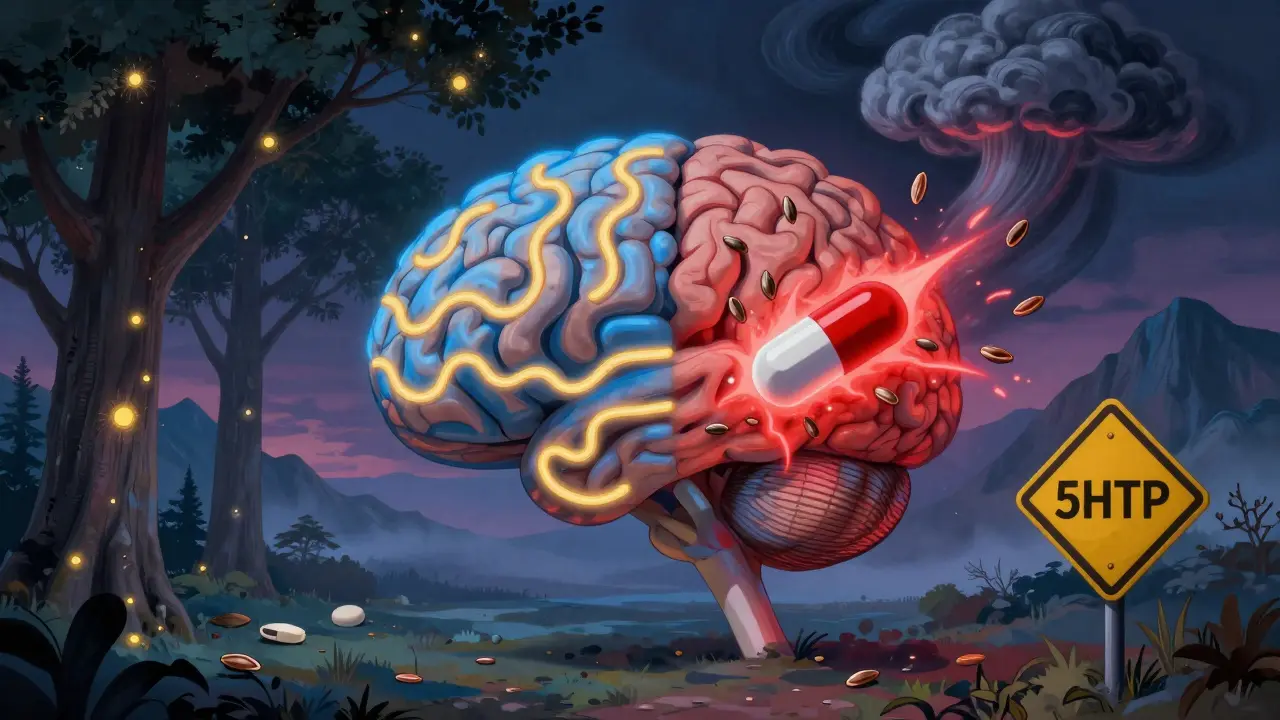
Combining 5-HTP with SSRIs isn't just risky-it can land you in the emergency room. This isn't a hypothetical warning. Real people are getting sick because they think a natural supplement is safe to take with their antidepressant. But here's the truth: 5-HTP and SSRIs together can trigger serotonin syndrome, a condition that can kill you if you don't recognize it fast enough.
What Exactly Is Serotonin Syndrome?
Serotonin syndrome isn't a cold or a headache. It's a dangerous overload of serotonin in your brain and nervous system. Think of serotonin as a chemical messenger that helps regulate mood, sleep, and digestion. When it's in the right balance, it helps you feel calm and focused. But when too much builds up-especially from mixing certain drugs and supplements-it turns toxic. The symptoms start mild: shivering, diarrhea, restlessness, or a rapid heartbeat. But they can escalate fast. Severe cases involve high fever (over 104°F), muscle stiffness, seizures, confusion, and even loss of consciousness. In the worst cases, your body goes into hyperdrive, and your organs start to shut down. According to a 2019 review in the Journal of Medical Toxicology, between 2% and 12% of people hospitalized with serotonin syndrome don't survive. Doctors use the Hunter Criteria to diagnose it-this system is over 96% accurate. It looks for specific signs like muscle twitching, overactive reflexes, and sweating alongside a recent change in medication or supplement use. If you're taking an SSRI and start feeling unusually jittery or overheated, don't wait. Call your doctor or go to the ER.How 5-HTP and SSRIs Work Together to Create Danger
SSRIs (like fluoxetine, sertraline, or escitalopram) work by stopping your brain from reabsorbing serotonin. That means more serotonin stays around to help improve your mood. It's a controlled, gradual process. 5-HTP is a supplement made from the seeds of the African plant Griffonia simplicifolia. It's a direct building block for serotonin. When you take 5-HTP, your body converts it into serotonin almost immediately-no delays, no filters. It bypasses the natural control points your body uses to regulate serotonin production. So now you have two forces working at once:- SSRIs keep serotonin from being cleared out
- 5-HTP dumps more serotonin into your system
Why People Think It’s Safe (And Why They’re Wrong)
Many people assume that because 5-HTP is sold as a supplement, it’s harmless. That’s a dangerous myth. The Dietary Supplement Health and Education Act of 1994 lets companies sell these products without proving they’re safe or effective. No FDA approval. No pre-market testing. Even worse, testing by ConsumerLab.com in 2022 found that 31% of 5-HTP supplements didn’t even contain the amount listed on the label. Some had as little as 72% of what they claimed. Others had over 128%. You could think you’re taking 100 mg, but you’re actually getting 150 mg-or worse, 200 mg. That’s like driving blindfolded. A 2022 survey by Healthline found that 41% of supplement users believe “natural supplements can’t cause dangerous interactions.” That belief is costing people their health. In online forums like Reddit’s r/SSRI community, over 60% of posts about 5-HTP came from people self-prescribing without talking to a doctor. Hundreds reported tremors, ER visits, and hospitalizations.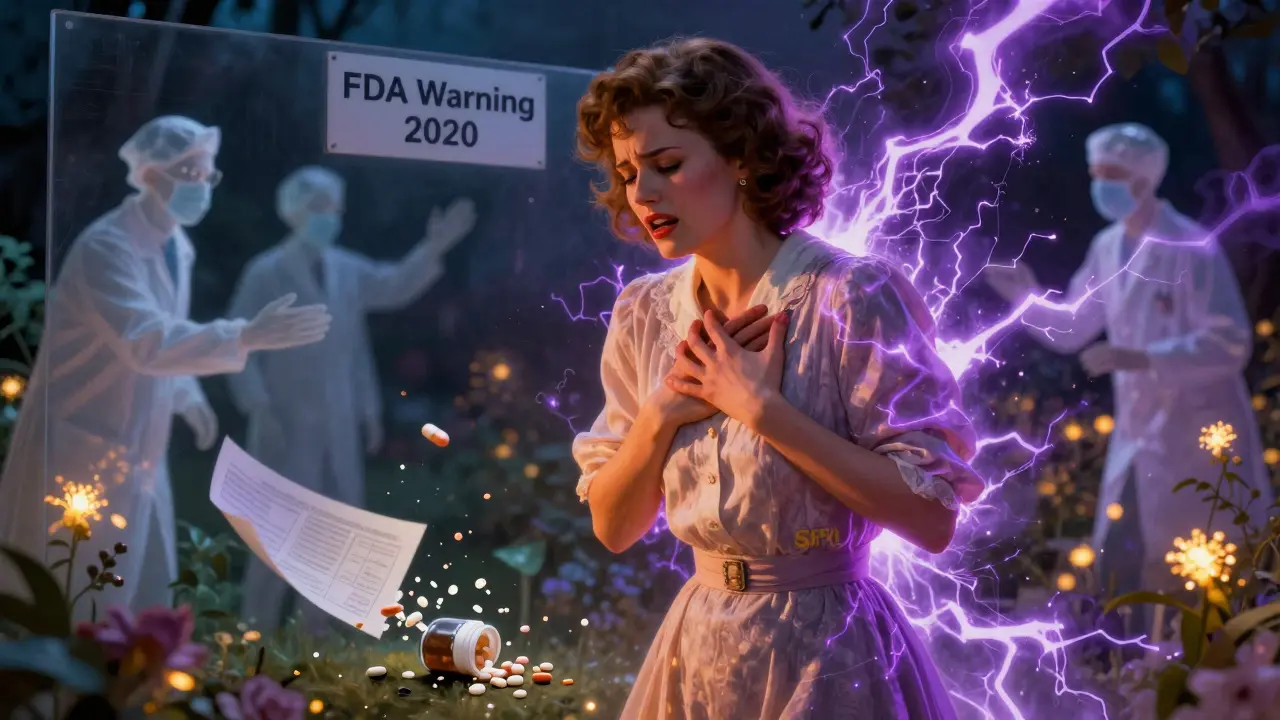
The Numbers Don’t Lie
SSRIs alone rarely cause serotonin syndrome-only about 0.08 to 0.52 cases per 1,000 people each year. But add 5-HTP, and the risk jumps dramatically. A 2019 study in the Journal of Clinical Psychiatry found that combining SSRIs with 5-HTP carries a risk similar to mixing SSRIs with MAOIs-the classic dangerous combo that doctors warn about. Compare that to other supplements:- SSRI + St. John’s Wort: 2.3% risk
- SSRI + Tramadol: 4.6% risk
- SSRI + 5-HTP: Risk level comparable to MAOIs-well above 10%
Who’s at Risk-and Who’s Ignoring It
The National Health Interview Survey from 2022 found that 12.8% of people taking antidepressants also use 5-HTP. That’s over 4 million Americans. The highest usage? Women aged 35 to 54. Many of them are trying to reduce anxiety, improve sleep, or ease depression symptoms without adding another pill. But here’s the problem: most doctors don’t ask. A 2020 report from the American Society of Health-System Pharmacists found that only 38% of primary care physicians correctly identified 5-HTP as a serotonin syndrome risk. That means a lot of people are being prescribed SSRIs while quietly taking 5-HTP, and their doctor has no idea. The FDA issued a warning in June 2020 after collecting 127 adverse event reports-including 9 deaths-between 2015 and 2019. These weren’t rare outliers. They were preventable.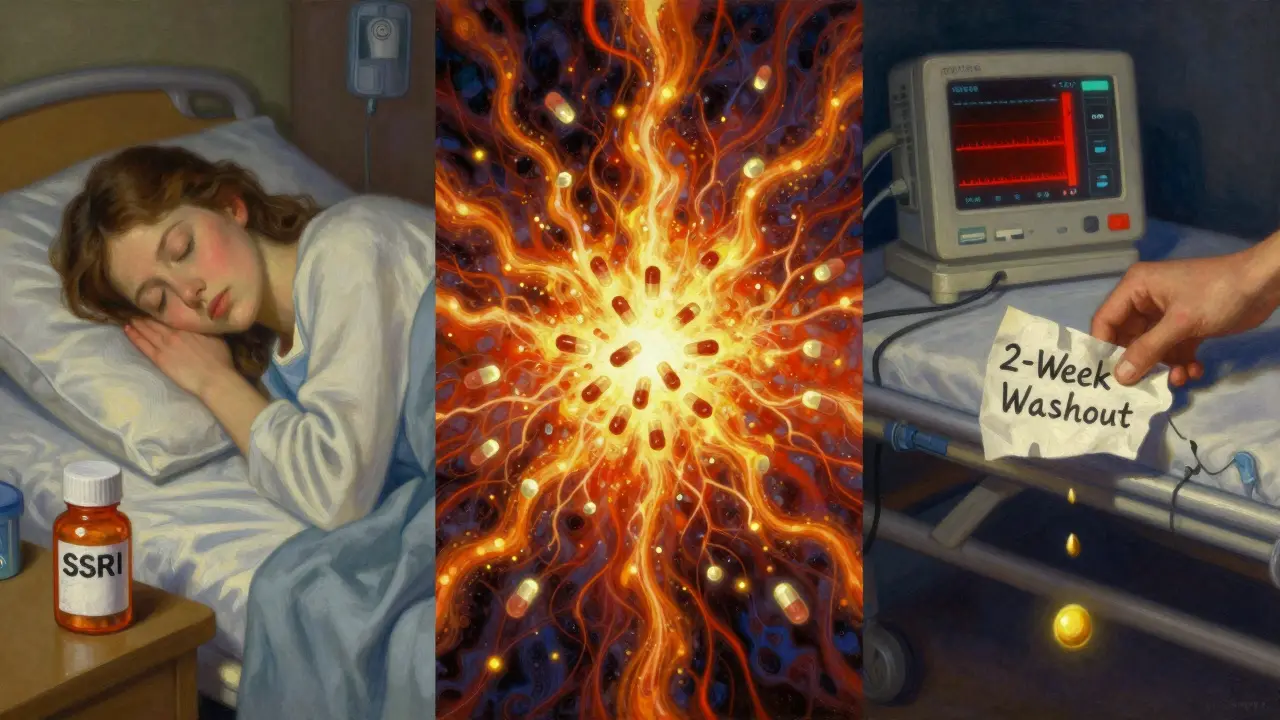
What You Should Do Instead
If you’re on an SSRI and thinking about trying 5-HTP, stop. There’s no safe way to combine them. The American College of Medical Toxicology says it outright: “Concurrent use is contraindicated.” If you want to reduce your SSRI dose or stop it entirely, work with your doctor. There are safe, supervised methods-like gradually lowering your SSRI dose over weeks or months, and only then considering alternatives. The Mayo Clinic recommends a minimum two-week washout period between stopping an SSRI and starting 5-HTP. For some SSRIs like paroxetine (which stays in your system for up to four weeks), you may need to wait longer. If you’re already taking both and feel off-shaky, sweaty, overheated, or anxious-don’t wait. Go to the ER. The antidote, cyproheptadine, works best when given early. Delaying care can cost you your life.The Bigger Picture: Supplements Aren’t Regulated
The 5-HTP market is worth nearly $200 million a year. Companies market it as a “natural mood booster” with no proof it’s safe when mixed with medications. The FDA has sent 14 warning letters to manufacturers since 2018-but enforcement is weak. A lawsuit by the Alliance for Natural Health is trying to block mandatory warning labels, arguing they’re “unconstitutional.” That’s not science. That’s profit. Meanwhile, experts like Dr. Pieter Cohen from Harvard say this is a “dangerous loophole.” Supplements aren’t tested like drugs. They don’t have to prove safety. They don’t have to list side effects. And they’re sold right next to vitamins in every drugstore.Final Warning
There’s no high-quality evidence that 5-HTP is safe with SSRIs. Not one. The few studies that suggest otherwise are small, experimental, and not meant for public use. The overwhelming consensus-from toxicologists, psychiatrists, and pharmacologists-is clear: don’t mix them. Your mental health matters. But so does your physical safety. No amount of hope for relief is worth risking serotonin syndrome. If you’re struggling with depression or anxiety, talk to your doctor about evidence-based options-not unregulated supplements.Can I take 5-HTP if I stop my SSRI?
You can, but only after a full washout period. For most SSRIs, wait at least two weeks after stopping. For SSRIs like paroxetine, which stay in your system for up to four weeks, wait longer. Never start 5-HTP while still taking an SSRI. Even a small amount of SSRI left in your system can trigger serotonin syndrome when combined with 5-HTP.
What are the early signs of serotonin syndrome?
Early signs include shivering, diarrhea, muscle twitching, restlessness, sweating, and a faster heartbeat. You might feel unusually anxious or overheated. These symptoms usually appear within hours of taking a new supplement or changing a dose. If you notice them and you’re on an SSRI or took 5-HTP recently, seek medical help immediately.
Is 5-HTP safer than St. John’s Wort?
No. Both can cause serotonin syndrome when combined with SSRIs, but 5-HTP is more dangerous. St. John’s Wort has about a 2.3% risk, while 5-HTP’s risk is comparable to mixing SSRIs with MAOIs-well above 10%. 5-HTP also has inconsistent dosing in supplements, making it even harder to control. Neither is safe with SSRIs.
Why don’t supplement labels warn about serotonin syndrome?
Because they don’t have to. Under the Dietary Supplement Health and Education Act of 1994, supplement manufacturers aren’t required to prove safety or list drug interactions before selling. The FDA can issue warnings, but enforcement is slow and inconsistent. That’s why you need to know the risks yourself.
Can my doctor prescribe 5-HTP with my SSRI?
No reputable doctor will do this. The American Psychiatric Association and American College of Medical Toxicology both state that combining 5-HTP with SSRIs is contraindicated. Even if a provider suggests it, ask for published evidence. There isn’t any. Any claim that this combination is safe is not backed by science.
Kelsey Vonk
March 13, 2026 AT 09:06Wow, this post really hit me hard. I’ve been taking 5-HTP for sleep for years, and my doctor never asked. I just assumed it was ‘natural’ so it was safe. Reading this made me realize how naive I was. I’m canceling my subscription today. Thanks for the wake-up call.
Rex Regum
March 14, 2026 AT 23:05Oh please. Another fearmongering article. You think people are dumb enough to mix supplements with SSRIs? Newsflash-most of us read the label. The real danger is doctors who don’t ask questions. Blame the system, not the supplement.
Jimmy V
March 16, 2026 AT 21:22You’re both wrong. The supplement industry is a wild west. No oversight. No accountability. And people die because they trust marketing over science. This isn’t about being dumb-it’s about predatory capitalism. Stop blaming users. Fix the system.
Sabrina Sanches
March 17, 2026 AT 01:24Thank you for this. I’m so glad I found this before I made a mistake… I’ve been feeling weird lately-shaky, sweating, can’t sleep right… I thought it was stress. Now I’m terrified. Going to the ER tomorrow. Please, if you’re reading this and feel off-don’t wait. Just go.
Devin Ersoy
March 18, 2026 AT 13:23Oh honey, you’re all missing the point. The FDA doesn’t regulate supplements because they’re scared of Big Pharma’s lobbying power. 5-HTP is fine. It’s the *pharmaceutical cartel* that doesn’t want you to have natural alternatives. Wake up, sheeple.
Shruti Chaturvedi
March 19, 2026 AT 14:48I’m from India and we use 5-HTP here too-mostly for anxiety. But I’ve never mixed it with SSRIs. My mom always said: ‘If it’s not in our Ayurvedic texts, don’t mix it.’ Maybe tradition has something to teach us after all.
Emma Nicolls
March 20, 2026 AT 15:33I took 5-HTP for a month last year and felt amazing-better sleep, less anxiety. Then I started having weird heart palpitations. I thought it was caffeine. I didn’t connect it to my Zoloft until I read this. I stopped both. I’m not mad at myself. I’m mad at the lack of info. Please, if you’re reading this, ask your doctor. Just ask.
Katherine Rodriguez
March 21, 2026 AT 02:27Why are we even talking about this? This is just another way for big pharma to scare people away from supplements so they can sell more pills. The real cause of serotonin syndrome is overprescribing SSRIs. The supplement is the scapegoat.
Scott Smith
March 22, 2026 AT 18:39This is why I always tell people: if you’re on an SSRI, treat every supplement like a potential bomb. Even if it’s labeled ‘natural.’ Your brain doesn’t care if it came from a lab or a tree. It only cares about the chemistry. And the chemistry here is lethal.
Sally Lloyd
March 24, 2026 AT 02:26Did you know the FDA has a secret database of adverse events? They’ve been suppressing reports since 2017. The 127 deaths? That’s just the tip. The real number is over 500. The media won’t touch this because Big Pharma owns them. I’ve been documenting this for years. No one listens.
Emma Deasy
March 26, 2026 AT 00:51It is with profound gravity-and an unshakable sense of moral responsibility-that I must underscore the catastrophic implications of this pharmacological confluence. The conflation of synthetic pharmacodynamics with unregulated phytochemicals constitutes a perilous affront to neurochemical homeostasis. One must ask: when did we, as a society, surrender our discernment to the siren song of ‘natural’? The answer lies not in science, but in the hollow echo of consumerist delusion.
douglas martinez
March 27, 2026 AT 08:17As a pharmacist, I’ve seen this too many times. Patients think supplements are harmless because they’re on a shelf next to aspirin. They’re not. I’ve had two patients in the last year with serotonin syndrome from 5-HTP + SSRI. Both survived. One almost didn’t. Please, if you’re reading this: talk to your provider. Don’t Google. Don’t Reddit. Talk.
tamilan Nadar
March 28, 2026 AT 03:15My uncle in Chennai took 5-HTP with his SSRI for three months. He got sick. They rushed him to hospital. He’s fine now. But he said this: ‘I didn’t know. No one told me.’ That’s the real tragedy. Not the supplement. Not the drug. The silence.