
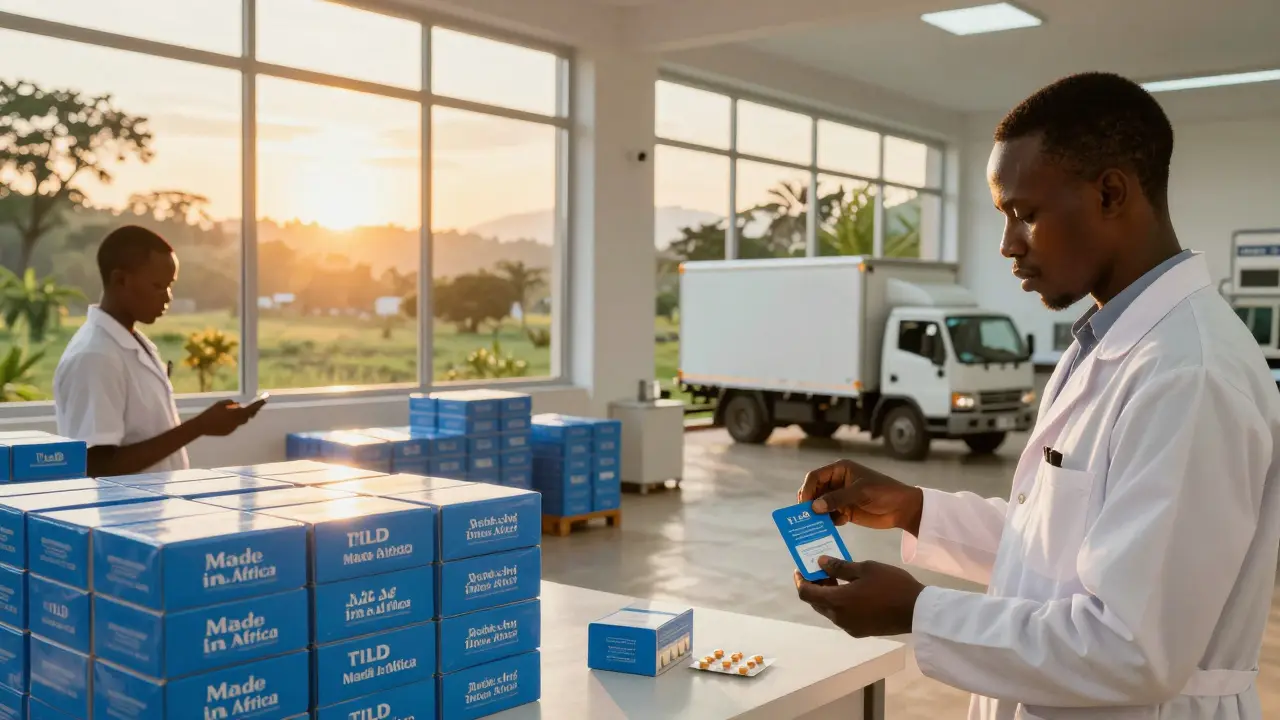
For decades, Africa relied on medicine shipped from India and Europe to treat HIV. Patients waited months for supplies. Clinics ran out of pills. Lives were lost not because treatment didn’t exist, but because it couldn’t reach them. That’s changing. On May 6, 2025, something historic happened: the Global Fund bought its first-ever HIV treatment made in Africa. The medicine? TLD - a single pill combining tenofovir, lamivudine, and dolutegravir. Made by Universal Corporation Ltd in Kenya, it’s now being delivered to Mozambique, enough to treat over 72,000 people every year.
Why African-Made ARVs Matter
Sub-Saharan Africa carries 65% of the world’s HIV cases. Yet for years, 80% of its medicines came from outside the continent. This wasn’t just inconvenient - it was dangerous. When global supply chains broke during the pandemic, HIV patients in rural clinics were the first to go without treatment. No one planned for that. No one thought about what happens when a ship gets delayed or a border closes.
Local production fixes that. When a country makes its own medicines, it doesn’t depend on shipping schedules, currency swings, or political tensions overseas. It controls its own health future. The TLD pill is more than a drug - it’s a symbol of that shift. It’s the current global standard for first-line HIV treatment. Better than older regimens, it works faster, has fewer side effects, and stops drug resistance more effectively. And now, for the first time, it’s being made where it’s needed most.
The Role of WHO Prequalification
Getting a medicine made in Africa to global health agencies isn’t easy. The World Health Organization (WHO) has strict standards. Every batch must be tested. Every factory inspected. Every quality control system reviewed. That’s called WHO prequalification. It’s the gold seal that tells donors like the Global Fund: ‘This is safe. This works. This is equal to anything made in Europe or the U.S.’
Universal Corporation Ltd became the first African company to get WHO prequalification for TLD in 2023. That wasn’t luck. It took years of investment, training, and technical support from WHO and the Medicines Patent Pool. But now, it’s proof that African manufacturers can meet global standards. And that’s opening doors. Other companies in Nigeria, South Africa, and Rwanda are now rushing to get their own prequalifications. Each one adds more capacity, more competition, and lower prices.
From Imports to Innovation
Before 2025, most HIV drugs in Africa came from India. Companies there brought prices down from $10,000 per patient per year in 2000 to under $100 by 2015. That was a miracle. But it created a dependency. African countries didn’t build labs, didn’t train chemists, didn’t develop their own supply chains. They waited for shipments.
Now, the focus is shifting. The Global Fund isn’t just buying drugs - it’s shaping the market. By committing to buy African-made ARVs, it gives manufacturers confidence to invest. They can build factories, hire workers, buy equipment - knowing there’s a guaranteed buyer. That’s called market-shaping. It’s not charity. It’s smart economics.
Unitaid, the Gates Foundation, and CIFF are funding new manufacturing sites. By the end of 2025, at least three more African plants will start making ARVs. One in Nigeria will produce rapid HIV tests. Codix Bio, a Nigerian company, now makes diagnostic kits under license from SD Biosensor. That’s huge. No more waiting for test kits from overseas. Clinics can test and treat in the same day.
Long-Acting Injections and the Next Frontier
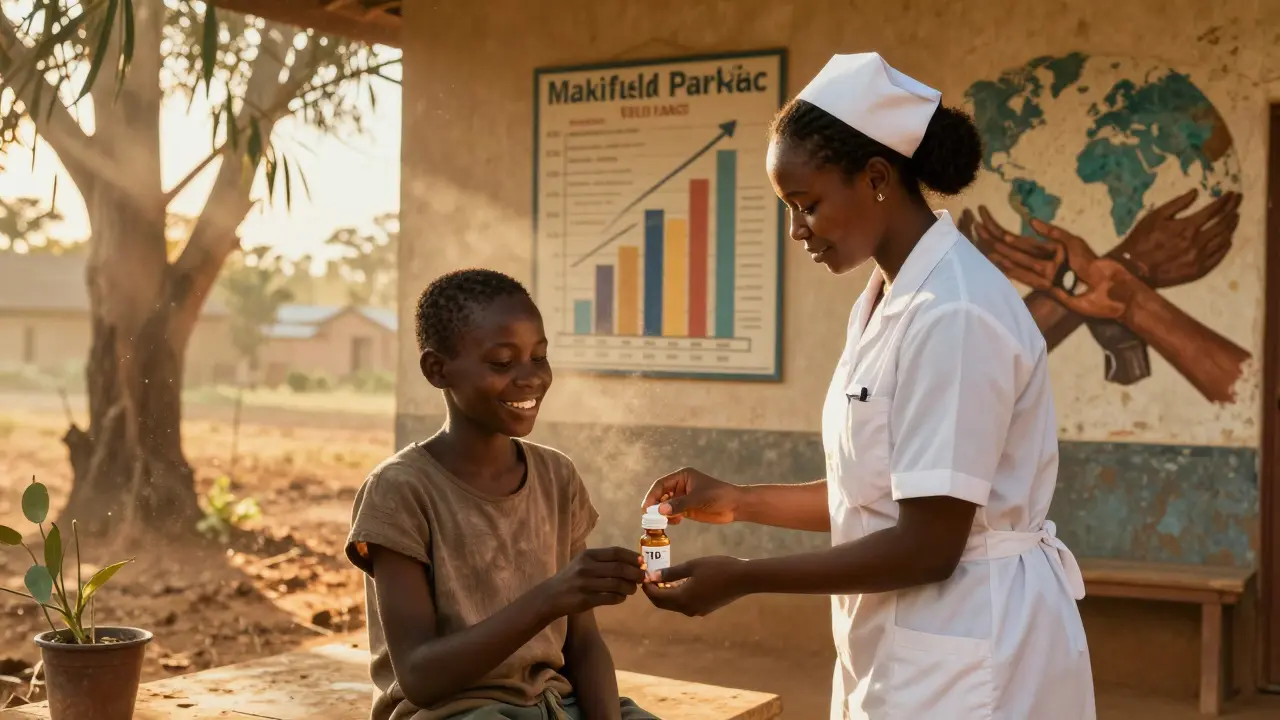
HIV treatment is moving beyond pills. In October 2025, South Africa became the first African country to register a twice-yearly HIV injection: cabotegravir long-acting. It’s not a cure, but for people who struggle to take a daily pill, it’s life-changing. No more remembering pills. No more stigma hiding medicine. Just two shots a year.
Gilead Sciences, the original maker, has already signed licensing deals with six African manufacturers to produce generic versions. Experts predict these generics could cost 80-90% less than the brand. And they’re coming fast. Gilead is also working with the U.S. State Department and the Global Fund to supply lenacapavir - a new long-acting drug for HIV prevention - to up to two million people across Africa by 2026. All at no profit until generics take over.
This isn’t just about treatment. It’s about prevention. More access to PrEP means fewer new infections. More access to long-acting drugs means fewer people dropping out of care. And all of it is being designed with African needs in mind.
The Numbers Behind the Progress
Since 2010, AIDS-related deaths in Africa have dropped by more than half - from 1.3 million to 630,000 in 2022. Why? Because more people are on treatment. In Eastern and Southern Africa, 93% of people living with HIV know their status. 83% are on ARVs. 78% have the virus suppressed - meaning they can’t transmit it.
In Western and Central Africa, those numbers are lower: 81%-76%-70%. But they’re rising. And now, with local production, they’ll rise faster. The African Union’s Pharmaceutical Manufacturing Plan aims to get African-made drugs to 40% of the continent’s needs by 2040. Right now, it’s just 2-3%. That’s a big gap. But the momentum is real.
By 2030, African-made ARVs could cover 20-30% of the continent’s needs. That’s not enough to replace all imports - but it’s enough to make supply chains resilient. If one source fails, another can step in. If prices rise, competition kicks in. If a new variant emerges, African scientists can help design the next treatment.
Challenges Still Ahead
But this isn’t a fairy tale. Africa still needs about 15 million person-years of first-line ARV treatment every year. That’s a massive demand. Only a handful of factories are producing at scale. Regulatory systems vary wildly between countries. Some lack the staff or funding to inspect labs. Others don’t have the laws to fast-track approvals.
South Africa moved quickly to approve the long-acting injection - in record time. But not every country can do that. Harmonizing regulations across 54 nations is one of the biggest hurdles. That’s why the WHO’s NextGen approach is so important. It’s not just about making pills. It’s about building systems: training inspectors, standardizing paperwork, sharing data, and creating regional approval pathways.
There’s also the question of funding. International donors can’t pay forever. African governments need to step up. Some are starting to - Botswana, Rwanda, and Ghana have begun budgeting for local drug purchases. But most still rely on aid. The goal isn’t to replace donors - it’s to create a system where local production reduces dependence on them.
What This Means for the Future
This isn’t just about HIV. It’s about health sovereignty. When a country can make its own medicines, it can respond faster to outbreaks - whether it’s HIV, malaria, or the next pandemic. It creates jobs. It trains engineers. It builds labs that can later produce vaccines or cancer drugs.
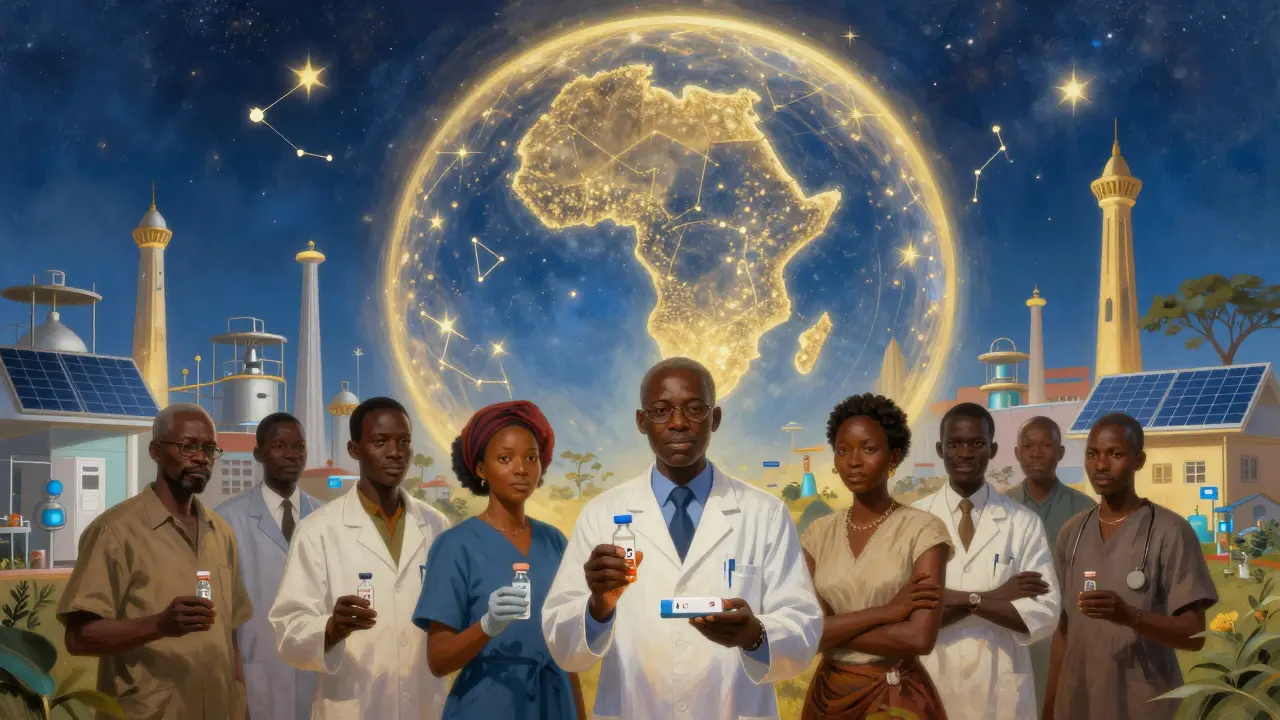
For the first time, African scientists and manufacturers aren’t just users of global health systems - they’re shaping them. The TLD pill made in Kenya isn’t just medicine. It’s proof that Africa doesn’t need to wait for permission to lead.
The next step? More factories. More prequalifications. More countries joining the supply chain. More people getting the right treatment, on time, without having to beg for it from halfway across the world.
When you look at the data, the progress is clear. But the real story is quieter. It’s the nurse in rural Mozambique who no longer has to tell a patient, ‘We’re out of pills.’ It’s the teenager in Lagos who can now get a test and start treatment the same day. It’s the mother in Kigali who doesn’t have to worry about her child’s medicine running out because of a shipping delay.
That’s what this is really about. Not politics. Not profits. Not even drugs. It’s dignity. And it’s finally here.
Are African-made antiretroviral drugs as effective as those made elsewhere?
Yes. All African-made ARVs approved for global use - like the TLD regimen from Universal Corporation Ltd - must meet WHO prequalification standards. These are the same rigorous quality, safety, and efficacy benchmarks used for drugs made in Europe, the U.S., or India. Independent testing confirms they perform identically in clinical use. The difference isn’t quality - it’s access.
Why did it take so long for Africa to start making its own HIV drugs?
Historically, African countries lacked the funding, technical expertise, and regulatory systems to build large-scale pharmaceutical factories. International donors relied on cheaper, established manufacturers in India. There was little incentive to invest locally. It wasn’t until the Global Fund and WHO began guaranteeing purchases and offering technical support that African manufacturers could take the financial risk. The COVID-19 pandemic exposed how dangerous that dependence was - and that changed the game.
How much cheaper are African-made ARVs compared to imported ones?
While exact pricing is often confidential, African-made ARVs are already priced competitively - often 10-20% lower than Indian imports. This isn’t just about cost-cutting. It’s about sustainability. When African manufacturers compete, prices drop across the board. The goal isn’t to undercut India - it’s to create a reliable, diversified supply chain that keeps prices low long-term.
Can African countries produce other medicines besides HIV drugs?
Absolutely. The same factories making TLD are already expanding into malaria treatments, antibiotics, and vaccines. Nigeria’s Codix Bio now produces HIV rapid tests. Rwanda and Senegal are building facilities for insulin and diabetes drugs. The infrastructure built for HIV is becoming the foundation for broader health sovereignty. This isn’t just an HIV story - it’s the start of a continent-wide pharmaceutical revolution.
What’s next for HIV treatment access in Africa?
The next big leap is long-acting injectables. With generic versions of cabotegravir and lenacapavir set to launch by 2026, millions more people could access prevention and treatment without daily pills. Regulatory systems are getting faster. Manufacturing capacity is scaling. And more African governments are starting to fund local drug purchases. By 2030, the continent could be producing nearly a third of its own HIV medicines - and leading the world in innovative, patient-centered care.
Hannah Taylor
December 22, 2025 AT 05:36Jason Silva
December 23, 2025 AT 19:45mukesh matav
December 24, 2025 AT 13:36Peggy Adams
December 25, 2025 AT 06:28Theo Newbold
December 26, 2025 AT 12:23Jay lawch
December 27, 2025 AT 09:26Christina Weber
December 29, 2025 AT 05:07Cara C
December 30, 2025 AT 00:00Sandy Crux
December 31, 2025 AT 20:06Michael Ochieng
January 2, 2026 AT 08:00