
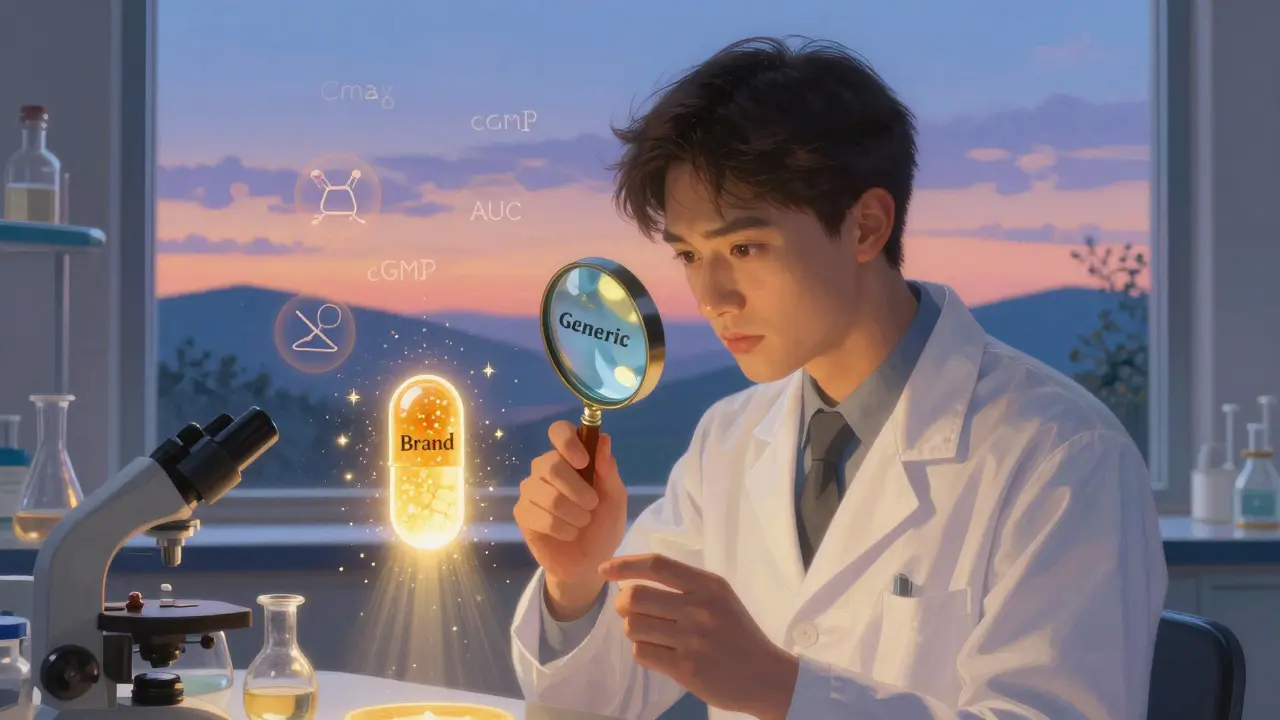
When you pick up a prescription for a generic drug, you’re not getting a cheaper version of medicine-you’re getting the same medicine, made to the same strict rules as the brand-name version. The FDA doesn’t allow just any company to slap a generic label on a pill. There’s a detailed, science-backed process that every generic drug must pass before it reaches your pharmacy. And if you’ve ever wondered whether those cheaper pills really work like the name-brand ones, the answer is yes-when they’re approved by the FDA.
What Makes a Generic Drug ‘Equivalent’?
The FDA doesn’t just say a generic drug is ‘similar.’ It demands pharmaceutical equivalence and bioequivalence. Pharmaceutical equivalence means the generic has the same active ingredient, strength, dosage form (tablet, capsule, injection), and route of administration (oral, injected, inhaled) as the brand-name drug. It must also be used for the same medical conditions. That’s the baseline.
But here’s where it gets technical: bioequivalence. This is the real test. The FDA requires that the generic drug delivers the same amount of active ingredient into your bloodstream at the same rate as the brand-name version. They measure this using two key metrics: Cmax (the highest concentration in your blood) and AUC (how much of the drug your body absorbs over time). For approval, the 90% confidence interval for both values must fall between 80% and 125% of the brand-name drug’s results. That’s not a guess-it’s a scientifically validated range proven to ensure the same clinical effect.
For most small-molecule drugs like antibiotics or blood pressure pills, this is tested in 24 to 36 healthy volunteers. Blood samples are taken over hours to map out how the drug moves through the body. If the curves match up within those limits, the drug is approved.
Manufacturing Rules: cGMP Applies to Everyone
It doesn’t matter if you’re making a brand-name drug or a generic-you follow the same rules. That’s called Current Good Manufacturing Practices, or cGMP, outlined in 21 CFR Parts 210 and 211. These rules cover everything: where the ingredients come from, how they’re stored, how machines are cleaned between batches, and how each batch is tested before release.
Every production lot of a generic drug must be tested for identity (is it the right drug?), strength (does it have the right amount of active ingredient?), purity (is it free of harmful contaminants?), and quality (does it dissolve properly?). These tests use validated methods approved by the FDA. No shortcuts.
And here’s something many people don’t know: about half of all generic drugs in the U.S. are made by the same companies that make the brand-name versions. Often, they’re made in the same factories. The only difference? The label. The FDA inspects around 3,500 manufacturing sites every year-whether they’re in the U.S., India, or China-to make sure they meet these standards.
The ANDA Process: How a Generic Gets Approved
Generic drug makers don’t repeat the full clinical trials that brand-name companies did. Instead, they file an Abbreviated New Drug Application, or ANDA. The word ‘abbreviated’ doesn’t mean ‘simplified’-it means they don’t need to prove the drug works from scratch. They only need to prove it’s equivalent to the brand-name version, which has already been proven safe and effective.
An ANDA includes detailed data on the drug’s chemistry, manufacturing process, stability, and bioequivalence. The FDA’s Office of Generic Drugs reviews every part. The review timeline for a complete application is 10 months under the Generic Drug User Fee Amendments (GDUFA), a system funded by fees paid by generic manufacturers to speed up approvals. In 2022 alone, the FDA approved 892 original ANDAs and issued 478 complete response letters-meaning the application wasn’t approved yet and needed fixes.
Stability testing is a big part of this. Manufacturers must show the drug stays safe and effective over its shelf life. That means storing samples at high heat and humidity (40°C/75% RH) for six months and then keeping them under normal conditions for 12 to 24 months. If the drug doesn’t break down or change in those tests, it gets approved.
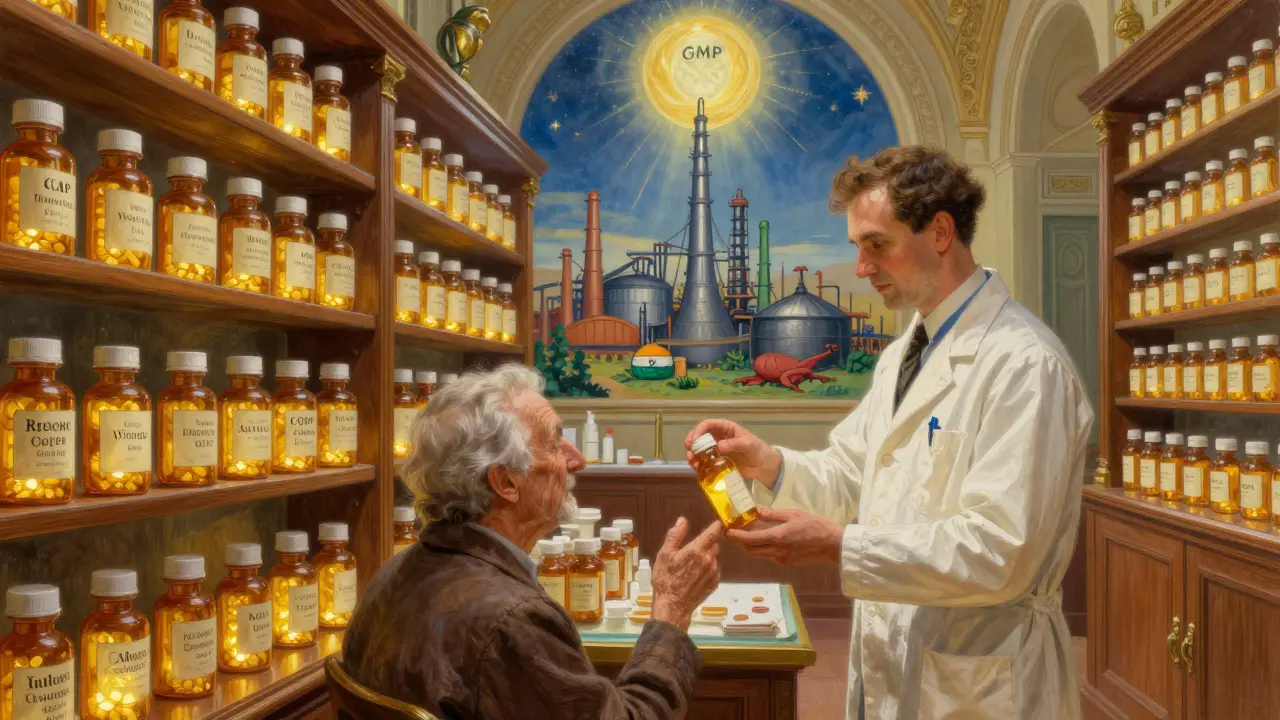
Complex Drugs: When It’s Not Just a Pill
Not all drugs are simple tablets. Some are inhalers, injectables, topical creams, or long-acting implants. These are called complex generic drugs. For them, measuring blood levels isn’t enough. The FDA has created over 2,143 product-specific guidances for these tricky cases. For example, with an asthma inhaler, the size of the drug particles, how they’re sprayed, and how they settle in the lungs all matter. The generic must match the brand-name device’s performance-not just the chemical content.
These products may require additional testing: in vitro (lab-based) studies, pharmacodynamic tests (how the drug affects the body), or even clinical endpoint trials. In 2022, the FDA found that 17% of complex generic categories needed these advanced methods. That’s why the agency spends $15.7 million a year on research to develop better testing tools. They’ve held 18 public workshops since 2017, bringing in scientists, manufacturers, and patient groups to solve these problems together.
Why Generics Save Billions-Without Sacrificing Quality
Generics make up over 90% of all prescriptions filled in the U.S., but they cost only about 23% of the total spent on prescription drugs. In 2022, they saved the healthcare system $37 billion. That’s not magic-it’s competition. When a brand-name drug’s patent expires, multiple companies can make the generic. Prices drop fast.
And the market is growing. The U.S. generic drug market was worth $135.7 billion in 2022 and is projected to hit $180.3 billion by 2027. That growth isn’t happening because people are being fooled. It’s happening because generics work. A 2022 Consumer Reports survey of 1,200 adults found 89% were satisfied with their generic medications, and 62% actively chose them to save money.
Are There Any Exceptions? What About Levothyroxine and Seizure Drugs?
Yes, there are cases where patients report differences. The most common examples are drugs with a narrow therapeutic index-where even small changes in blood levels can cause problems. Levothyroxine (for thyroid conditions) and certain seizure medications like phenytoin are in this group.
A 2021 study in JAMA Internal Medicine found that 12.3% of patients switching between different generic versions of levothyroxine had thyroid hormone levels that shifted enough to need a dose adjustment. That doesn’t mean the generics were unsafe-it means the body is super sensitive to tiny variations. The FDA advises patients who are stable on one generic to stay on it. If they need to switch, they should be monitored.
On Reddit’s r/pharmacy community, a 2023 thread with over 1,400 responses showed 83% of users reported no difference between generic and brand-name drugs. The 17% who did notice changes mostly pointed to epilepsy or blood thinner medications. These are rare cases. The American Medical Association and the American Academy of Family Physicians both affirm that FDA-approved generics are safe and effective.
What You Can Do as a Patient
If your doctor prescribes a generic, you can trust it. The FDA’s standards are among the strictest in the world. But if you’re on a drug where small changes matter-like thyroid, seizure, or blood thinner meds-stick with the same generic brand if you’re stable. Don’t switch unless your pharmacist or doctor advises it.
Ask your pharmacist: ‘Is this the same generic I’ve been taking?’ If you notice a change in how you feel after switching, don’t ignore it. Talk to your doctor. It’s not about the drug being bad-it’s about your body’s sensitivity.
And remember: generics aren’t ‘second choice.’ They’re the standard. Over 20,000 generic drug products have been approved in the U.S. That’s more than 14,800 brand-name drugs matched with affordable alternatives. The system works. It’s built on science, not savings.
Are generic drugs as effective as brand-name drugs?
Yes. The FDA requires generic drugs to be bioequivalent to their brand-name counterparts, meaning they deliver the same amount of active ingredient into your bloodstream at the same rate. Over 90% of prescriptions in the U.S. are filled with generics, and studies show they work just as well for most people.
Why do some generics look different from the brand-name version?
By law, generics can’t look exactly like the brand-name drug, so they may differ in color, shape, or markings. These differences are only in inactive ingredients like dyes or fillers. The active ingredient, strength, and effectiveness remain identical.
Does the FDA inspect generic drug manufacturing plants?
Yes. The FDA inspects about 3,500 manufacturing sites globally each year-whether they make brand-name or generic drugs. These inspections check compliance with Current Good Manufacturing Practices (cGMP), ensuring every batch is safe, clean, and consistent.
Can I switch between different generic brands?
For most drugs, yes. But for medications with a narrow therapeutic index-like levothyroxine, warfarin, or some seizure drugs-switching between generics may cause small changes in blood levels. If you’re stable on one generic, it’s best to stick with it. Talk to your doctor before switching.
Are generic drugs made in the same facilities as brand-name drugs?
About half of all generic drugs in the U.S. are made by the same companies that produce brand-name versions, often in the same factories. The FDA doesn’t distinguish between them during inspections-quality standards are identical.
How long does it take for a generic drug to be approved?
Under the Generic Drug User Fee Amendments (GDUFA), the FDA aims to review a complete Abbreviated New Drug Application (ANDA) within 10 months. Complex generics may take longer due to additional testing requirements.
Do generic drugs have the same side effects as brand-name drugs?
Yes. Since the active ingredient is identical, the side effects are the same. Differences in inactive ingredients rarely cause issues, but in very rare cases, someone might have an allergy to a dye or filler in one version. If you notice new side effects after switching, report them to your doctor.
Why are generic drugs so much cheaper?
Generic manufacturers don’t have to repeat expensive clinical trials to prove safety and effectiveness. They only need to show their product matches the brand-name drug. This reduces development costs significantly, and competition among multiple generic makers drives prices down.
Final Thoughts: Trust the System
The FDA’s system for generic drugs isn’t perfect, but it’s built on decades of science, inspections, and data. When you take a generic, you’re getting a drug that meets the same quality, strength, purity, and stability standards as the brand-name version. The savings are real. The safety is backed by evidence. And the system is designed so you don’t have to choose between affordability and effectiveness.
There are rare cases where switching generics causes issues-but those are exceptions, not the rule. For the vast majority of people, generics are not just a cost-saving option. They’re the standard of care.
Katherine Blumhardt
December 25, 2025 AT 14:04why do generics always look so weird?? like why is my blood pressure pill now a bright green capsule?? i swear it tastes different too. maybe im just weird.
sagar patel
December 26, 2025 AT 20:17The FDA bioequivalence range of 80-125% is statistically valid but clinically reckless for narrow therapeutic index drugs. The data ignores inter-individual pharmacokinetic variance. This is regulatory theater disguised as science.
Bailey Adkison
December 26, 2025 AT 21:25Yeah right like the FDA actually inspects factories in India and China the same way they do in New Jersey. You think they care about a 2% difference in dissolution rate when the company pays their inspection fee? Wake up.
Ben Harris
December 26, 2025 AT 23:25I switched from brand-name levothyroxine to generic and suddenly I was exhausted, gaining weight, and crying for no reason. My doctor said it was 'just stress.' I'm not stupid. The inactive ingredients are poison. The FDA is in bed with Big Pharma and Big Generic. I'm not taking it anymore.
Mussin Machhour
December 27, 2025 AT 23:08Love that generics are saving us billions. I’ve been on the same generic for 5 years and never had an issue. My dad’s on 7 meds and half are generics-he saves like $400 a month. That’s a mortgage payment. Science + savings = win.
Oluwatosin Ayodele
December 29, 2025 AT 06:49Let me clarify something you all are missing. The 80-125% bioequivalence window is based on healthy volunteers. But elderly patients with renal impairment? Pediatric populations? These groups are never tested. The FDA approval is not a guarantee of safety across all demographics. It’s a population average. That’s not medicine. That’s statistics pretending to be science.
Lindsay Hensel
December 29, 2025 AT 20:04As someone who’s traveled to 47 countries, I’ve seen how other nations handle generics. The U.S. system is among the most rigorous. We don’t just approve-we audit, reinspect, and demand transparency. This isn’t about cost. It’s about global health equity.
Sophie Stallkind
December 30, 2025 AT 15:44Thank you for this comprehensive and meticulously referenced overview. The distinction between pharmaceutical and bioequivalence is often misunderstood by the public. The regulatory framework, while complex, is grounded in reproducible science and peer-reviewed methodology. It is both prudent and ethical to rely on FDA-approved generics, except in cases of documented clinical sensitivity. Patient autonomy must be balanced with evidence-based practice.