
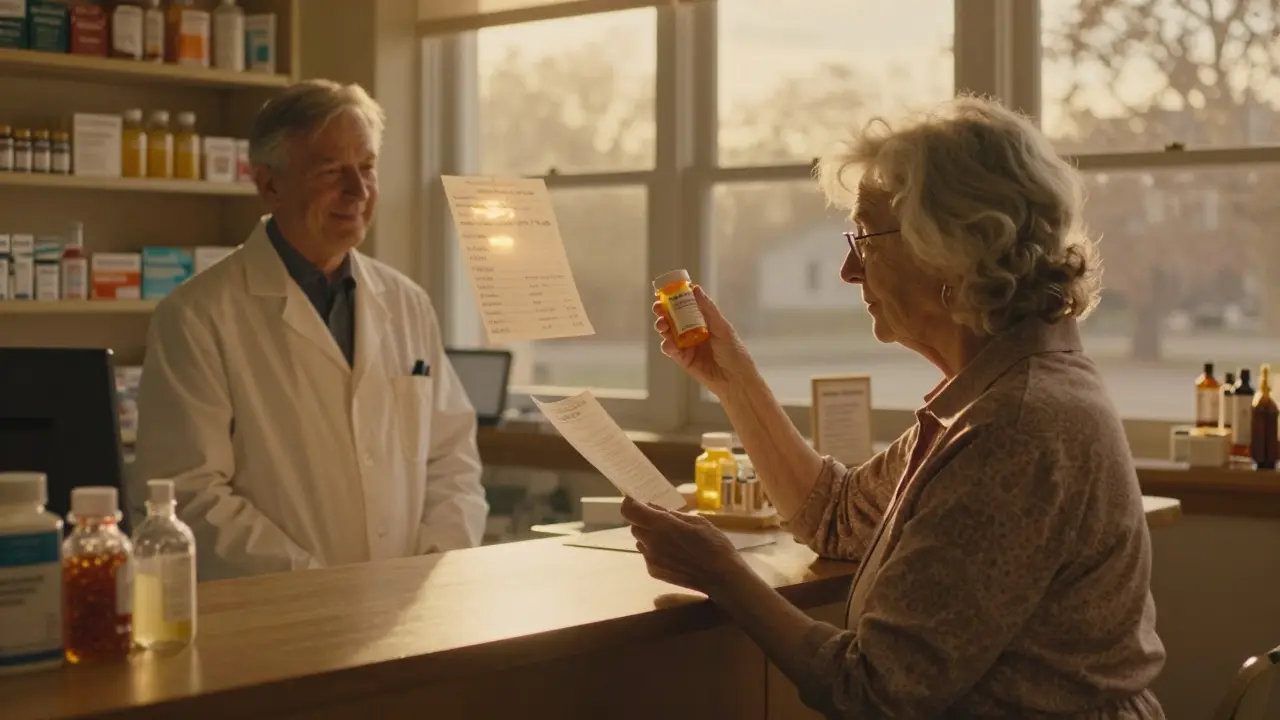
Every year, thousands of people in Australia get the wrong medicine or the wrong dose from a pharmacy - not because the pharmacist made a careless mistake, but because no one stopped to double-check. It happens more often than you think. You walk in, hand over a prescription, and walk out with a bottle. But do you ever look at the label? Do you compare the pills to what you took last time? Do you ask why the dosage changed? Most people don’t. And that’s where the risk starts.
Why You Need a Personal Safety Checklist
Pharmacies are busy. Pharmacists juggle dozens of prescriptions a day. Even the most careful ones can mix up similar-looking names - like hydroxyzine and hydrocodone. Or they might dispense the right drug but the wrong strength - say, 10mg instead of 5mg. These aren’t rare errors. Studies show that around 1 in 20 prescriptions filled in Australia have some kind of mistake. Most are caught before they reach you. But not all.You can’t control the pharmacy’s workflow. But you can control what you do when you walk out with your medicine. A simple personal safety checklist doesn’t replace professional checks - it adds a final layer of protection. It turns you from a passive recipient into an active participant in your own safety.
Your Personal Pharmacy Safety Checklist
Here’s what you should do every single time you pick up a prescription. Do this before you leave the counter.- Check the name on the bottle - Is it your full name? Middle initial? Sometimes prescriptions get mixed up between people with similar names. If it says “J. Smith” and you’re “John Smith,” that’s a red flag.
- Match the drug name - Look at the prescription slip or your doctor’s note. Does the medicine on the label match what was prescribed? Don’t assume. Spell it out loud: “Is this lisinopril or losartan?”
- Verify the dosage - How many milligrams? How many pills per dose? If your old prescription was 5mg and this one is 10mg, ask: “Why did this change?” Don’t be shy. A pharmacist expects this.
- Count the pills - If you got 30 pills, count them. If it’s supposed to last 30 days, and you have 60, something’s wrong. Or if it’s a new antibiotic and you got 14 pills instead of 10, ask.
- Compare the pill appearance - Did you take this before? Look at the shape, color, and imprint. A blue oval with “A12” on it should look the same every time. If it’s now a white round pill with “B45,” ask why. Pills change manufacturers all the time - but you should know why.
- Ask about side effects - “What are the most common side effects I should watch for?” Don’t just take the leaflet. Ask for the top three things people experience. If they say “nothing serious,” press a little: “What do most people complain about?”
- Confirm the purpose - “This is for my blood pressure, right?” Sometimes the label says “for anxiety” when you were prescribed it for migraines. A mismatch here is dangerous.
- Check the expiration date - Is it at least six months out? If it’s expiring in two months, ask if they have a fresher batch. Medicines lose potency over time - especially liquids and creams.
Do this every time. Even if it’s the same medicine you’ve taken for years. Manufacturers change. Doses change. Mistakes happen. One woman in Melbourne got her diabetes medicine switched to a thyroid drug - because the labels looked similar. She didn’t check. She ended up in the hospital.
What to Do If Something Feels Off
If anything on the checklist doesn’t match - don’t leave. Say this: “I’ve taken this before, and it looks different. Can we double-check?” Most pharmacists will be happy to verify. If they brush you off, ask to speak to the pharmacist in charge. If they still won’t look, say: “I’d like to take this to another pharmacy for a second check.” That’s your right.Don’t worry about looking “difficult.” Pharmacists are trained to handle this. In fact, the Pharmaceutical Society of Australia encourages patients to ask questions. One 2023 survey of Australian pharmacists found that 89% said they appreciated patients who checked their prescriptions - and that those patients were less likely to have errors.
Bring a List to Your Visit
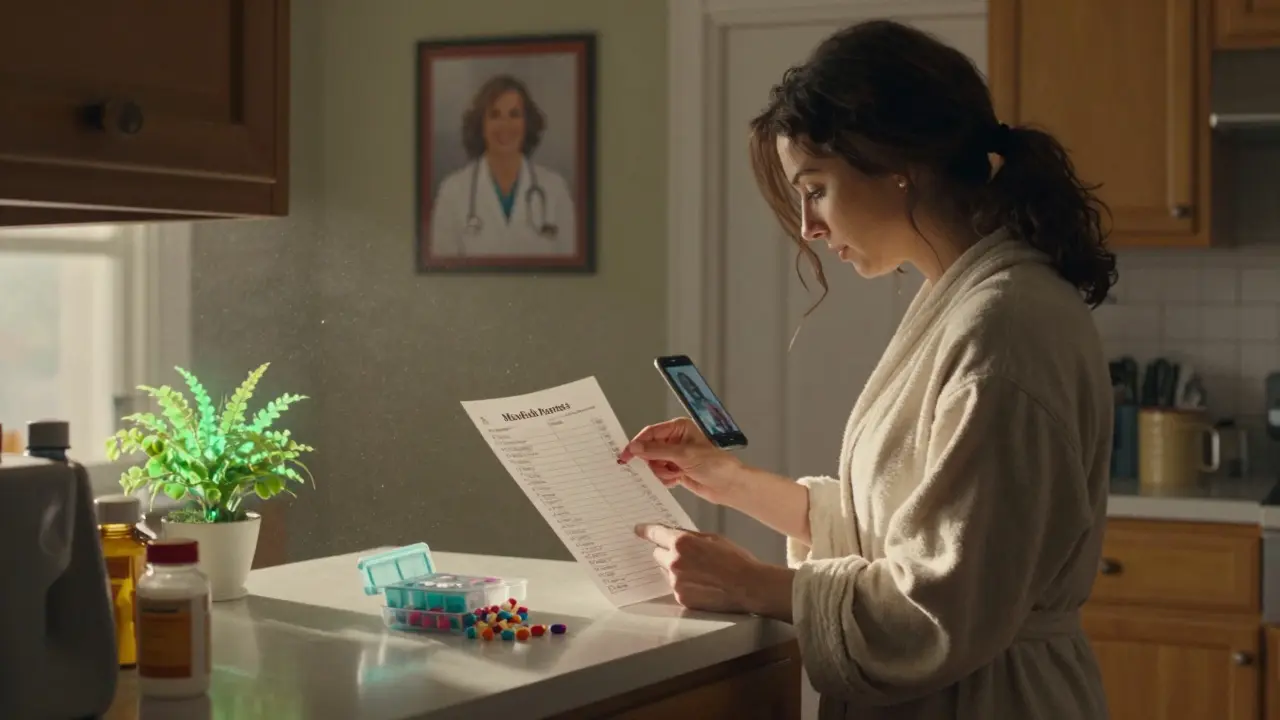
Keep a running list of all your medications - even over-the-counter ones. Include:- Drug name (brand and generic)
- Dosage
- How often you take it
- Why you take it
- When you last refilled it
Bring this list every time you visit a pharmacy - even if you’re just picking up one new medicine. It helps the pharmacist spot conflicts. For example, if you’re on blood thinners and they try to give you a new cold medicine that contains ibuprofen, your list will trigger a warning.
Use your phone. Take a photo of your list. Update it after every doctor’s visit. You don’t need an app. A simple note in your Notes app works.
What You Can’t Do - And What You Shouldn’t Try
Some things sound like good ideas - but aren’t practical or safe.- Don’t try to check drug interactions yourself. There are too many variables. Let the pharmacist do it with their software.
- Don’t rely on Google. A random blog might say “this drug causes seizures” - but that’s only in 1 in 10,000 cases. Pharmacists use verified databases, not web searches.
- Don’t assume your doctor’s note is enough. Sometimes doctors write “20mg” and the pharmacy misreads it as “200mg.” Your checklist catches that.
- Don’t wait until you feel sick to check. The goal is to catch errors before they cause harm.

Real Stories - What Happens When People Don’t Check
In 2022, a 72-year-old man in Sydney picked up a new prescription for warfarin - a blood thinner. He’d been on it for years. The new bottle said 5mg. He’d always taken 2.5mg. He didn’t ask. Two weeks later, he had a major bleed. His blood test showed his INR level was dangerously high. The pharmacy had accidentally dispensed double the dose. He survived, but spent three weeks in hospital. In another case, a woman in Brisbane got a refill of her asthma inhaler. The label said “albuterol.” She didn’t check the strength. She’d always used 90mcg per puff. This one was 180mcg. She used it as normal. Within hours, her heart started racing. She went to the ER. The pharmacist later admitted they’d swapped the strength - a common error with inhalers.Both cases were preventable. Neither person used a checklist.
How This Fits Into the Bigger Picture
You might think: “Why should I do this? Isn’t this the pharmacist’s job?” Yes - it is. But systems fail. People get tired. Prescriptions get misread. Technology glitches. No system is perfect.Pharmacies in Australia follow strict guidelines from the Therapeutic Goods Administration (TGA) and the Pharmaceutical Society of Australia. They use double-checking systems. They scan barcodes. They log every dispense. But even with all that, errors slip through. Why? Because human error isn’t eliminated by technology - it’s reduced.
Your checklist is the final human safety net. It’s not about distrust. It’s about smart collaboration. The pharmacy does its job. You do yours. Together, you stop errors before they hurt someone.
Start Today - One Step at a Time
You don’t need to memorize all eight steps right away. Pick one to start with. Maybe it’s checking the name on the bottle. Then next time, add the dosage. After a few visits, you’ll be doing the whole list without thinking.Keep a printed copy of the checklist in your wallet. Or save it on your phone. Set a reminder: “Check pharmacy meds every time.”
This isn’t about fear. It’s about control. You know your body better than anyone. If something feels off - trust that. And always ask.
Do I need to check my medicine every time, even if it’s the same drug?
Yes. Manufacturers change pill appearance, dosages get adjusted, and pharmacies sometimes switch suppliers. Even if you’ve taken the same medicine for years, always verify the name, dose, and appearance. One woman in Queensland took her blood pressure pill for 10 years - then got a new batch that looked completely different. She didn’t ask, and ended up with dangerously low blood pressure. Always check.
What if the pharmacist gets annoyed when I ask questions?
Most won’t. In fact, Australian pharmacists are trained to welcome questions. If someone seems irritated, ask to speak to the pharmacist in charge. If they still dismiss you, consider going to another pharmacy. Your safety matters more than convenience. There are over 5,800 pharmacies in Australia - you have options.
Can I use a mobile app to check my prescriptions?
Apps like Medisafe or MyTherapy can remind you when to take pills and track side effects, but they can’t verify if the pharmacy gave you the right medicine. No app can replace physically checking the label, dosage, and pill appearance. Use apps as supplements - not substitutes.
Is it safe to pick up someone else’s prescription?
Only if you’re authorized to do so - like a caregiver for an elderly parent. Even then, you must verify the name on the bottle matches the person it’s for. Never pick up a prescription for someone else unless you’re certain of their identity and medication history. Mistakes here can be deadly.
What should I do if I realize I took the wrong medicine?
Stop taking it immediately. Call your pharmacist or doctor. If you’re feeling unwell, go to the nearest emergency department. Don’t wait. Bring the bottle and the prescription with you. Most errors are caught quickly if you act fast. The longer you wait, the higher the risk.
Amadi Kenneth
March 20, 2026 AT 06:26Shameer Ahammad
March 21, 2026 AT 23:11Alexander Pitt
March 23, 2026 AT 06:16Manish Singh
March 23, 2026 AT 20:57Nilesh Khedekar
March 23, 2026 AT 21:24Robin Hall
March 24, 2026 AT 04:11jared baker
March 24, 2026 AT 04:24Michelle Jackson
March 25, 2026 AT 04:52Andrew Mamone
March 26, 2026 AT 12:47