

Passing a kidney stone is often described as one of the most intense pains a person can experience. But for many, the real nightmare isn't the first stone-it's the realization that they keep coming back. If you've already had one, you're not just dealing with a random event; you're likely managing a chronic metabolic condition. In fact, without a specific plan, about 50% of people will see another stone within five years. The good news? You have a massive amount of control over whether that happens through a few strategic shifts in how you eat and drink.
Understanding the Cycle of Recurrence
Most people treat kidney stones like a broken bone: once it's fixed, you're done. However, Kidney Stone Disease is a chronic metabolic disorder where mineral deposits form in the kidneys due to an imbalance of substances in the urine . It isn't just about "bad luck"; it's about how your body processes calcium, oxalate, and citrate.
If you don't change the environment in your kidneys, the stones will likely return. Data shows recurrence rates climbing from 14% at one year to over 50% by the ten-year mark. This isn't just a matter of discomfort; recurrent stones can lead to permanent damage, with roughly 19% of repeat stone-formers eventually developing chronic kidney disease. Treating this as a lifelong management project rather than a one-time emergency is the only way to stay stone-free.
The Golden Rule of Hydration
If there is one single most important factor in preventing a new stone, it is your urine volume. When your urine is concentrated, minerals crash out of the liquid and stick together, forming a crystal. When your urine is diluted, those minerals stay dissolved and simply wash out of your system.
To keep things moving, you need to aim for a 24-hour urine volume of at least 2.5 liters. This doesn't mean just drinking 2.5 liters of water; you actually need to drink more (usually 2.5 to 3 liters) to account for the fluid you lose through breathing, sweating, and other bodily functions. If you're exercising or living through a hot summer, you'll need even more.
A common mistake is relying on thirst. By the time you feel thirsty, your body is already dehydrated, and your kidneys are already concentrating your urine. Use a marked water bottle to track your intake throughout the day to ensure you're hitting your targets consistently.
The Calcium Paradox: Why You Shouldn't Cut It Out
One of the biggest myths in kidney stone prevention is that you should avoid calcium-rich foods because most stones are made of calcium oxalate. It sounds logical, right? But in reality, cutting out calcium is one of the worst things you can do.
Here is why: Calcium is a mineral that, when eaten with meals, binds to oxalate (a naturally occurring compound in many plants) in your digestive tract. When they bind together in the gut, they are excreted in your stool. If you don't have enough calcium in your system, that oxalate is absorbed into your bloodstream and travels to your kidneys, where it meets calcium in your urine and forms a stone. By keeping a moderate amount of calcium in your diet, you're actually blocking oxalate from ever reaching your kidneys.
| Component | Recommended Action | Why it Matters |
|---|---|---|
| Water | 2.5 - 3 Liters Daily | Dilutes minerals to prevent crystallization |
| Calcium | Maintain moderate intake | Binds oxalate in the gut to prevent kidney absorption |
| Sodium (Salt) | Limit to 2g (5g salt) daily | High salt forces more calcium into the urine |
| Animal Protein | Limit to ~8 oz per day | Reduces acid load and increases citrate levels |
| Citrate | Increase (e.g., lemon juice) | Naturally inhibits crystal growth |

Managing Oxalates and Sodium
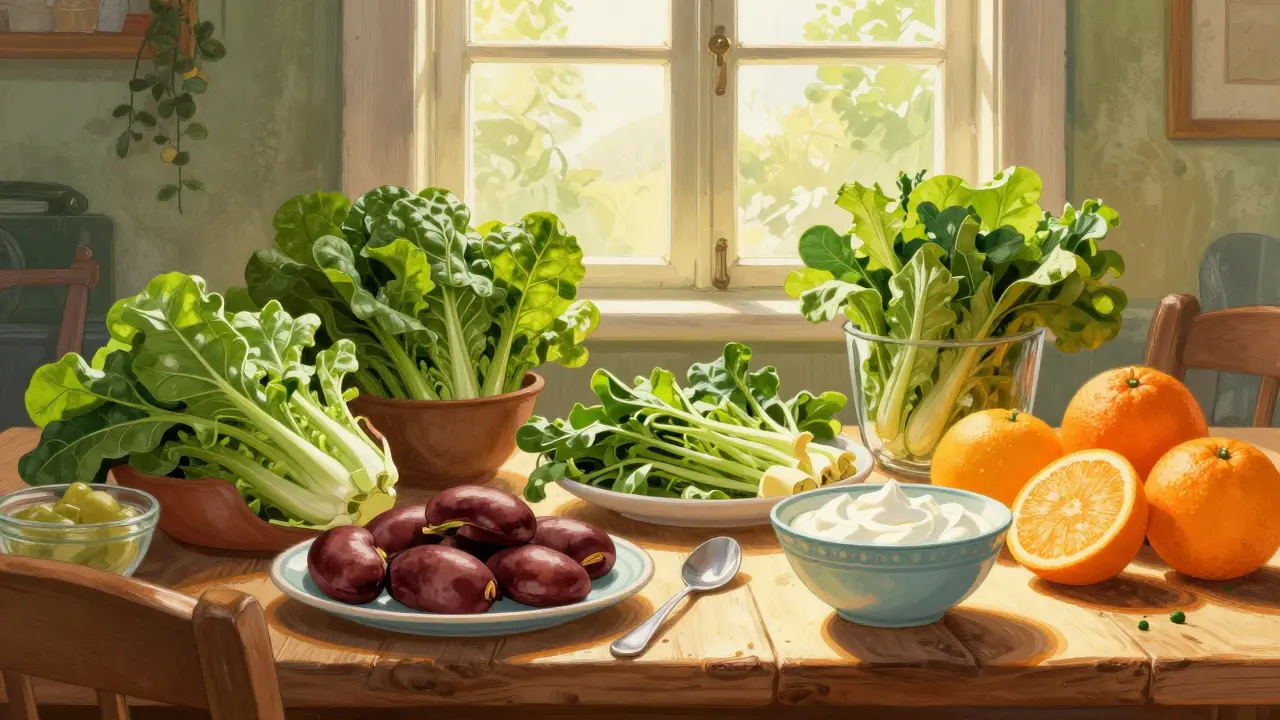
While you shouldn't fear calcium, you should be mindful of Oxalate is a compound found in high concentrations in foods like spinach, beets, and rhubarb that combines with calcium to form stones . The trick isn't necessarily to stop eating these foods entirely, but to pair them with calcium. For example, if you're having a salad with spinach, adding some feta cheese or a yogurt-based dressing can help neutralize the oxalate right there in your stomach.
Sodium is another hidden culprit. Most of the salt we eat doesn't come from the shaker on the table; about 75% comes from processed and packaged foods. When you eat too much sodium, your kidneys excrete more calcium into your urine. This creates a "perfect storm" where there is plenty of calcium in the urine to bond with whatever oxalate is present. Switching to fresh ingredients and reading labels for hidden sodium is a critical step in long-term prevention.
The Power of Citrate
If calcium and oxalate are the "bricks" of a kidney stone, Citrate is the "glue" that prevents them from sticking together. Citrate binds to calcium in the urine, preventing it from forming crystals with oxalate. It also makes existing crystals less likely to grow.
One of the easiest ways to boost your citrate levels is by adding fresh lemon juice to your water. This is a simple, low-cost habit that provides a meaningful protective effect. Some people also find success with lemonade or orange juice, though you have to be careful with the added sugar in those options, as high sugar intake can also contribute to stone risk.
A Long-Term Strategy for Success
Prevention is not a "one and done" deal. Because this is a chronic condition, the dietary changes need to be sustainable for years, not just a few weeks after a painful episode. A multidisciplinary approach is often the most effective, involving a urologist for surgical needs and a dietitian to help refine your eating patterns.
Many experts recommend the DASH diet-originally designed for hypertension-because it emphasizes fruits, vegetables, and low-sodium intake, which aligns perfectly with kidney stone prevention. Some studies suggest the DASH diet can reduce the risk of recurrence by as much as 40-50%.
To know if your plan is working, you can ask your doctor about a 24-hour urine collection test. This provides a biochemical snapshot of exactly what's happening in your kidneys-measuring your citrate levels and pH-allowing you to tweak your diet based on hard data rather than guesswork.
Should I stop eating spinach and nuts to avoid oxalates?
Not necessarily. Total avoidance is rarely required and can be difficult. Instead, the key is to eat calcium-rich foods at the same time as your high-oxalate foods. This allows the calcium to bind to the oxalate in your gut, ensuring it leaves your body through your stool rather than your kidneys.
Is drinking coffee or tea okay, or does it cause stones?
Coffee and tea are generally acceptable as part of your fluid intake. While some teas contain oxalates, the overall benefit of the fluid they provide usually outweighs the risk. However, if you are extremely sensitive to oxalates, you may want to monitor your intake or stick primarily to water.
How much water do I actually need to drink per day?
The goal is to produce at least 2.5 liters of urine in 24 hours. To achieve this, most people need to drink between 2.5 and 3 liters of fluids daily. This amount should increase if you are exercising, living in a hot climate, or experiencing a fever.
Do fizzy drinks help or hurt?
Fizzy drinks, particularly colas, are generally discouraged. Some contain phosphoric acid and high levels of fructose, which can alter urinary chemistry and potentially increase the risk of stone formation. Water with a squeeze of fresh lemon is a far superior alternative.
Can medications help if diet isn't enough?
Yes, medications can be used for specific types of stones. However, their effectiveness varies. For some, thiazide diuretics are used to reduce calcium excretion, though some recent studies suggest they may not be substantially more effective than a placebo for everyone. Always consult a urologist to see if medication is appropriate for your specific stone composition.
Next Steps for Prevention
If you've recently passed a stone, your first step should be to ensure your doctor has performed a stone composition analysis. Not all stones are the same; while calcium oxalate is the most common, uric acid or struvite stones require different dietary approaches.
For those starting a prevention plan today: start by buying a 1-liter water bottle and commit to drinking three of them daily. Next, audit your pantry for high-sodium processed foods and replace them with whole-food alternatives. Finally, start adding fresh lemon to your water. These three small shifts tackle the most significant drivers of stone recurrence.
Robin Walton
April 9, 2026 AT 13:15Drinking that much water sounds like a lot, but it's so worth it to avoid that kind of pain. I really appreciate the tip about the marked water bottle because it's so easy to forget when you're busy.