
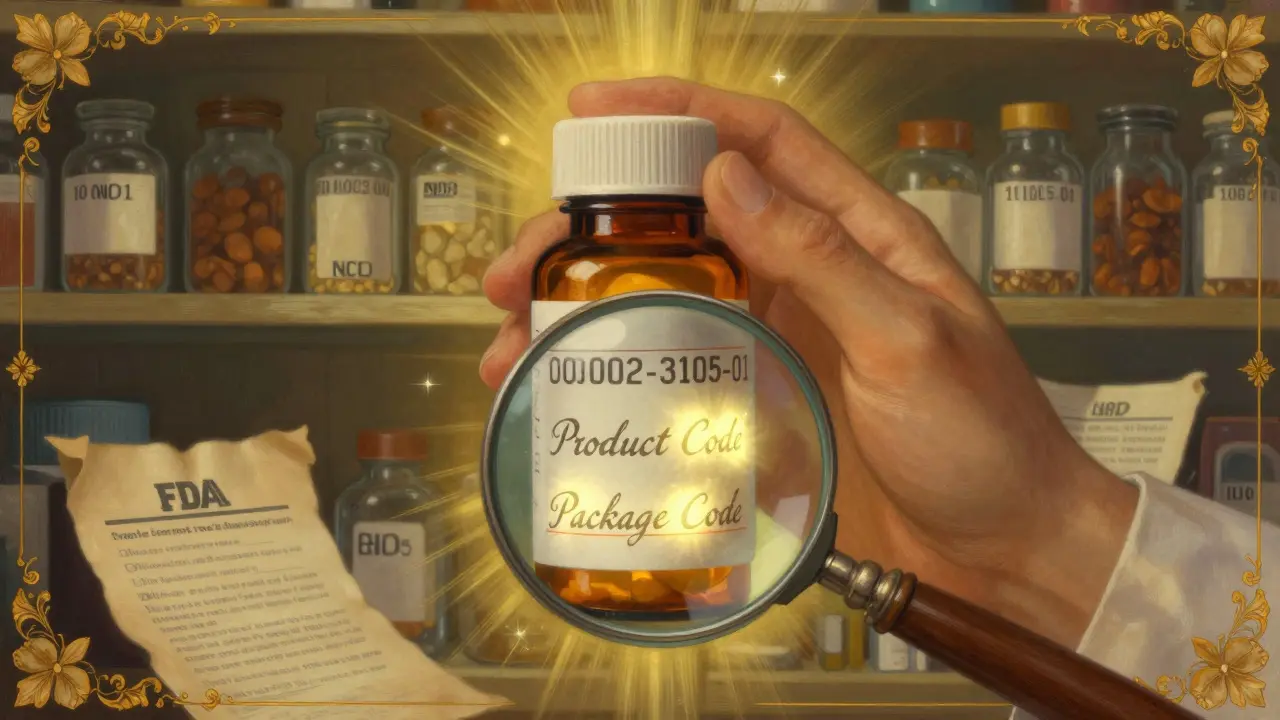
Getting the right medication isn’t just about the name on the bottle. One wrong digit in the NDC number can mean giving a patient a 20mg dose instead of 10mg-or worse, the wrong drug entirely. In U.S. pharmacies, nearly 1 in 8 dispensing errors trace back to misreading the National Drug Code. If you work in healthcare, you’ve probably seen it: a bottle labeled with a string of numbers, a hyphen here, another there, and no clear explanation of what each part means. But once you learn how to read it, the NDC becomes your most reliable tool for catching mistakes before they reach the patient.
What Is the NDC Number?
The National Drug Code, or NDC, is a unique 10-digit identifier assigned to every medication sold in the United States. It’s not just a barcode number-it’s a structured code that tells you exactly which company made the drug, what’s in it, and how it’s packaged. Think of it like a license plate for medications. Every prescription, over-the-counter pill, and injectable has one. The FDA requires it on all packaging, and billing systems depend on it to process claims. But here’s the catch: the number you see printed on the bottle isn’t always the one you need to use. That’s where confusion starts.
The Three Parts of the NDC
The NDC breaks down into three segments, each with a specific job:
- Labeler Code (first segment): This 4- to 6-digit number identifies the manufacturer, repacker, or distributor. For example, if you see “00002” at the start, that’s Eli Lilly. This code stays the same no matter how the drug is packaged.
- Product Code (second segment): This 3- to 4-digit code tells you the active ingredient, strength, and dosage form. Two pills might look identical, but if one says “3105” and the other says “4465,” one is 10mg and the other is 20mg. This is where most errors happen.
- Package Code (third segment): This 1- to 2-digit number shows the package size. “01” might mean a 30-count bottle. “02” could mean 100 tablets. If the prescription says 90 pills but the NDC shows a 30-count, you’ve got a mismatch.
These segments are usually separated by hyphens, like this: 00002-3105-01. But not all labels use the same format. Some are 4-4-2, others are 5-3-2. That’s intentional. The FDA allows flexibility so manufacturers can fit the code on small packages. But your pharmacy system doesn’t care about flexibility-it wants an 11-digit number.
Why the 11-Digit Format Matters
When you’re filling a prescription, the system asks for an 11-digit NDC. But the label on the bottle? It’s 10 digits. So what’s the deal? The extra digit is a zero added to make the format uniform. Medicare, Medicaid, and most insurers require the 5-4-2 format: five digits for the labeler, four for the product, two for the package.
Here’s how you convert:
- If the format is 4-4-2 (like 0002-3105-01), add a zero at the start of the labeler code → 00002-3105-01
- If it’s 5-3-2 (like 12345-310-01), add a zero to the product code → 12345-0310-01
- If it’s 5-4-1 (like 12345-3105-1), add a zero to the package code → 12345-3105-01
Miss this step, and your claim gets rejected. Worse, if you’re not paying attention, you might think the original 10-digit code is correct and dispense the wrong package size. That’s how a patient ends up with 30 pills instead of 90-or, in rare cases, the wrong strength entirely.

How to Verify the NDC Step by Step
Here’s how to use the NDC like a pro:
- Find the NDC on the packaging. It’s usually printed near the barcode, sometimes in red circles as shown in FDA training materials. Don’t rely on the box-check the actual vial or blister pack.
- Count the digits between hyphens. Is it 4-4-2? 5-3-2? 5-4-1? Write it down. This tells you how to convert it.
- Convert to 5-4-2 format. Add the zero in the right place. Don’t guess. Use a chart or a mobile app.
- Compare each segment to the prescription. Does the labeler match the brand you expect? Does the product code match the strength and form? If the script says “20mg tablet” and the NDC product code corresponds to “40mg capsule,” stop. Don’t dispense.
- Double-check with the FDA NDC Directory. Go to fda.gov/drugs/drug-approvals-and-databases/national-drug-code-directory. Type in the full 11-digit code. It will show you the exact drug name, manufacturer, and approved use. If it doesn’t match, there’s a problem.
Pharmacists who use this method report a 60% drop in dispensing errors within their first three months. It’s not magic-it’s procedure.
Common Mistakes and How to Avoid Them
Even experienced staff mess this up. Here are the top three errors:
- Mixing up product and package codes. One pharmacist thought “02” meant 20 pills. It meant 100. Always check the FDA directory-never assume.
- Using the wrong format. A pharmacy used a 4-4-2 code as 5-4-2 without adding the zero. Claims got denied. Patients got delayed refills.
- Ignoring discontinued codes. In 2023 alone, over 8,500 NDCs were deactivated. If the drug looks unfamiliar, verify it’s still active. The FDA updates its directory daily.
Pro tip: Always say the NDC out loud during double-checks. “Zero-zero-zero-zero-two, hyphen, three-one-oh-five, hyphen, zero-one.” Hearing it helps your brain catch mismatches your eyes miss.
Tools That Help
You don’t have to memorize every code. Use these:
- FDA’s NDC Directory (free): Search by NDC, drug name, or manufacturer. Works on mobile.
- ASHP’s NDC Verification Guide (free download): Includes conversion charts and common error patterns.
- Commercial tools like AAPC Codify: Integrates with EHRs and auto-converts formats. Costs about $129/month, but saves hours of manual checks.
Most hospitals now require two people to verify high-risk meds using NDC. That extra 37 seconds per dose? It’s worth it. A 2022 study found that double-checks with NDC verification cut errors by 74%.
What’s Changing in 2025?
The FDA is moving toward a single 12-digit NDC format by 2025. No more 4-4-2 or 5-3-2. Everything will be 6-4-2: six digits for the labeler, four for the product, two for the package. This eliminates confusion. But until then, you need to be fluent in the old system.
Why does this matter? Because as supply chains get more complex-with drugs shipped across borders, repackaged in warehouses, and sold through online pharmacies-the NDC is the only thing that keeps everything traceable. The Drug Supply Chain Security Act (DSCSA) now requires every package to carry its NDC for electronic tracking. If you can’t read it, you can’t verify it. And if you can’t verify it, you’re putting patients at risk.
Final Thought: It’s Not Just a Number
The NDC isn’t a bureaucratic requirement. It’s a safety net. A single digit can mean the difference between healing and harm. That’s why every pharmacist, technician, and nurse who handles meds needs to know how to read it-not just for billing, but for life.
Can two different drugs have the same NDC number?
No. Each NDC is unique to one product, manufacturer, strength, dosage form, and package size. If two drugs have the same NDC, one is counterfeit or mislabeled. Always verify the NDC against the FDA directory before dispensing.
What if the NDC on the bottle doesn’t match the prescription?
Stop. Don’t dispense. Contact the prescribing provider immediately. The most common cause is a change in manufacturer or repackaging. The active ingredient may be the same, but inactive ingredients, dosage form, or strength could differ. Never assume they’re interchangeable.
Do I need to convert the NDC for every prescription?
Yes-if you’re submitting a claim to Medicare, Medicaid, or most private insurers. They require the 11-digit 5-4-2 format. Even if you’re just dispensing, converting ensures you’re matching the exact product. It’s a best practice for safety, not just billing.
How often are NDC numbers updated?
The FDA updates its NDC Directory daily. Manufacturers add new codes, discontinue old ones, or change packaging. A code that worked last week might be inactive today. Always check the directory before dispensing unfamiliar drugs.
Is the NDC the same as the barcode?
The barcode usually contains the NDC, but it’s not always readable by all scanners. Some scanners only read the 10-digit version. Always verify the printed NDC number against the barcode. If they don’t match, investigate before proceeding.
What should I do if I can’t find the NDC on the packaging?
Do not dispense. Contact the supplier or manufacturer. Some small packages (like inhalers or single-dose vials) may have the NDC on the outer box only. If you can’t verify it, return the product. Never guess.
Mike Dubes
March 4, 2026 AT 08:50Man, this post saved my butt last week. I almost gave a patient the 20mg instead of 10mg because I didn't catch the product code difference. Took me 10 minutes to realize the NDC on the bottle was 0002-3105-01 and the system wanted 00002-3105-01. That zero matters more than you think. Thanks for laying it out so clear.
Helen Brown
March 4, 2026 AT 11:15This whole NDC thing is a government scam to make pharmacists work harder. I've been doing this for 20 years and never needed to convert anything. The barcode works fine. Why make it complicated?
John Cyrus
March 5, 2026 AT 04:58You people are overcomplicating this. The FDA says 5-4-2. That's it. If you can't read a hyphenated number then maybe you shouldn't be handling meds. I've seen too many nurses guess and then blame the system. Stop being lazy and learn the format. Period.
John Smith
March 6, 2026 AT 05:56Bro this is the real MVP of pharmacy life. I used to roll my eyes at NDC checks until I caught a fake oxycodone that had the same labeler code as the real stuff but the product code was for acetaminophen. That shit could've killed someone. Now I yell it out loud like the post says - ZERO ZERO ZERO ZERO TWO HYPHEN THREE ONE OH FIVE HYPHEN ZERO ONE. My partner says I sound like a robot but I'm alive and so are my patients.
Jessica Chaloux
March 7, 2026 AT 13:14I just read this and cried. I had a patient last month who almost got the wrong med because I trusted the barcode. I felt so guilty. Thank you for this. I'm going to print this out and put it on my station. I love you guys.
Raman Kapri
March 7, 2026 AT 20:02The assertion that the NDC prevents errors is not empirically validated. In India, we rely on generic names and batch numbers. The American obsession with numeric codes reflects systemic inefficiency. Perhaps the real issue is lack of standardization across international supply chains.
Tildi Fletes
March 7, 2026 AT 20:55While the procedural guidance provided is technically accurate, one must also consider the cognitive load imposed on frontline staff. The necessity of manual conversion increases the risk of human error despite best intentions. A more sustainable solution would involve system-level integration rather than individual vigilance.
Siri Elena
March 9, 2026 AT 00:26Oh honey, you’re telling me we need to convert numbers because the FDA can’t decide on a format? How cute. I mean, really - 5-4-2? 4-4-2? Who’s in charge here, a toddler with a keyboard? At least we get to say ‘hyphen’ out loud now. That’s our new morning ritual. ☕
Divya Mallick
March 10, 2026 AT 18:14USA still clinging to outdated 10-digit codes while India has moved to blockchain-based drug traceability since 2021. This NDC charade is a colonial relic. We have AI-powered QR verification across 5000+ pharmacies. You're still arguing over hyphens? Wake up. The future is here and it doesn't need your zero-padding.
Pankaj Gupta
March 12, 2026 AT 01:17The breakdown of NDC components is clearly articulated and aligns with FDA guidelines. The conversion rules for 5-4-2 format are logically consistent with the regulatory framework. It is recommended that practitioners maintain a reference chart for common labeler codes to reduce cognitive overhead.
Alex Brad
March 13, 2026 AT 16:17Check the label. Count the hyphens. Add the zero. Double-check the FDA site. Do it every time. No excuses.
Renee Jackson
March 15, 2026 AT 14:02This is precisely the kind of foundational knowledge that should be embedded in every pharmacy training program. The attention to detail required here is not merely procedural - it is ethical. Thank you for articulating this with such clarity and urgency. The lives we touch depend on this rigor.
RacRac Rachel
March 17, 2026 AT 07:30OMG this is literally the most important thing I’ve read all year 🥹💖 I printed it, laminated it, and stuck it next to my coffee maker. Now I say the NDC out loud while brushing my teeth. My cat judges me but my patients are safe. 10/10 would recommend. 🙌💊