

When your acne doesn’t respond to creams, antibiotics, or hormonal treatments, and your skin is covered in painful, deep cysts that won’t go away, you’re not just dealing with a skin problem-you’re dealing with a life-altering one. That’s where isotretinoin comes in. It’s not just another acne pill. It’s the most effective treatment for severe nodular and cystic acne, with about 80% of patients achieving long-term clearance after one course. For many, it’s the difference between hiding behind makeup and finally seeing your own face in the mirror.
How Isotretinoin Actually Works
Isotretinoin isn’t a typical acne medication. It’s a synthetic form of vitamin A, but it doesn’t just treat surface symptoms. It attacks acne at its source. First, it shrinks your oil glands by up to 90%. Less oil means fewer clogged pores and less food for the bacteria that cause inflammation. Second, it changes how skin cells behave, stopping them from sticking together and blocking pores. Third, it reduces redness and swelling by calming the immune system’s overreaction. And fourth, by cutting off the oily environment, it makes life impossible for Cutibacterium acnes, the bacteria that turns clogged pores into angry pimples.
This isn’t guesswork. Clinical studies show that after 5 to 8 months of treatment, most people don’t just get better-they stay better. Unlike antibiotics, which only work as long as you take them, isotretinoin often delivers permanent results. One study in JAMA Dermatology found that 80% of patients had no acne recurrence five years after finishing treatment. That’s why dermatologists call it the gold standard.
What You Need to Know About Safety
Isotretinoin is powerful, and that means it comes with serious risks. The biggest one is birth defects. If you’re pregnant or become pregnant while taking it, the risk of severe fetal abnormalities is extremely high. That’s why in the U.S., every patient must enroll in the iPLEDGE program. This system requires two negative pregnancy tests before you start, monthly tests during treatment, and two forms of birth control if you’re capable of becoming pregnant. You can’t get your first prescription until all these steps are completed-usually taking 7 to 10 days.
Outside of pregnancy risks, there are other safety concerns. About 90% of people experience dry lips, and many also get dry eyes, nosebleeds, or peeling skin. These aren’t just annoyances-they can be severe enough to disrupt daily life. Using petroleum-based lip balm 5 to 10 times a day helps. For dry eyes, artificial tears can make a big difference. Some people report joint pain or muscle aches, and in rare cases, liver enzymes rise or triglycerides spike. That’s why lab tests aren’t optional.
Lab Monitoring: What Gets Checked and Why
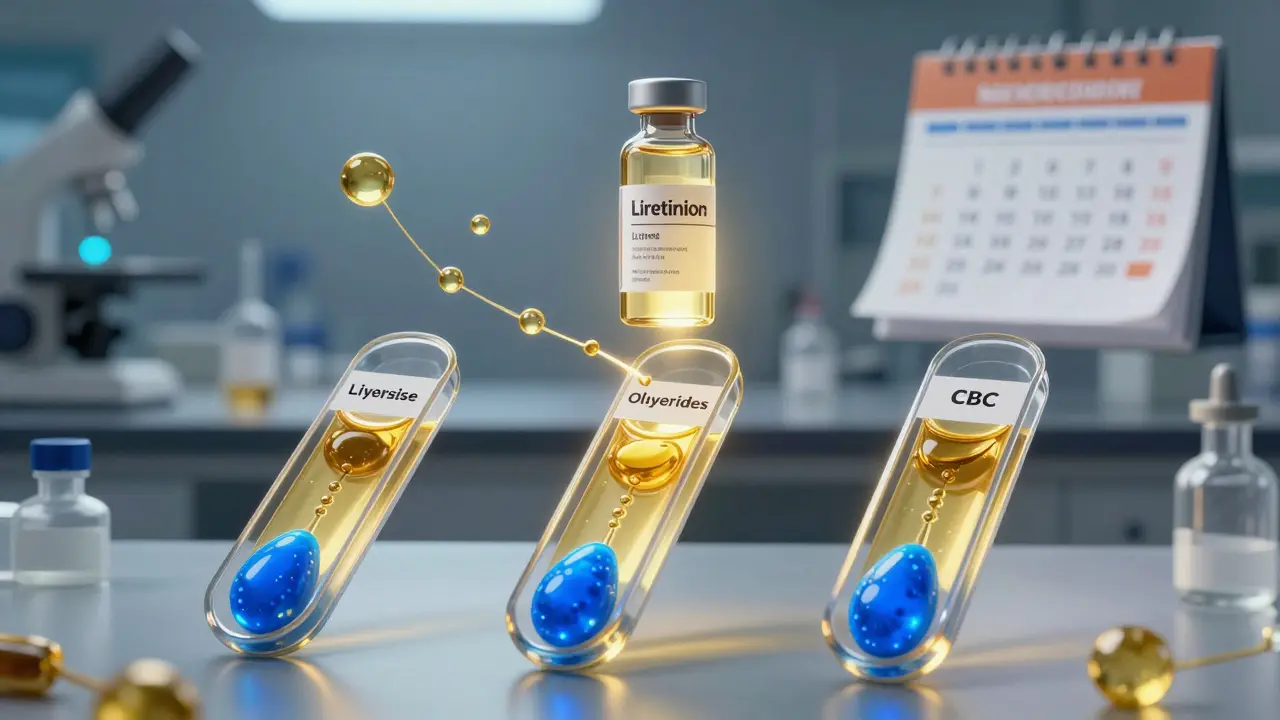
Before you even take your first pill, your doctor will order three key blood tests: a complete blood count (CBC), liver function tests (ALT, AST), and a lipid panel (cholesterol and triglycerides). These aren’t just routine checks-they’re your early warning system.
Why? Because isotretinoin can affect your liver and cholesterol. About 15-20% of patients see their triglycerides rise enough to require a dose change or temporary pause. High triglycerides can lead to pancreatitis, a dangerous condition. Liver enzymes might also climb, though serious liver damage is extremely rare. Your doctor will repeat these tests 4 to 8 weeks after you start, and then every 1 to 2 months after that. If numbers go too high, they’ll adjust your dose or stop treatment.
It’s not just about safety-it’s about effectiveness. If your triglycerides are too high, you can’t keep taking the drug. That’s why these labs aren’t bureaucracy. They’re part of the treatment plan.
Dosing: More Isn’t Always Better
For years, the standard was 0.5 to 1.0 mg per kilogram of body weight per day. But newer research is changing that. A 2023 review of 32 studies in the Journal of Cosmetic Dermatology found that a low-dose regimen-just 0.5 mg/kg/day, taken in one week every four weeks for six months-achieved an 88% success rate. Another study from the NIH in 2014 showed that 20 mg daily for three months worked for 90% of people with moderate to severe acne, with only a 4% relapse rate.
This matters because high doses don’t always mean better results-they just mean more side effects. Dry skin, nosebleeds, and mood changes become more likely. Many dermatologists now start low and adjust based on response and tolerance. For example, someone weighing 70 kg might start at 20 mg daily instead of 70 mg. If acne clears by month 4, they might stop. If not, they’ll go longer.
The goal isn’t just to clear acne-it’s to clear it without making life unbearable. That’s why personalized dosing is becoming the new norm.
Results: What to Expect
Most people start seeing improvement around week 6 to 8. But here’s the catch: your acne might get worse before it gets better. About 30-40% of patients experience a flare in the first month. It’s not a sign the drug isn’t working-it’s part of the process. Your doctor will tell you to keep going, and most flares resolve by week 10.
By the end of 5 to 8 months, most patients are 90% clear or better. Some are completely clear. The best part? The results usually last. A 2023 study from the Dermatology Group of the Carolinas found that 90% of patients didn’t need another course of isotretinoin-even 10 years later. That’s why so many people call it life-changing.
But it’s not just about skin. Mental health improves too. Studies show that after treatment, self-esteem and quality of life scores rise significantly. People stop avoiding photos. They start wearing shorts again. They stop feeling like their acne defines them.
Side Effects: The Real Talk
Let’s be honest: isotretinoin isn’t easy. The dryness is constant. Lips crack. Skin flakes. Eyes feel gritty. Nosebleeds happen. You’ll need to moisturize constantly, use a gentle cleanser, and avoid harsh exfoliants. Some people get headaches, dizziness, or trouble sleeping. Rarely, people report mood changes or depression. While the link between isotretinoin and depression isn’t proven, doctors still ask about your mood at every visit.
One of the most under-discussed issues is long-term dryness. A 2023 Mayo Clinic report noted that in some cases, dry skin or lips never fully return to how they were before treatment. That doesn’t mean the treatment failed-it just means you might need to keep using moisturizer and lip balm indefinitely.
And then there’s the iPLEDGE program. Many patients find it frustrating. You need to log in monthly, answer questions about contraception, and get your blood test results uploaded. Some say it feels like being treated like a criminal. But it’s designed to prevent birth defects-and it works. Since its launch, there have been fewer than 100 documented cases of isotretinoin-related birth defects in the U.S.

Who Shouldn’t Take It
Isotretinoin isn’t for everyone. If you have mild acne-just blackheads and a few pimples-it’s overkill. Topical retinoids or antibiotics will work better with far less risk. If you’re pregnant or planning to be, it’s off the table. If you have a history of inflammatory bowel disease (Crohn’s or ulcerative colitis), your doctor will likely avoid it, since isotretinoin can worsen it in rare cases.
People with liver disease, high triglycerides that can’t be controlled, or a history of depression should be evaluated carefully. It’s not an absolute no, but it requires extra caution.
What Comes After
Once you finish your course, you’re not done. You’ll need to keep using sunscreen daily-your skin will be more sensitive to the sun. You’ll also want to keep using a gentle moisturizer. Some people benefit from occasional topical retinoids to maintain results.
And if your acne comes back? It happens in about 10-20% of cases. But it’s usually milder than before. Many people can manage it with topical treatments alone. If it’s severe again, you might need a second course-but that’s rare.
The Bottom Line
Isotretinoin is not a quick fix. It’s not a first-line treatment. It’s not for everyone. But for people with severe, treatment-resistant acne, it’s the most effective option we have. It clears skin, restores confidence, and often gives you back your life.
The side effects are real. The labs are necessary. The pregnancy prevention rules are strict. But for many, the trade-off is worth it. If you’ve tried everything else and your skin is still breaking out, isotretinoin might be the answer you’ve been waiting for.
Can isotretinoin permanently cure acne?
Yes, for many people, isotretinoin leads to long-term or permanent clearance. About 80% of patients experience no recurrence after completing a full course. For some, acne returns mildly years later, but it’s usually much less severe than before treatment.
How long do you take isotretinoin?
Most people take isotretinoin for 5 to 8 months, depending on their weight and acne severity. The total cumulative dose is usually between 120 and 150 mg per kilogram of body weight. Some patients on low-dose regimens may take it for up to 6 months, while others with very severe acne may need up to 30 weeks.
Do you need blood tests while on isotretinoin?
Yes. Before starting, you need a baseline blood test for liver enzymes, cholesterol, triglycerides, and a complete blood count. After that, you’ll repeat these tests every 4 to 8 weeks during treatment. If triglycerides or liver enzymes rise too high, your doctor may pause or adjust your dose.
Can you drink alcohol while taking isotretinoin?
It’s not recommended. Alcohol can stress your liver, and isotretinoin already affects liver function. Combining the two increases the risk of liver damage. Even moderate drinking should be avoided during treatment.
What happens if you get pregnant while on isotretinoin?
If you become pregnant while taking isotretinoin, there is a very high risk of severe birth defects, including facial deformities, heart problems, and brain damage. If this happens, stop the medication immediately and contact your doctor. The iPLEDGE program exists to prevent this-so following its rules is critical.
Is isotretinoin safe for teens?
Yes, isotretinoin is commonly prescribed for teenagers with severe acne. It’s one of the most effective treatments for this age group. However, teens must be closely monitored for mood changes and side effects. Parents and doctors work together to ensure the benefits outweigh the risks.