

Imagine spending your entire day planning your life around the nearest bathroom. For millions of people, this isn't a nightmare-it's just a Tuesday. Irritable Bowel Syndrome is a chronic functional gastrointestinal disorder where the gut and brain don't communicate properly, leading to abdominal pain and unpredictable bowel habits. Also known as IBS, it affects about 10-15% of people worldwide. It isn't a disease you "cure" with a single pill; rather, it's a long-term condition that you manage through a mix of diet, lifestyle, and medicine.
What Does IBS Actually Feel Like?
IBS doesn't look the same for everyone. Some people deal with constant urgency, while others feel like they can't go at all. Most people start noticing symptoms in their 20s or 30s, and women are diagnosed about twice as often as men. The hallmark is recurrent abdominal pain, but that's usually accompanied by a few other frustrating things:
- Bloating: That feeling where your stomach is tight, swollen, and uncomfortably full, even if you haven't eaten much.
- Diarrhea: Watery stools and that sudden, "I need to go right now" urgency.
- Constipation: Straining during bowel movements or feeling like you haven't quite finished.
- Excess Gas: Increased belching or flatulence that can be painful.
Because the gut is so closely linked to the rest of the body, you might feel things outside your stomach. Around 70% of people with IBS report "extraintestinal" symptoms, like a lump in the throat (globus sensation), acid reflux, or even non-cardiac chest pain. It's a total-body experience that can make a simple dinner date feel like a high-stakes mission.
The Three Faces of IBS
Doctors generally group IBS into three subtypes based on your most common bowel habit. Knowing which one you have is the first step toward getting the right treatment.
| Subtype | Primary Symptom | Estimated Prevalence |
|---|---|---|
| IBS-D | Diarrhea-predominant | ~40% |
| IBS-C | Constipation-predominant | ~35% |
| IBS-M | Mixed (alternating both) | ~25% |
Identifying Your Triggers
If you have IBS, your gut is essentially an oversensitive alarm system. Things that don't bother other people might set off a flare-up for you. The most common culprits fall into three buckets: food, stress, and hormones.
Dietary triggers are the big ones. About 70% of patients struggle with specific foods. You've likely heard of the low-FODMAP diet. FODMAPs are types of carbohydrates (fermentable oligosaccharides, disaccharides, monosaccharides, and polyols) that are poorly absorbed in the small intestine, leading to fermentation and gas. Cutting these out-like avoiding certain beans, onions, and high-fructose fruits-can provide relief for up to 75% of people. Other common triggers include caffeine, alcohol, and greasy, fatty foods.
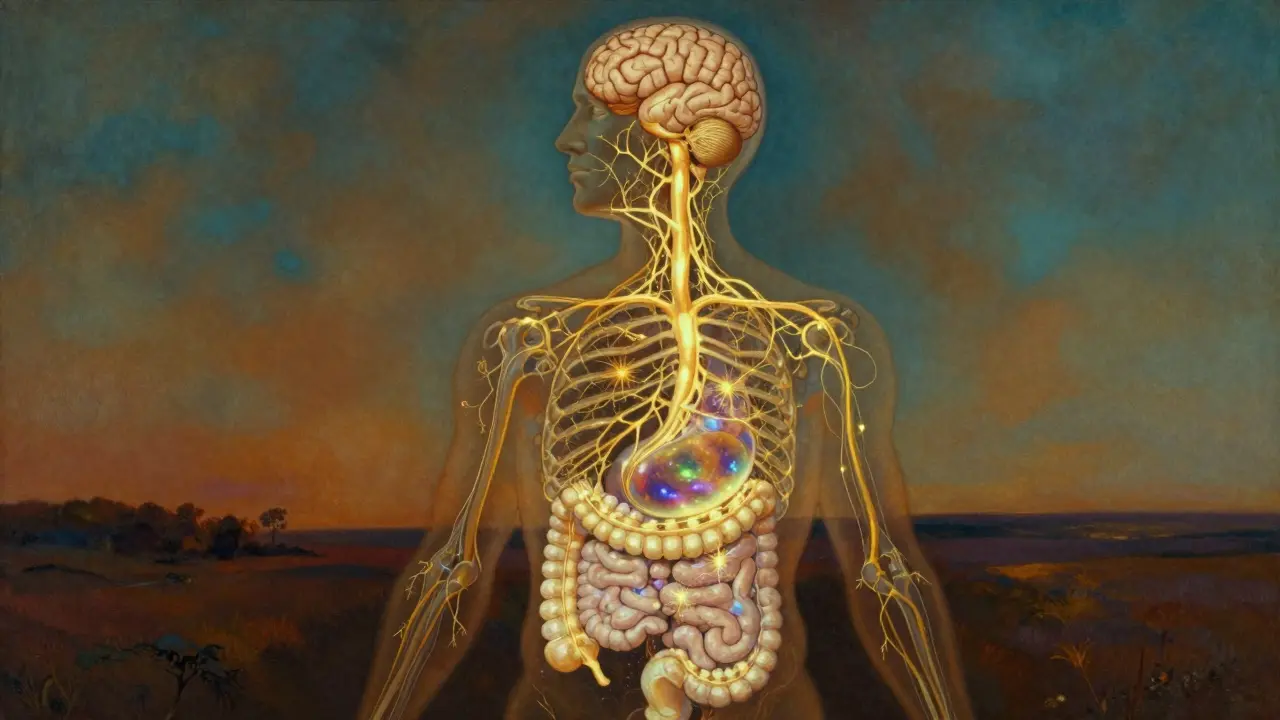
Then there's the mind. The gut-brain axis is the bidirectional communication line between your central nervous system and your enteric nervous system. When you're stressed, your brain sends signals that can make your gut contract too fast or too slow. This is why 60-80% of people notice their symptoms spike during a rough week at work.
For women, hormones play a huge role. Up to 70% of women report that their symptoms get significantly worse during their menstrual periods. Even something as common as a round of antibiotics can throw off your gut microbiota, triggering symptoms in about 25% of patients.
Medication Options: Which One Works?
There is no "one size fits all" pill for IBS. Your doctor will pick a medication based on your specific subtype. Here is how the current pharmaceutical landscape looks.
Managing Diarrhea (IBS-D)
If your main struggle is urgency, you have several options. Over-the-counter Loperamide (found in Imodium) is a go-to for many, helping about 60% of people slow things down, though it doesn't fix the root cause. For more severe cases, prescription drugs like Rifaximin (an antibiotic) or Eluxadoline can reduce abdominal pain and diarrhea, with about half of patients seeing significant improvement.
Managing Constipation (IBS-C)
When things are too slow, the goal is to get the bowel moving. Medications like Linaclotide and Plecanatide work by increasing fluid secretion in the intestine. Clinical data shows about 30-40% of patients achieve at least three complete bowel movements a week using these. Lubiprostone is another option that helps about 30% of patients by increasing fluid flow.
Pain and Global Control
If cramping is the worst part, antispasmodics like dicyclomine can help about 55% of people. Interestingly, low-dose antidepressants-specifically tricyclics like amitriptyline-are often used not for depression, but to "turn down the volume" of the signals between the gut and the brain. This helps about 40-50% of people manage their overall symptoms.
The Path to Diagnosis: Rules and Red Flags
You can't just decide you have IBS; you have to rule out more serious things first. Doctors use the Rome IV criteria, which require abdominal pain at least once a week for the last three months, linked to bowel movements or a change in stool frequency/appearance.
However, there are "red flag" symptoms that mean it's not just IBS and require immediate investigation:
- Unexpected weight loss (more than 10 pounds without trying).
- Rectal bleeding or blood in the stool.
- Iron deficiency anemia.
- Symptoms that start after age 50.
- Nocturnal diarrhea that wakes you up from a deep sleep.
If you have these, your doctor might order a colonoscopy or blood tests for celiac disease to make sure you aren't dealing with something like Inflammatory Bowel Disease (IBD).

Beyond the Pharmacy: Lifestyle and New Research
Medicine is only one piece of the puzzle. Many people find the most success with a multimodal approach. This might mean working with a dietitian to navigate the three phases of the low-FODMAP diet: elimination, reintroduction, and personalization. Roughly 70% of people can pinpoint their specific trigger foods during the reintroduction phase.
Mental health tools are also surprisingly effective. Cognitive behavioral therapy (CBT) and gut-directed hypnotherapy have response rates of 40-60%, making them as effective as some drugs for overall symptom control.
Looking forward, the science is getting more precise. Researchers are now investigating the Gut Microbiome to find specific bacterial signatures for different IBS types. There's even research into Fecal Microbiota Transplantation (FMT), which has shown a 35% remission rate in some studies, though it's still being refined for general use.
Is IBS the same as IBD?
No. IBS is a functional disorder, meaning the gut looks normal but doesn't work correctly. IBD (Inflammatory Bowel Disease), such as Crohn's or Ulcerative Colitis, involves actual physical inflammation and damage to the intestinal lining.
Can I do the low-FODMAP diet on my own?
While you can find lists online, it's highly recommended to do this with a registered dietitian. The diet is restrictive and meant to be temporary; doing it wrong can lead to nutritional deficiencies or failure to identify your actual triggers.
How long does it take for IBS medication to work?
Most medications show results within 2 to 4 weeks. However, low-dose antidepressants used for gut-brain modulation may take 4 to 8 weeks to reach full effectiveness.
Do probiotics actually help with IBS?
It depends on the strain. Not all probiotics are created equal. For example, Bifidobacterium infantis 35624 has shown consistent benefits in clinical trials, but many generic probiotics don't perform much better than a placebo.
Can stress actually cause IBS?
Stress doesn't necessarily "cause" the condition from scratch, but it is a powerful trigger. Because of the gut-brain axis, emotional distress can trigger the physical symptoms of IBS or make existing symptoms much worse.
Next Steps for Relief
If you suspect you have IBS, start by keeping a food and symptom diary for two weeks. Note what you ate, your stress levels, and your bowel habits. This data is gold for your doctor and helps them distinguish between the subtypes (D, C, or M) much faster.
If you're already diagnosed and feeling stuck, consider a "pivot" in your strategy. If diet hasn't worked, try a gut-directed therapy. If medications are causing side effects, talk to your provider about adjusting the dose or switching to a different class of drug. The goal isn't perfection, but a manageable baseline that lets you live your life without constantly searching for the nearest exit.