
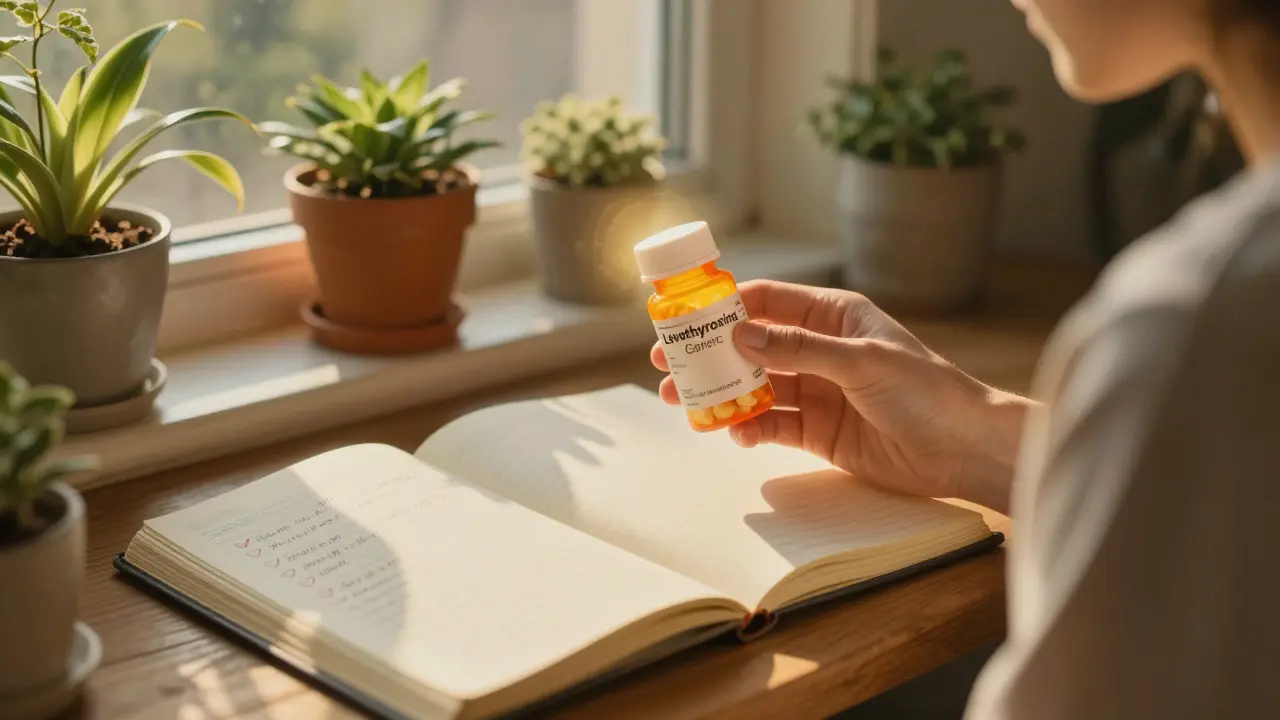
Switching from a brand-name drug to a generic version is one of the most common changes in your medication routine - and it’s usually completely safe. In fact, generic medications make up 92.6% of all prescriptions filled in the U.S. and save patients and the healthcare system billions every year. But even though generics are required by the FDA to be identical in active ingredients, strength, and dosage to their brand-name counterparts, some people notice changes after making the switch. That’s not because generics are inferior - it’s because your body might react differently to small differences in inactive ingredients, manufacturing processes, or even pill shape. The key isn’t to avoid generics - it’s to know how to monitor your health after switching.
Why You Might Notice a Difference
Generic drugs must prove they deliver the same amount of active ingredient into your bloodstream as the brand-name version. This is called bioequivalence. The FDA requires that the 90% confidence interval for the absorption rate (measured by AUC and Cmax) falls between 80% and 125% of the brand-name drug. That sounds technical, but here’s what it means in real life: your body might absorb the generic version slightly faster or slower - just enough to feel different, even if the overall effect is the same. The real issue isn’t the active ingredient. It’s the fillers, dyes, binders, and coatings. These inactive ingredients don’t treat your condition, but they can affect how the pill breaks down in your stomach. For most people, this doesn’t matter. But if you have a sensitive digestive system, allergies, or a condition that needs rock-solid consistency - like epilepsy, thyroid disease, or heart rhythm problems - even small changes can throw things off.Which Medications Need Extra Attention
Not all drugs are created equal when it comes to switching. Some have what’s called a narrow therapeutic index. That means the difference between a dose that works and one that’s too high or too low is very small. For these, even tiny variations in absorption can cause real problems. The FDA and medical groups like the American Heart Association and the American Academy of Family Physicians flag these high-risk drugs:- Levothyroxine (for hypothyroidism): Even a 10% change in absorption can throw off your TSH levels. Many patients report fatigue, weight gain, or brain fog after switching.
- Warfarin (a blood thinner): Small changes in how much enters your blood can lead to dangerous clots or bleeding. INR levels must be checked closely after a switch.
- Lamotrigine, phenytoin, carbamazepine (anti-seizure meds): A slight drop in blood levels can trigger seizures. A 2022 study found 62% of reported generic issues involved epilepsy drugs.
- Bupropion (for depression and smoking cessation): Some patients report mood shifts or increased anxiety after switching to a different generic formulation.
- Cyclosporine, tacrolimus (immunosuppressants): Used after organ transplants. Even minor changes can risk rejection.
How to Monitor Your Health After Switching
The best way to know if the generic is working for you is to track your body’s response. You don’t need fancy tools - just a notebook, your phone, or a simple app. For chronic conditions:- Thyroid patients: Get a TSH blood test 4-6 weeks after switching. If your level changes by more than 1.0 mIU/L, talk to your doctor. Some people need to go back to the brand.
- Diabetes patients: Track your fasting blood sugar and HbA1c. If your average glucose jumps by more than 15% over two weeks, it’s worth investigating.
- High blood pressure: Check your BP twice daily for the first two weeks. If systolic readings rise by 10+ points consistently, contact your provider.
- Epilepsy patients: Keep a seizure diary. Note frequency, duration, and severity. If seizures increase, don’t wait - get help.
- Depression or anxiety: Rate your mood on a scale of 1-10 each day. If your average drops by 2+ points for more than 10 days, it could be the med.
- Write down any new side effects - headaches, nausea, dizziness, rash - and when they started.
- Check the pill’s appearance. Generics can look different. If your new pill is a different color, shape, or size, note the name on the bottle and the NDC number (it’s on the label).
- Don’t switch between different generic brands unless your doctor says it’s okay. One manufacturer’s version of lamotrigine might work fine, but another’s might not.

What to Do If Something Feels Off
If you notice changes that concern you, don’t panic - but don’t ignore them either. First, check your medication. Look at the bottle. Is it the same generic brand as before? If you got a different one, that could be the issue. Generic manufacturers change frequently, and even small formulation tweaks can matter. Next, talk to your doctor. Bring your symptom log. If you’re on a high-risk drug, your doctor may want to do a blood test or adjust your dose. Many doctors will let you try one more generic brand before switching back to the brand-name version. If you’re sure the generic is causing problems, report it. The FDA’s MedWatch program collects reports from patients. Go to www.fda.gov/medwatch or call 1-800-FDA-1088. Include:- The drug name and dosage
- The NDC number (found on the bottle)
- The lot number
- When you started taking it
- What symptoms you had
When You Can Relax
The good news? For most people, switching to generics is smooth. A 2023 Consumer Reports survey found that 89% of people were satisfied with their generics. On PatientsLikeMe, 92.7% of 42,000 users reported no change in symptoms after switching. If you’re taking common meds like:- Atorvastatin (for cholesterol)
- Lisinopril (for blood pressure)
- Metformin (for diabetes)
- Fluoxetine (for depression)
- Amoxicillin (for infections)
How to Avoid Unnecessary Switches
Pharmacists are allowed to swap brand-name drugs for generics unless your doctor says “dispense as written.” But you have rights. Ask your pharmacist:- “Is this the same generic I’ve been taking?”
- “Can I stick with the same manufacturer?”
- “Is there a brand-name version with a lower co-pay?”
What’s Changing in 2025
The FDA is getting better at tracking generic drug issues. By 2025, they plan to use AI to scan every adverse event report within 72 hours - down from the current 7-day window. They’re also rolling out a new system to track every pill from factory to pharmacy, so if a batch causes problems, they can pull it fast. Meanwhile, more countries are adopting global standards for generic quality. The WHO’s Global Benchmarking Tool is now used in 78 countries with stable regulatory systems - meaning safer generics worldwide.Final Takeaway
Switching to generics is smart, safe, and saves money - for most people. But if you’re on a high-risk medication, your body might need a little extra attention. Don’t assume everything will be fine. Track your symptoms. Know your pill. Talk to your doctor. Report anything unusual. You’re not being paranoid - you’re being proactive.Generics aren’t second-rate. They’re rigorously tested, widely used, and often the only way people can afford life-saving drugs. But your health is personal. Monitor it - not because generics are risky, but because your body deserves your attention.
Are generic drugs less effective than brand-name drugs?
No, generic drugs are not less effective. The FDA requires them to have the same active ingredient, strength, dosage form, and bioequivalence as the brand-name version. Studies show that 90%+ of patients experience the same results. However, a small percentage may notice differences due to inactive ingredients or individual sensitivity - especially with drugs that have a narrow therapeutic index like levothyroxine or warfarin.
How long should I monitor my health after switching to a generic?
For most people, 30 days is enough to notice any changes. But if you’re on a high-risk medication like thyroid hormone, blood thinners, or anti-seizure drugs, monitor for 60-90 days. Schedule follow-up blood tests at 4 and 8 weeks. If symptoms improve or stay stable, you’re likely fine. If they worsen, contact your doctor.
Can I switch between different generic brands?
It’s not recommended without checking with your doctor or pharmacist. Different manufacturers use different fillers and manufacturing methods. One generic version of lamotrigine might work perfectly, while another could trigger seizures in sensitive patients. Stick with the same brand unless your provider approves a change.
What should I do if I think my generic is causing side effects?
First, check the pill’s appearance and NDC number on the bottle. Then, contact your doctor - don’t stop the medication abruptly. Keep a symptom log. If you believe it’s the drug, report it to the FDA via MedWatch (www.fda.gov/medwatch or 1-800-FDA-1088). Include the lot number, dosage, and exact symptoms. The FDA investigates all serious reports.
Are generics made in the same facilities as brand-name drugs?
Yes. Many brand-name companies also make generic versions of their own drugs. The FDA inspects all manufacturing sites - domestic and foreign - under the same strict standards. In 2022, the FDA conducted over 1,100 inspections of generic drug facilities. The quality controls are identical, whether it’s a brand or generic.
Why do generics look different from brand-name drugs?
By law, generics can’t look exactly like the brand-name drug because of trademark rules. That’s why the color, shape, or size might change. But the active ingredient is the same. The difference is only in the inactive ingredients - which don’t affect how the drug works, but can sometimes cause minor side effects in sensitive people.
Can I ask my doctor to keep me on the brand-name drug?
Yes. If you’ve had problems with generics in the past, or if you’re on a high-risk medication, your doctor can write “dispense as written” or “do not substitute” on the prescription. Some insurance plans require prior authorization for brand-name drugs, but many will approve it if there’s a documented medical reason.
Prasanthi Kontemukkala
December 26, 2025 AT 04:10Just switched my levothyroxine to generic last month and noticed my energy dropped hard. Didn't think much of it till I read this. Got my TSH checked-went from 2.1 to 3.8. Back on brand now. So glad someone laid this out clearly. You're not crazy if it feels off. 🙌
Lori Anne Franklin
December 26, 2025 AT 21:22lol i thought i was just getting old but turns out my new generic warfarin pills are a diff color and now i’m scared to leave the house. jk… mostly. got my inr checked last week and it was wild. doc said keep the same brand. worth the extra $5.
Bryan Woods
December 28, 2025 AT 14:47This is an excellent, well-researched breakdown. The emphasis on narrow therapeutic index drugs is critical. Many clinicians assume bioequivalence guarantees therapeutic equivalence, but the data shows otherwise for specific classes. The FDA’s upcoming AI-driven adverse event tracking is a welcome step forward.
Ryan Cheng
December 29, 2025 AT 09:34My mom’s on cyclosporine after her kidney transplant. She switched generics once and had a near-rejection episode. They didn’t catch it till her creatinine spiked. Now she’s locked into one brand, and her pharmacy knows not to substitute. If you’re on immunosuppressants? Don’t gamble. Write ‘do not substitute’ on the script. It’s not paranoia-it’s survival.
wendy parrales fong
December 30, 2025 AT 15:45My brain fog lifted after switching back to brand-name lamotrigine. I didn’t realize how much it was affecting me until it was gone. I keep a little notebook now-mood, sleep, headaches. It’s simple, but it saved me. You don’t need fancy tech. Just pay attention. Your body talks. You just gotta listen.
Jeanette Jeffrey
December 31, 2025 AT 07:06Ugh. People panic over pills like they’re magic. If you can’t handle a generic, maybe you’re just addicted to brand-name marketing. The FDA doesn’t lie. If your thyroid meds ‘stop working,’ you’re probably just stressed or eating sugar. Stop blaming the pill and start blaming yourself.
Shreyash Gupta
January 1, 2026 AT 16:14bro just take the generic 😎 the brand is just a fancy label. i’ve switched 7 times and still alive. maybe ur body is weak? 🤷♂️
Angela Spagnolo
January 2, 2026 AT 16:37Thank you for this. I didn’t know about the NDC number thing… I just assumed all generics were the same. I’ve been switching back and forth because my insurance keeps changing… now I’m terrified. I’m going to call my pharmacist tomorrow. And maybe… maybe I’ll start a log. Just… a little one. 🥺