

Corticosteroid Psychiatric Risk Calculator
Calculate Your Risk
Estimate your risk of psychiatric side effects from corticosteroid treatment based on key factors.
When you're prescribed corticosteroids for asthma, rheumatoid arthritis, or another inflammatory condition, you're probably focused on how they'll help your physical symptoms. But there's another side to these powerful drugs-one that affects your mind. Corticosteroids can trigger serious mood swings, depression, mania, and even psychosis. These aren't rare side effects. They happen more often than most doctors admit, and they can turn your life upside down-even after you stop taking the medication.
What Exactly Happens When Corticosteroids Hit Your Brain?
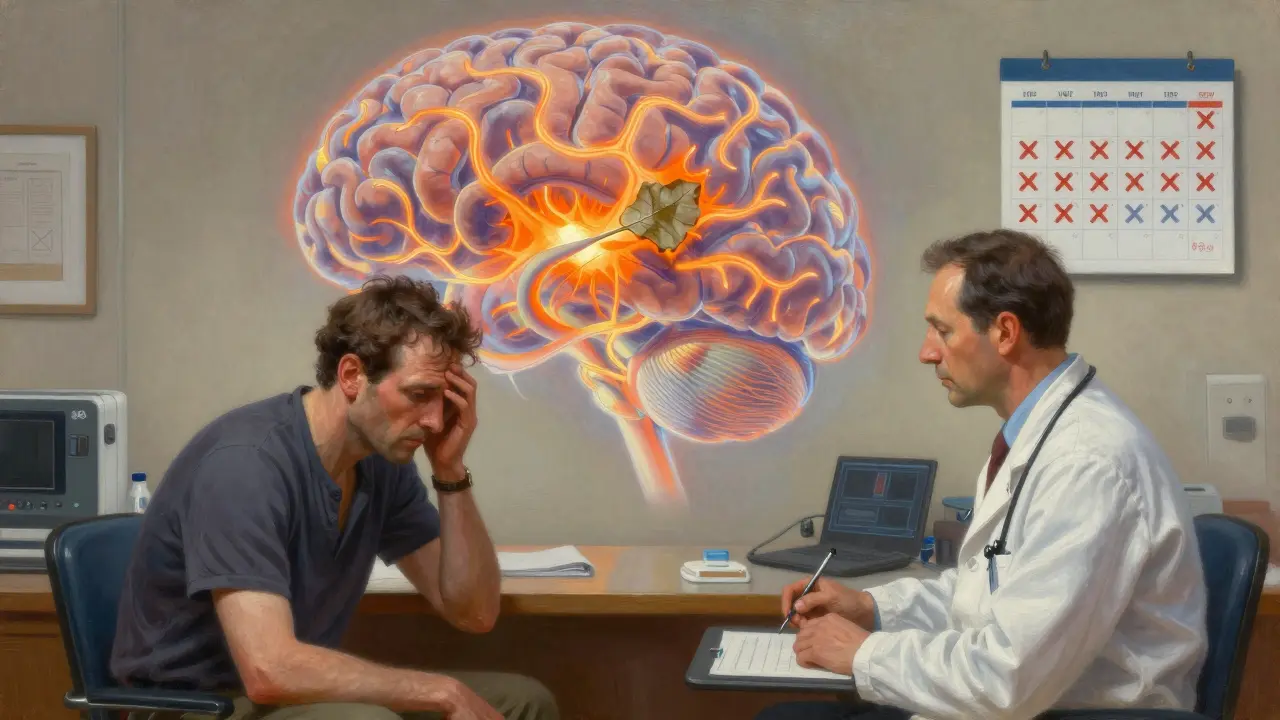
Corticosteroids like prednisone, dexamethasone, and methylprednisolone aren't just anti-inflammatory drugs. They flood your body with synthetic versions of cortisol, a hormone your adrenal glands normally make. When you take them in high doses, your brain doesn't know the difference. And that's where trouble starts.Studies show that these drugs interfere with multiple brain systems. One major target is the hippocampus, the area responsible for memory and emotional regulation. High doses can shrink this region over time, leading to confusion, forgetfulness, and emotional instability. Another pathway involves dopamine. Animal studies reveal corticosteroids boost dopamine production, which can trigger hallucinations and delusions-hallmarks of psychosis. This isn't just theory; it's been seen in real patients.
It's not just one mechanism. Corticosteroids also suppress your body's natural stress response system-the HPA axis. When this happens, your brain loses its ability to balance mood. The result? A chemical storm that can push someone with no prior mental health history into a full-blown psychotic episode.
How Common Are These Side Effects?
You might think this is rare. It's not. About 5% to 18% of people taking systemic corticosteroids experience some kind of psychiatric reaction. That means roughly 1 in 10 patients could be affected. The numbers climb sharply with dose:- At doses under 40 mg of prednisone per day: 1.3% risk
- At 80 mg or more per day: 18.4% risk
That’s a 14-fold increase in risk. And here’s the kicker-10 million new oral corticosteroid prescriptions are written every year in the U.S. alone. Even if only 5% of those patients develop psychiatric symptoms, that’s 500,000 people annually who might suddenly feel like they’re losing their mind.
The symptoms aren't always dramatic. Many start with subtle signs: trouble sleeping, irritability, or feeling unusually upbeat. These are often dismissed as stress or aging. But they can escalate fast. Within days to weeks, someone might go from mild anxiety to full psychosis-believing they're being watched, hearing voices, or acting out in ways they never would before.
Who’s Most at Risk?
Not everyone reacts the same way. Certain people are far more vulnerable:- Women are more likely than men to develop psychiatric side effects, though the exact reason isn't clear.
- People over 65 have less brain resilience and are more sensitive to hormonal shifts.
- Those with prior mental illness, especially bipolar disorder, are at highest risk. One study found that 11.8% of cases involved mania with no prior history-but in patients with bipolar, the flare-up is often severe and sudden.
- High-dose, long-term users are the most vulnerable. A 10-day course of 40 mg might be fine. A 3-month course of 80 mg? That’s a different story.
Even if you’ve taken corticosteroids before without issues, that doesn’t mean you’re safe next time. The risk isn’t just about dosage-it’s about your body’s current state, your age, and whether you’re under physical or emotional stress.
What Do the Symptoms Look Like?
These aren’t vague feelings. They’re specific, measurable changes:- Euphoria (27.5% of cases): An unnatural, exaggerated sense of well-being that doesn’t match reality.
- Insomnia (42.3%): Not just trouble sleeping-complete inability to rest, even when exhausted.
- Mood swings (38.7%): Rapid shifts from crying to laughing to anger, often within minutes.
- Personality changes (29.1%): A once calm person becomes aggressive or paranoid.
- Severe depression (14.6%): Suicidal thoughts can emerge suddenly, even in people with no prior history.
- Psychosis (5-18%): Delusions, hallucinations, disorganized speech, or catatonia. This is the most dangerous and least recognized.
Some people experience mania alone. Others get psychosis without mania. In rare cases, symptoms appear only after stopping the drug. That’s critical: if you think you’re safe once you finish the course, you’re wrong. There are documented cases where psychosis lasted weeks or even months after the last pill.
Why Is This So Often Missed?
Doctors aren’t ignoring it. They’re often unaware. Most medical training focuses on physical side effects-weight gain, blood sugar spikes, bone loss. Psychiatric effects? They’re mentioned in a footnote. Pharmacists rarely screen for them. Family members don’t know what to look for.When a 70-year-old woman on prednisone for COPD starts yelling at her grandchildren and claims the TV is spying on her, her doctor might think it’s dementia. Or depression. Or just old age. But it could be steroid-induced psychosis. And if no one connects the dots, she might be misdiagnosed, hospitalized, or even put on antipsychotics that don’t address the root cause.
Diagnosis is a process of elimination. As one study puts it: “Steroid-induced psychosis is more of a diagnosis of exclusion.” That means doctors must rule out infections, brain tumors, drug interactions, metabolic imbalances, and other neurological conditions before blaming the steroid. And many don’t have the time-or the training-to do that thoroughly.
What Should You Do If You Notice These Signs?
If you or someone you care about is on corticosteroids and starts acting strangely, don’t wait. Don’t assume it’s “just stress.” Here’s what to do:- Call the prescribing doctor immediately. Don’t wait for your next appointment. Say: “I’m seeing unusual mood or behavior changes since starting the steroid.”
- Don’t stop the medication on your own. Suddenly quitting corticosteroids can trigger adrenal crisis-a life-threatening drop in cortisol. Tapering must be done under medical supervision.
- Ask about lowering the dose. Studies show 92% of patients improve when the dose is reduced below 40 mg of prednisone per day. Sometimes cutting the dose in half is enough to reverse symptoms.
- Request a psychiatric consult. If symptoms are severe, involve a psychiatrist. They know how to distinguish steroid-induced psychosis from other conditions and can recommend safe, off-label treatments.
There’s no FDA-approved drug for this. But in practice, low-dose antipsychotics like haloperidol, risperidone, or olanzapine often work. They’re not perfect, but they can calm symptoms within days. Lithium has been used to prevent mania, but it carries risks and requires blood monitoring. For most patients, the best treatment is reducing the steroid-not adding another drug.
What’s Missing From Current Care?
We’ve known about this for decades. The first reports date back to the 1940s. Yet today, there’s still no standardized screening tool. No checklist for pharmacists. No routine mental health check-ins for patients on long-term steroids.Experts are calling for “clinimetric methods”-simple, quick assessments doctors can use during visits to catch early signs. Imagine a one-page form asking: “Have you had trouble sleeping? Felt unusually happy or irritable? Had strange thoughts?” That could save lives. But until that happens, the burden falls on patients and families.
And here’s the hardest truth: no pharmaceutical company is developing a solution. There’s no new drug, no warning label upgrade, no patient education campaign. It’s left to individual clinicians to recognize it-and too many still don’t.
What You Can Do Now
If you’re on corticosteroids:- Keep a mood journal. Note sleep, energy, irritability, and unusual thoughts.
- Ask your doctor: “What psychiatric side effects should I watch for?”
- Tell a family member what to look for. They might notice changes before you do.
- Never ignore sudden confusion, paranoia, or extreme mood shifts. They’re not normal.
If you’re a caregiver for someone on steroids:
- Monitor for agitation, withdrawal, or strange behavior.
- Don’t assume it’s “just aging” or “stress.”
- Keep a log of when symptoms started relative to the steroid dose.
- Insist on a psychiatric evaluation if symptoms are severe.
Corticosteroids save lives. But they can also steal someone’s sense of self. The more we talk about this, the less likely it is that someone will suffer in silence-misdiagnosed, isolated, or worse.
Can corticosteroids cause psychosis even after stopping the medication?
Yes. While most psychiatric symptoms improve once the steroid is tapered or stopped, there are documented cases where psychosis, mania, or severe depression persisted for weeks or even months after the last dose. This suggests the brain changes triggered by high-dose steroids can have lasting effects, especially in vulnerable individuals. If symptoms continue after stopping the drug, medical evaluation is still necessary.
Are there any warning signs I should look for in the first week of treatment?
Yes. Early signs often appear within the first 5 days and include insomnia, restlessness, irritability, unexplained euphoria, or confusion. These may seem minor, but they’re red flags. If someone on steroids suddenly seems “off,” even slightly, it’s worth mentioning to their doctor. Catching symptoms early often means they can be reversed with a simple dose reduction.
Is this more common in older adults?
Yes. People over 65 are at higher risk because their brains are more sensitive to hormonal changes and have less capacity to adapt. Older adults also often take multiple medications, which can increase the chance of interactions. Many cases of steroid-induced psychosis in seniors are misdiagnosed as dementia or depression, delaying proper treatment.
Can I prevent these side effects if I need to take corticosteroids?
You can’t always prevent them, but you can reduce the risk. The most effective strategy is using the lowest effective dose for the shortest time possible. Avoid doses over 40 mg of prednisone per day unless absolutely necessary. If you have a history of depression, bipolar disorder, or anxiety, tell your doctor before starting. Some patients benefit from close monitoring or prophylactic support from a psychiatrist.
Are there any medications approved to treat steroid-induced psychosis?
No. There are currently no FDA-approved drugs specifically for corticosteroid-induced psychosis. Treatment relies on off-label use of antipsychotics like haloperidol, risperidone, or olanzapine, which have shown effectiveness in case studies. The best approach remains reducing or stopping the steroid, when possible. Always work with a doctor who understands this condition-it’s not standard practice.
Kenzie Goode
February 26, 2026 AT 04:20I started prednisone last year for my RA and thought I was just stressed-until I caught myself screaming at my cat for breathing too loud. I didn’t realize it was the meds until my partner forced me to see a doc. Turns out, I was in a manic episode. I’m lucky I didn’t lose my job or my relationships. This post? Lifesaver. I wish someone had warned me.
Dominic Punch
February 27, 2026 AT 14:44Let me be clear: this isn't 'side effect' territory-it's a public health blind spot. We're giving people mind-altering drugs like candy and pretending it's fine. 18% risk at high dose? That's not rare. That's a war zone. Doctors need mandatory mental health screening before prescribing. Period. And pharmacies? They should be required to hand out a one-pager on psychiatric risks. Not optional. Not 'if you ask.' Mandatory.
Valerie Letourneau
March 1, 2026 AT 02:55As a Canadian clinician who’s seen multiple cases of steroid-induced psychosis in elderly patients, I can confirm the under-recognition is systemic. In our geriatric wards, it’s common to see patients labeled with ‘dementia’ when the root cause is a 10-day course of methylprednisolone. We lack protocols. We lack awareness. And the consequences are devastating-families are traumatized, patients are overmedicated, and recovery is delayed. This is not a niche issue. It’s a failure of clinical culture.
Cory L
March 2, 2026 AT 07:58Bro. I took 60mg of prednisone for a flare and went full Elon Musk mode for three weeks. Thought I was building a time machine in my garage. My dog started avoiding me. My girlfriend left. I didn’t even realize I was being crazy until I crashed and sobbed in the shower. Now I keep a mood journal. It’s wild how fast your brain can go off the rails. If you’re on this stuff? Pay attention. Like, actually pay attention. Not just ‘yeah yeah I’m fine.’
Bhaskar Anand
March 2, 2026 AT 23:02Stephen Archbold
March 4, 2026 AT 14:34So I had this weird week after my last prednisone course-couldn’t sleep, kept laughing at nothing, then cried for 2 hours over a commercial. Thought I was going crazy. My GP said ‘stress.’ Turns out it was the meds. I’m glad someone finally wrote this. I didn’t know I could talk about it. I felt so alone. Thank you. Seriously. This helped me feel less weird.
Timothy Haroutunian
March 5, 2026 AT 02:57Look, I get it. Corticosteroids are powerful. But let’s not turn this into a horror movie. Most people take them and don’t turn into zombies. I’ve been on them for years. I’m fine. Maybe the real issue is that we’re pathologizing normal human variation? Like, if you get a little moody after a 10-day course, maybe you’re just tired, not psychotic. We’ve got a mental health industrial complex that wants to label everything. I’m not saying this doesn’t happen-but let’s not scare people into thinking every headache or sleepless night is a sign of impending madness.
Erin Pinheiro
March 6, 2026 AT 08:50Ugh. Another ‘medical trauma’ post. Look, if you can’t handle a little steroid-induced euphoria or insomnia, maybe you shouldn’t be on them. I’ve been on 80mg for 4 months. I feel AMAZING. My energy is through the roof. My mood? Fluctuating? Yeah. So what? That’s life. Stop whining. This isn’t a crisis. It’s biology. And if you’re too fragile to handle it, maybe you need to stop pretending your body can handle chronic inflammation. Take responsibility. Not everyone is a fragile snowflake.
Brandice Valentino
March 6, 2026 AT 08:58As someone who’s read *The New England Journal of Medicine* since I was 16, I find this article… charmingly amateurish. Where are the citations? The meta-analyses? The controlled trials? This reads like a Medium post from someone who Googled ‘steroid psychosis’ once. I mean, ‘500,000 people annually’? That’s not a study. That’s a guess. And ‘no FDA-approved drug’? Well, duh. We don’t approve drugs for side effects. We treat symptoms. Please. Let’s elevate the discourse.
Larry Zerpa
March 7, 2026 AT 08:55Let’s cut through the noise. This entire post is emotional manipulation dressed as medical advice. You cite percentages without context. You imply causation without ruling out confounders. You ignore that many of these symptoms occur in patients with active inflammation-exactly what the steroids are treating. You also conveniently omit that psychosis from steroid withdrawal is statistically rarer than psychosis from alcohol withdrawal. And yet, you’re painting this as an epidemic. This isn’t advocacy. It’s fearmongering. If you want real change, stop sensationalizing. Start publishing real data. Otherwise, you’re just adding to the noise.