
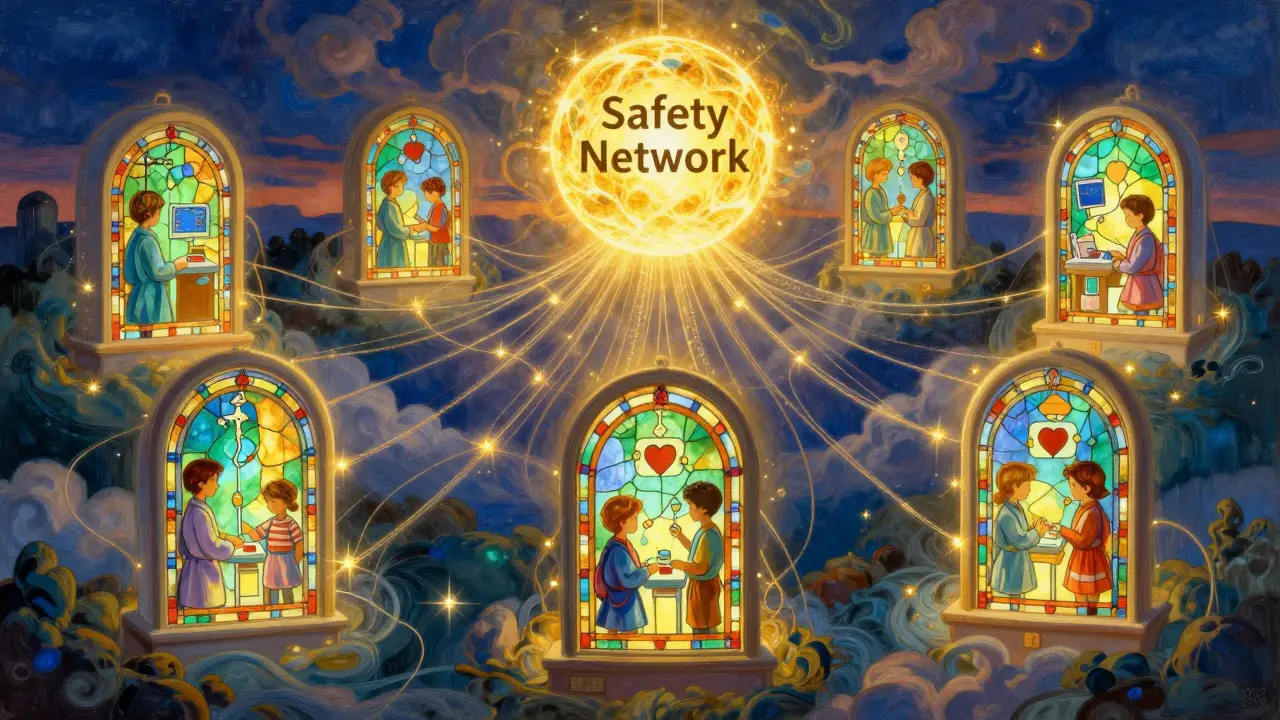
When a child is given a new medication or treatment, doctors don’t always know what might go wrong. Kids aren’t just small adults-their bodies process drugs differently, and side effects can show up in ways that surprise even experienced clinicians. Traditional clinical trials often leave children out, leaving a dangerous gap in safety data. That’s where pediatric safety networks come in.
Why Pediatric Safety Networks Exist
For decades, children were rarely included in drug trials. Even when they were, studies were small, short, and rarely tracked long-term side effects. The result? Doctors often prescribed medications to kids based on guesses, not solid evidence. This changed after the 2002 Best Pharmaceuticals for Children Act and the 2003 Pediatric Research Equity Act pushed the U.S. government to act. But laws alone didn’t fix the problem. What was needed was a system-something that could collect real-world data across hundreds of hospitals and clinics, quickly and safely. Enter pediatric safety networks. These aren’t just research projects. They’re coordinated, multi-site systems designed to find hidden dangers in treatments before they hurt more kids. Think of them as early warning systems for child health. When a new drug is given to 50 children in one hospital, you might see a rash. But if 500 kids across seven states get the same drug and 12 develop liver inflammation? That’s a pattern. Only a network can catch that.The CPCCRN: A Model for Critical Care Safety
One of the most influential networks was the Collaborative Pediatric Critical Care Research Network (CPCCRN), funded by the Eunice Kennedy Shriver National Institute of Child Health and Human Development (NICHD). Launched in 2014, it brought together seven major children’s hospitals, a central data hub, and a strict governance structure. Each hospital had to meet high standards: they needed to enroll patients, collect detailed data, and follow protocols designed by the group. The Data Coordinating Center didn’t just crunch numbers-it designed the tools. Every side effect, every abnormal lab result, every unexpected reaction was recorded using the same definitions. That consistency made it possible to compare outcomes across sites. Crucially, CPCCRN had a Data and Safety Monitoring Board-a dedicated team that reviewed all adverse events in real time. If a pattern emerged, the network could pause a trial, alert doctors, and adjust treatment. One site reported that without the centralized sample size calculations, they would’ve missed a rare but serious reaction to a sedative because their local patient numbers were too low. The network made that data meaningful.Child Safety CoIIN: Preventing Harm Beyond the Hospital
Not all pediatric safety work happens in ICUs. The Child Safety Collaborative Innovation and Improvement Network (CoIIN), led by the Children’s Safety Network with support from HRSA, focused on injuries and environmental risks-things like car seat misuse, falls, and youth violence. Instead of tracking drug reactions, CoIIN tracked interventions. One state team noticed that their program to prevent sexual violence among teens wasn’t reducing incidents as expected. By looking at real-time data, they discovered the issue wasn’t the message-it was the delivery. Teens weren’t engaging with the material because it felt too clinical. So they redesigned their sessions to include peer-led discussions and social media content. Within six months, participation rose and reported incidents dropped. CoIIN’s strength was flexibility. Unlike CPCCRN, which followed rigid clinical protocols, CoIIN let states test their own ideas. But that also meant data collection was less uniform. Side effects here weren’t medical-they were unintended consequences of public health programs. And those mattered just as much.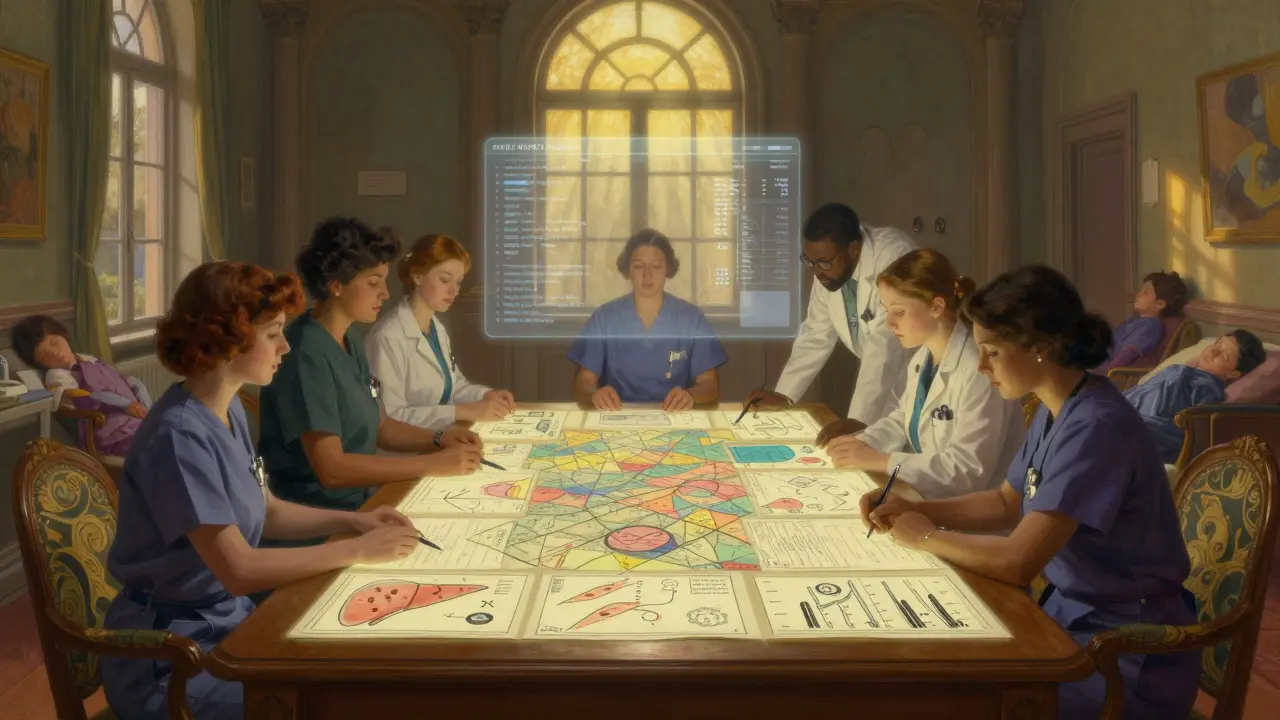
How These Networks Are Structured
Both networks had similar bones, even if their flesh was different.- Steering Committees made decisions by vote-no single hospital could push a protocol through without consensus.
- Protocol Review Committees evaluated whether a study was ethical, feasible, and likely to answer a real safety question.
- Data and Safety Monitoring Boards (in CPCCRN) or real-time dashboards (in CoIIN) flagged unusual trends.
What These Networks Learned
One of the biggest lessons? Small changes, when scaled, can prevent big harms. In CPCCRN, a simple change-delaying the use of certain antibiotics in kids with sepsis until cultures were taken-reduced antibiotic-resistant infections by 22% across all sites. That wasn’t found in a single hospital. It was found because seven hospitals shared their data. CoIIN found that programs trying to prevent teen dating violence often unintentionally stigmatized victims. When teams reviewed their own data, they adjusted language, training materials, and even how they trained school staff. That kind of feedback loop is impossible in a single-site study. Both networks also learned that collaboration isn’t easy. Hospitals compete for funding, prestige, and patients. Getting them to share data, admit mistakes, and change their routines took time, leadership, and trust. But when it worked, the results were faster, safer, and more reliable than anything a single institution could do alone.
Limitations and Gaps
These networks weren’t perfect. CPCCRN only looked at kids in intensive care-so it missed side effects from medications given in outpatient clinics or at home. CoIIN tracked outcomes over months, not years, so long-term effects like developmental delays or chronic conditions were rarely captured. Also, funding was temporary. CPCCRN’s original grant expired in 2014. CoIIN ran two cohorts, ending in 2019. Neither has been renewed under the same name. But their legacy didn’t vanish. CPCCRN’s methods directly influenced the newer Pediatric Trials Network. CoIIN’s data collection tools are still used by states adapting their child safety programs. The real limitation? These networks still rely on federal grants. Without sustained funding, they disappear. And when they do, children go back to being an afterthought in safety research.The Bigger Picture
Pediatric safety networks prove that collaboration isn’t just nice-it’s necessary. Children’s health can’t be studied in isolation. Side effects that show up in one town might be invisible in another. Rare reactions only become visible when you pool data from thousands of kids. The networks didn’t just collect data-they built trust. They trained nurses, doctors, and public health workers to look for harm, not just cure. They showed that safety isn’t just about avoiding mistakes-it’s about learning from them, fast. Today, as new drugs, devices, and digital health tools flood the market, the need for these networks is greater than ever. AI can predict side effects. Wearables can track symptoms. But none of that matters if we don’t have systems in place to connect the dots across hospitals, states, and communities. The answer isn’t waiting for a new law or a big grant. It’s continuing the work these networks started: sharing data, asking hard questions, and never assuming a child’s safety is someone else’s problem.What are pediatric safety networks?
Pediatric safety networks are multi-hospital or multi-state systems designed to track side effects and safety issues in children during medical treatments or public health interventions. They combine data from many sites to spot rare or hidden problems that single institutions might miss.
How do these networks detect side effects?
They use standardized data collection tools, centralized analysis, and dedicated safety boards. Every adverse event-like a rash, liver enzyme spike, or behavioral change-is recorded the same way across all sites. Statistical tools then look for patterns that wouldn’t be visible in one hospital’s data.
Are pediatric safety networks still active today?
The original CPCCRN and Child Safety CoIIN networks ended their funded phases in 2014 and 2019, respectively. However, their methods live on. The NIH’s Pediatric Trials Network now uses similar structures, and many states still use CoIIN’s data tools for child injury prevention programs.
Why can’t regular clinical trials handle pediatric side effect research?
Traditional trials are too small, too slow, and often exclude children altogether. Rare side effects need thousands of patients to show up. Kids also respond differently to drugs than adults, so adult data doesn’t apply. Safety networks solve this by pooling data across many sites, making it possible to study rare events in real-world settings.
What’s the difference between CPCCRN and CoIIN?
CPCCRN focused on drug and treatment side effects in critically ill children in hospitals. CoIIN focused on preventing injuries and unintended consequences of public health programs-like school-based violence prevention or car seat safety campaigns. CPCCRN used clinical data; CoIIN used community-level outcomes.
How did these networks handle data privacy?
All networks followed HIPAA regulations. Data was de-identified before transfer, encrypted during transmission, and stored on secure servers. CPCCRN’s Data Coordinating Center managed access controls, while CoIIN used state-level systems with strict user permissions. No personally identifiable information was shared between sites.
Kimberly Mitchell
January 12, 2026 AT 22:39The structural integrity of these networks is fundamentally flawed. Standardized data collection? Please. You’re assuming all institutions have the bandwidth to comply with rigid protocols while juggling staffing shortages, EHR interoperability nightmares, and bureaucratic inertia. The CPCCRN model is a luxury good-only viable in academic medical centers with NIH backing. Meanwhile, rural hospitals are still using paper logs for pediatric adverse events. This isn’t systemic reform; it’s elite data collection dressed up as public health.
Angel Molano
January 13, 2026 AT 06:04Stop glorifying bureaucracy. These networks are expensive paper shufflers. Kids still get dosed wrong because doctors don’t read the guidelines. Fix the training. Stop the vanity projects.
Vinaypriy Wane
January 14, 2026 AT 05:56While I appreciate the ambition behind these networks, I must emphasize-without sustained, equitable funding, we are merely constructing fragile scaffolds over a crumbling foundation. The fact that CPCCRN and CoIIN expired? That’s not an endpoint-it’s a warning. We are not just losing data systems; we are abandoning children’s safety as a collective moral imperative.
Diana Campos Ortiz
January 14, 2026 AT 20:14Actually, I think this is really important… like, more than people realize. I work in a pediatric clinic and we’ve used some of the CoIIN tools for our teen safety workshops. The peer-led stuff? Huge difference. Kids actually talk now. Not sure if anyone else noticed, but the language changes made a ton of difference. Just… keep going, please?
John Tran
January 15, 2026 AT 17:57Let’s be real here-this isn’t about data, it’s about power. These networks? They’re the new cathedral. The NIH, the hospitals, the statisticians-they’re the priesthood. And the children? They’re the offerings. We’ve turned pediatric safety into a ritual: collect, analyze, report, then vanish when the grant runs out. We’ve built temples to data while the kids still bleed out in ERs because no one’s watching the right metrics. The real tragedy isn’t that we missed the rare side effect-it’s that we knew it was there, and we chose to look away because it didn’t fit the protocol. We don’t need more dashboards. We need more humility. We need to admit that the system we built is a monument to our own arrogance, not our compassion.
mike swinchoski
January 16, 2026 AT 07:33These networks are just a way for rich hospitals to get more grant money. Real doctors don’t need databases to know if a kid’s reaction is bad. If a kid gets sick after a drug, stop giving it. Done. Why do we need seven hospitals to tell us that?
Anny Kaettano
January 17, 2026 AT 17:12Watching these networks evolve has been one of the most hopeful things in pediatric care. The way CPCCRN turned isolated incidents into population-level insights? That’s how science should work. And CoIIN’s pivot to community voice? Brilliant. These aren’t just data pipelines-they’re learning ecosystems. We need to expand them, not sunset them. Let’s fund the next generation. Our kids deserve more than legacy systems.
jefferson fernandes
January 19, 2026 AT 01:13Kimberly, you’re right about the funding cliff-but you’re missing the point: these networks created a culture of accountability. Before CPCCRN, hospitals hid adverse events. Now? They report them. That’s cultural change. You can’t measure trust in a spreadsheet, but it’s the real ROI. And Diana-your clinic’s success with peer-led workshops? That’s exactly why CoIIN’s flexibility mattered. Not every problem needs a randomized trial. Sometimes, it just needs someone who listens.