
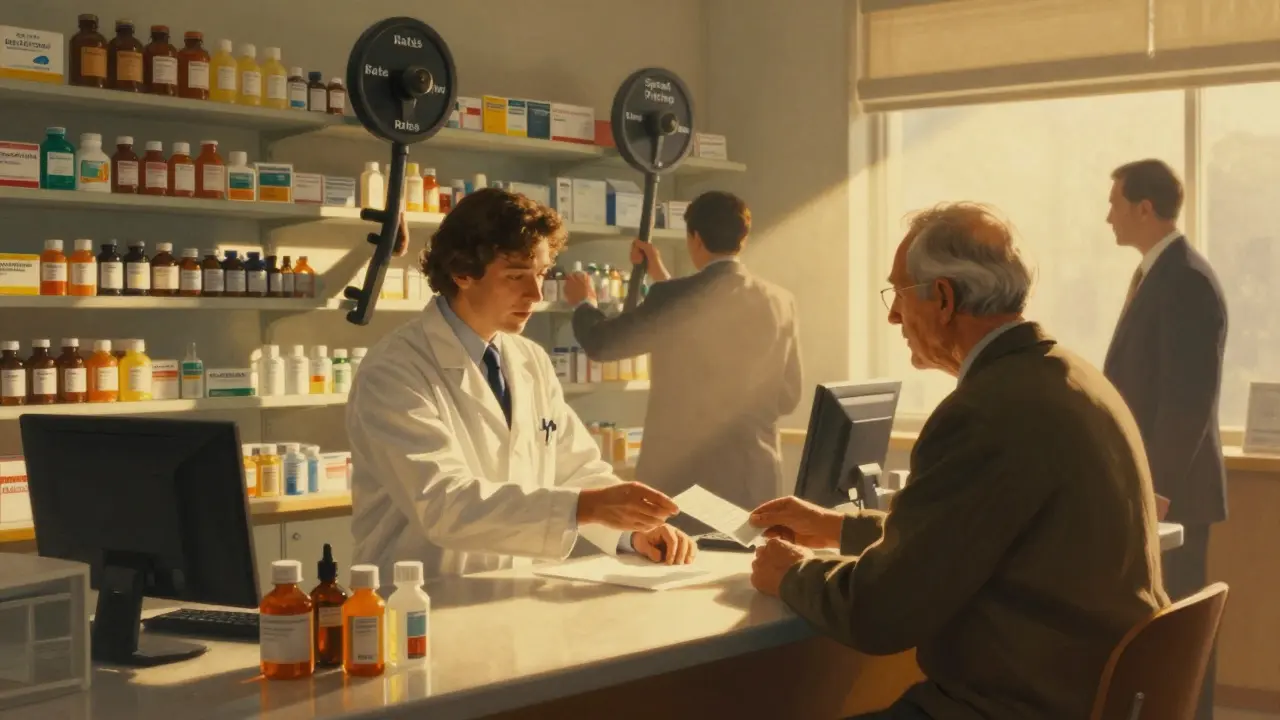
When you pick up a generic prescription at the pharmacy, you might think the price is simple: lower cost, same medicine. But behind that $4.50 copay lies a tangled web of federal laws, state regulations, and corporate contracts that decide exactly how much the pharmacy gets paid-and whether they can even afford to fill your script. The system isn’t broken by accident. It’s built that way.
How Generic Drugs Got Their Price Tag
The foundation of today’s generic drug system comes from the 1984 Hatch-Waxman Act. This law let drugmakers copy brand-name medications without repeating expensive clinical trials, as long as they proved bioequivalence. In return, brand-name companies got extended patent protection. The goal? Lower prices through competition. And it worked. Today, generics make up 90% of all prescriptions filled in the U.S., but only 23% of total drug spending. But here’s the catch: just because a generic drug is cheaper doesn’t mean the pharmacy gets paid more. In fact, the opposite is often true. Reimbursement models are designed to push pharmacists toward generics-but the money they receive doesn’t always reflect the real cost of buying the pills.Two Ways Pharmacies Get Paid for Generics
There are two main reimbursement models for generic drugs: Average Wholesale Price (AWP) and Maximum Allowable Cost (MAC). AWP used to be the standard. It’s a list price set by manufacturers, often inflated, and pharmacies were paid a percentage below it. But since AWP didn’t match what pharmacies actually paid, it became unreliable. Most plans switched to MAC. MAC is simpler: the payer sets a fixed maximum amount they’ll pay for each generic drug per unit-say, $0.50 for a 30-day supply of lisinopril. If the pharmacy buys it for $0.40, they pocket $0.10. If they pay $0.60? They eat the loss. No exceptions. This system sounds fair, but it’s brutal for small pharmacies. In 2023, the average profit margin on generic drugs was just 1.4%, down from 3.2% in 2018. Many independent pharmacies operate on razor-thin margins. A single MAC rate change can turn a profitable month into a loss.Medicare Part D and the Hidden Rules
Medicare Part D covers 50.5 million seniors and people with disabilities. It’s the biggest player in generic reimbursement. But its rules are complex. Part D plans use formularies-lists of covered drugs-with tiers. Generics are usually in Tier 1, with the lowest copay. But not all generics are treated equally. Some plans put certain generics on higher tiers if they’re “non-preferred,” even if they’re chemically identical. Patients pay more. Pharmacists get paid less. And then there’s prior authorization. In 2022, 28% of Part D plans required prior authorization for at least one generic drug. That means the pharmacist has to call the doctor, fill out forms, wait for approval-and sometimes the patient walks away because it’s too much hassle. The new Medicare $2 Drug List Model, rolling out in 2025, could change this. It targets about 100-150 low-cost, high-use generics like metformin, atorvastatin, and levothyroxine. If a plan joins, it must charge no more than $2 for these drugs, no matter the patient’s deductible. The idea? Make adherence easier and cut confusion.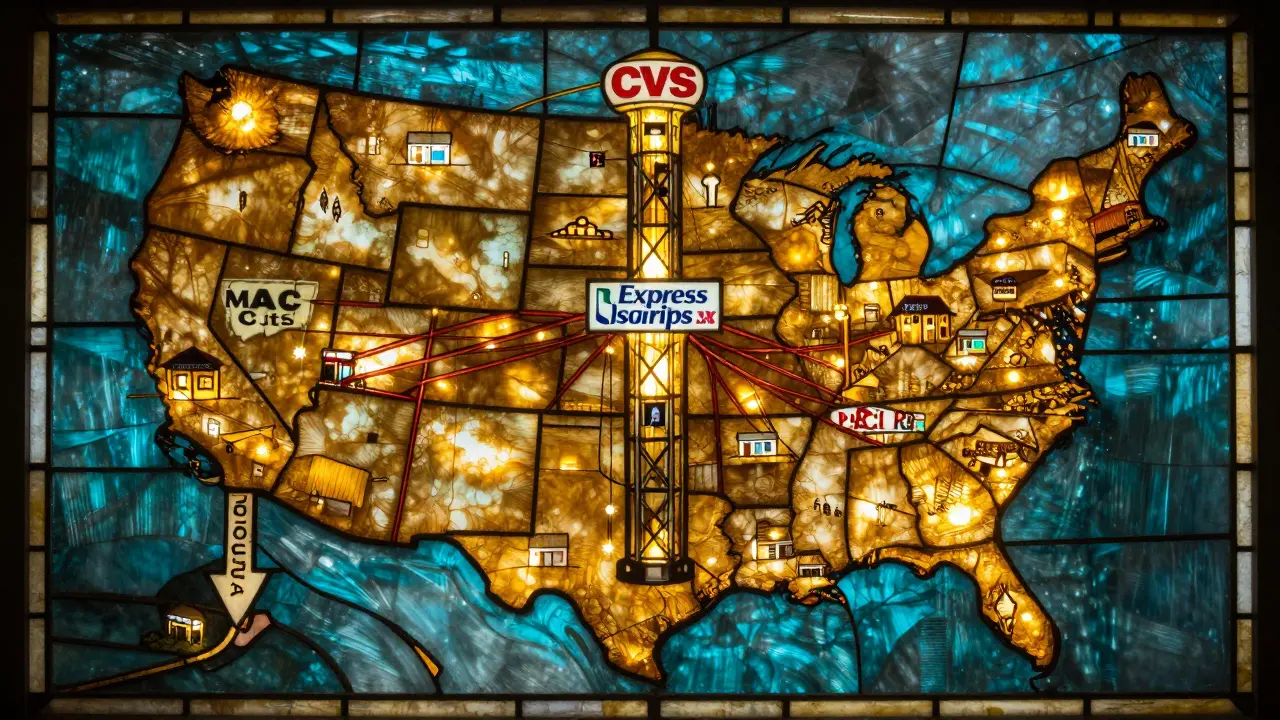
Who Really Controls the Prices? PBMs
Behind the scenes, Pharmacy Benefit Managers (PBMs) are the hidden power brokers. CVS Caremark, Express Scripts, and OptumRX handle over 80% of all prescription claims in the U.S. PBMs don’t just negotiate prices. They also collect rebates from drugmakers-and keep a slice of the difference between what insurers pay and what pharmacies get paid. This is called “spread pricing.” For example: the insurer agrees to pay $10 for a generic drug. The PBM tells the pharmacy they’ll be paid $7. The PBM pockets $3. The pharmacy doesn’t know the insurer paid $10. The patient pays their $5 copay. The PBM gets paid twice: from the insurer and from the spread. This lack of transparency hurts pharmacies and patients alike. Before 2018, PBMs used “gag clauses” to stop pharmacists from telling customers they could buy the same drug cheaper without insurance. Now banned, but the damage lingers.State Laws Are Trying to Fix the Gaps
Federal rules leave big holes. So states stepped in. As of 2023, 44 states passed laws regulating how PBMs reimburse pharmacies for generics. Some states now require PBMs to pay pharmacies at least the actual acquisition cost of the drug. Others ban spread pricing entirely. A few mandate that pharmacies be notified of MAC changes at least 30 days in advance. But it’s a patchwork. A pharmacy in California might be protected. One in Texas might not be. And PBMs often refuse to contract with pharmacies that don’t accept their terms-leaving patients with fewer choices.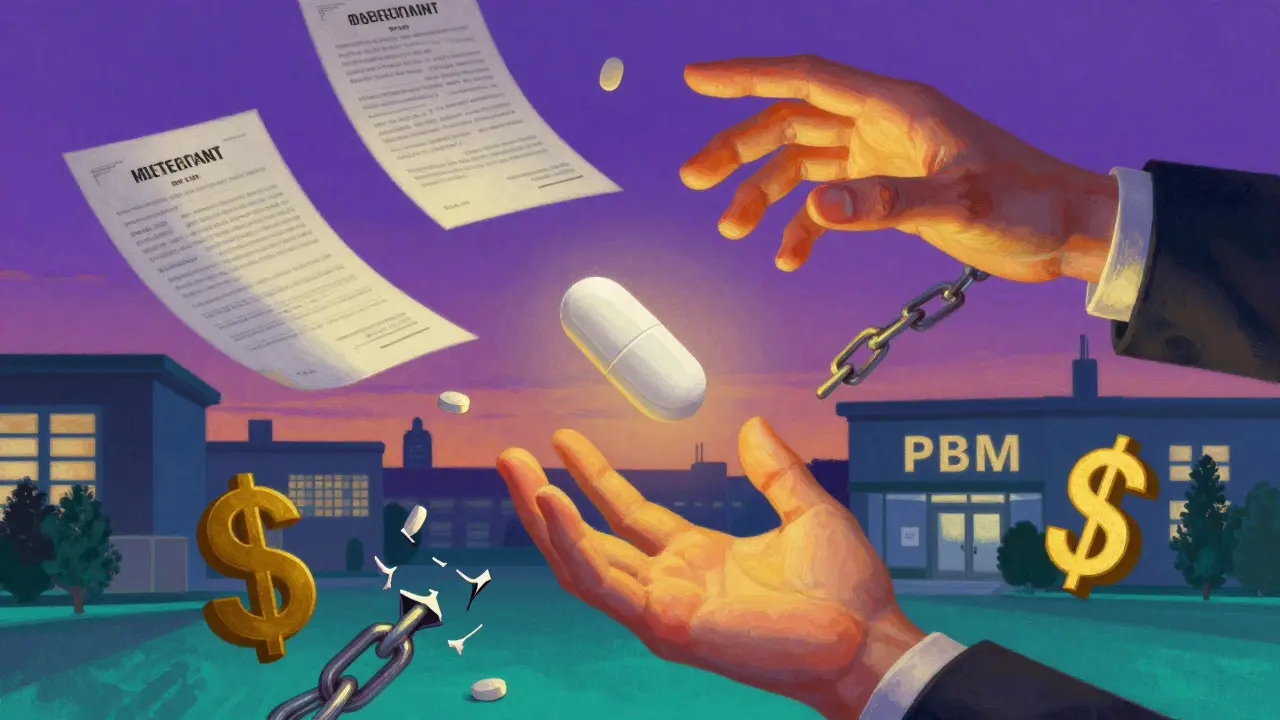
What’s Next? The Model and Beyond
The Medicare $2 Drug List Model is the most significant shift in years. It’s not mandatory, but if enough Part D plans join, it could force the whole system to adapt. It’s also a signal: policymakers are tired of the current mess. The Inflation Reduction Act’s $2,000 out-of-pocket cap on Part D drugs (starting in 2025) will push more people toward generics. If those generics are still priced at $5 or $10, the savings won’t matter. Long-term, experts predict a move toward value-based payments. Instead of paying per pill, plans might pay for outcomes: Did the patient’s blood pressure drop? Did they avoid hospitalization? That could make generics even more valuable-but only if reimbursement keeps up.Real Impact: A Pharmacist’s Day
Imagine you’re a pharmacist in Ohio. A patient comes in with a script for generic metformin. The MAC rate is $0.60. You bought the batch for $0.65. You lose $0.05 per pill. You call the patient’s PBM. They say the rate hasn’t changed. You check your contract. It says you agreed to MAC pricing. You can’t dispute it. The patient asks why it’s $5 today when it was $4 last month. You can’t explain the MAC rate change. You can’t say the PBM made $3 off the insurer. You can’t tell them they could buy it for $2 at Walmart. That’s the reality. Laws and reimbursement models don’t just affect numbers on a ledger. They affect whether a pharmacy stays open. Whether a patient gets their medicine. Whether trust in the system survives.Why are generic drugs sometimes more expensive than brand-name drugs at the pharmacy?
They aren’t usually more expensive-but they can *feel* that way. Sometimes, a brand-name drug is covered under a special discount program, while the generic is on a non-preferred tier with a higher copay. Or, the pharmacy’s reimbursement rate (MAC) for the generic dropped below what they paid for it, so they raise the cash price to avoid losing money. Always ask: "Can I pay cash instead?"-it’s often cheaper than using insurance.
How do MAC pricing rules hurt small pharmacies?
MAC rates are set by PBMs and often don’t reflect real market prices. If a pharmacy buys a generic drug for $1.20 but the MAC is $1.00, they lose $0.20 per script. For high-volume drugs like metformin or atorvastatin, that adds up fast. Independent pharmacies don’t have the buying power of big chains, so they’re more vulnerable. Many operate at 1-2% profit margins on generics-barely enough to cover rent and staff.
What’s the difference between a generic and an authorized generic?
A regular generic is made by a different company after the brand’s patent expires. An authorized generic is made by the original brand-name company but sold under a different label. It’s chemically identical, but it’s still the same manufacturer. That can delay competition because the brand keeps control of the market, reducing the number of true generics that enter.
Why do some insurance plans make me pay more for a generic than another?
Because every Part D plan has its own formulary and tier structure. One plan might put a certain generic on Tier 1 ($5 copay), while another puts it on Tier 2 ($15) because it’s labeled "non-preferred." Even if both generics are the same drug, made by the same company, the plan’s PBM decides the tier based on rebates, not clinical value. Always compare formularies when choosing a plan.
Can I ask my pharmacist if the generic is cheaper if I pay cash?
Yes, and you should. Since 2018, gag clauses are banned. Pharmacists are legally allowed to tell you if paying out-of-pocket is cheaper than using your insurance. Many big retailers like Walmart and Costco offer $4 generic lists. A $10 generic with insurance might cost $3 cash. Always ask.
What You Can Do
If you’re on Medicare or have private insurance, here’s how to protect yourself:- Always ask your pharmacist: "Can I pay cash for this?"
- Compare your plan’s formulary each year during open enrollment.
- Use tools like GoodRx or SingleCare to check cash prices before filling.
- If your generic is suddenly more expensive, ask why-there’s usually a MAC change or formulary shift.
- For high-volume generics, consider mail-order or retail discount programs.
Isaac Jules
January 6, 2026 AT 20:36This system is a goddamn scam. PBMs are just middlemen sucking blood from pharmacies and patients alike. $3 spreads? On metformin? I’ve seen pharmacists cry over MAC rate cuts. This isn’t capitalism-it’s feudalism with a pharmacy logo.
Wesley Pereira
January 8, 2026 AT 00:40lol so the ‘solution’ is to pay $2 for drugs but the pharmacy still gets nickel-and-dimed? Classic. PBMs are the real villains here, and no one in DC wants to touch them because they’re tied to every major insurer and pharmacy chain. We’re all just pawns in a game where the house always wins.
Lily Lilyy
January 8, 2026 AT 04:59It’s heartbreaking to see how hard pharmacists work just to keep the doors open. They’re not just filling prescriptions-they’re holding the system together with duct tape and hope. Thank you for sharing this.
Kelly Beck
January 9, 2026 AT 14:28I used to work in a small-town pharmacy. We lost money on every lisinopril script but kept filling them because someone’s grandma needed it. We’d tell patients to check GoodRx-and sometimes they’d save $15 a month. Small wins matter. Keep pushing for change.
Jeane Hendrix
January 10, 2026 AT 17:28wait so if the mac rate is lower than acquisition cost, the pharmacy just eats it? but they still have to pay rent, staff, utilities… how is this even legal? i feel like this is a loophole that was never meant to exist
Saylor Frye
January 10, 2026 AT 18:15Wow. So the 1984 law that was supposed to lower costs just created a bureaucratic nightmare where the only winners are the middlemen. I guess ‘free market’ just means ‘let the rich get richer while everyone else scrambles for $0.05 profit.’
Gabrielle Panchev
January 12, 2026 AT 03:02Let me be clear: the MAC system is not merely flawed-it is a structural atrocity, a grotesque parody of economic efficiency, wherein the very entities meant to facilitate access to essential medication are incentivized to bankrupt the providers who deliver it, and this is not an accident, it is a feature, designed by lobbyists with MBA degrees and zero moral compass, and it is absolutely criminal that no one in Congress has the courage to dismantle it-because they’re all on the PBM payroll, let’s be real.
Stuart Shield
January 13, 2026 AT 06:11Back in the UK, we don’t have this mess. The NHS negotiates bulk prices and pharmacies get a flat fee per script. No spreads, no MAC chaos, no gag clauses. We still get generics for pennies. It’s not magic-it’s policy. America could do this if it wanted to.
Joann Absi
January 13, 2026 AT 11:55THEY’RE LYING TO US!!! 🤯 PBMs are part of the BIG PHARMA cabal! They’re working with the government to keep you sick so they can keep profiting! You think metformin costs $0.65 to make? NO. It costs $0.02. They charge $0.65 so they can pocket $3.00 and then tell you it’s ‘insurance.’ WAKE UP.
Mukesh Pareek
January 14, 2026 AT 04:25Typical American healthcare dysfunction. In India, generics are sold at ₹5 ($0.06) per tablet because we have no PBM middlemen. The government regulates prices directly. You don’t need a PhD in pharmacy law to understand that this system is corrupt. Fix the structure, not the symptoms.
Rachel Wermager
January 14, 2026 AT 14:52Actually, the MAC model is efficient-it’s just that pharmacies don’t understand cost structures. If you’re buying at $0.65 and the MAC is $0.60, you’re either overpaying your distributor or you’re not leveraging volume. The problem isn’t the model-it’s your procurement strategy.
Katelyn Slack
January 15, 2026 AT 10:44i just found out my local pharmacy lost money on my blood pressure med… and they still gave it to me. i had no idea. sorry for never tipping you guys before.
Melanie Clark
January 16, 2026 AT 21:21They’re watching us. The PBM algorithm knows when you refill your meds. They’re tracking your health data to sell to insurers. That’s why your copay went up. They’re using your diabetes to make money. Don’t trust anyone. Not even your pharmacist.
Dana Termini
January 16, 2026 AT 22:16There’s a lot here that’s broken, but I’m glad people are finally talking about it. The fact that pharmacists can now tell you about cash prices is a win. Small steps. Let’s keep pushing for transparency-not just in pricing, but in who’s profiting from our health.