

What Is Polycystic Ovary Syndrome (PCOS)?
Polycystic Ovary Syndrome, or PCOS, isn’t just about cysts on the ovaries. That’s a common misunderstanding. It’s a hormonal disorder that affects 5 to 10% of women during their reproductive years. The real problem lies in the imbalance of hormones-especially too much androgen, the male hormone, and trouble with insulin. This messes with ovulation, making periods irregular or even absent. Many women don’t realize they have PCOS until they try to get pregnant and can’t. By then, they’ve often been dealing with symptoms like acne, excess hair growth, or weight gain for years.
The diagnosis isn’t based on one test. Doctors use the Rotterdam criteria: you need at least two out of three things-irregular periods, signs of high androgens (like facial hair or blood tests showing elevated testosterone), and polycystic-looking ovaries on ultrasound. But here’s the catch: not everyone with PCOS has visible cysts. And in teenagers, ultrasounds aren’t even recommended because their ovaries naturally look a bit like that during puberty. Diagnosis often gets delayed by two to three years because symptoms are dismissed as "normal" or blamed on stress or weight.
How Hormones Go Wrong in PCOS
In PCOS, the hormonal system is stuck in a loop. The ovaries make too much testosterone-often 1.5 to 2 times higher than normal. That’s why many women deal with unwanted hair on the face or chest, stubborn acne, or thinning hair on the scalp. But the root cause? Insulin resistance. About 50 to 70% of women with PCOS, even if they’re not overweight, have trouble using insulin properly. Their bodies make extra insulin to compensate, and that extra insulin tells the ovaries to crank out more androgens.
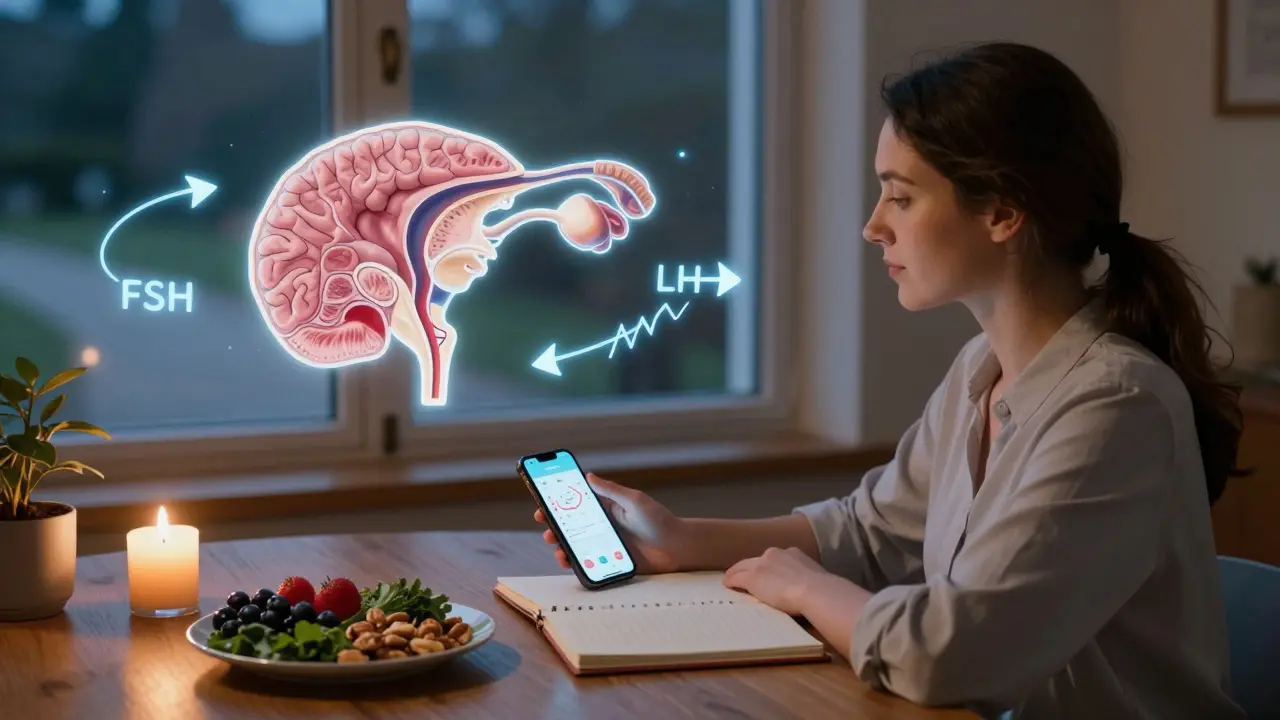
At the same time, the brain’s signaling gets mixed up. The pituitary gland releases too much luteinizing hormone (LH) and not enough follicle-stimulating hormone (FSH). Normally, FSH helps eggs mature. But with low FSH and high LH, follicles start to grow but never release an egg. That’s why ovulation stops. Without ovulation, progesterone doesn’t get made. That leaves estrogen floating around without its usual partner, which can thicken the uterine lining over time and raise the risk of endometrial cancer.
It’s not just reproductive hormones either. Cortisol, the stress hormone, can make things worse. High stress keeps cortisol elevated, which further disrupts the brain-ovary connection. And because insulin resistance also lowers SHBG (a protein that binds testosterone), more free testosterone circulates in the blood, making symptoms worse. This isn’t just about fertility-it’s a whole-body issue. Women with PCOS are at higher risk for type 2 diabetes, high cholesterol, and heart disease later in life.
Fertility Treatment: Where to Start
If you’re trying to get pregnant and have PCOS, the first step isn’t medication-it’s lifestyle. Even a 5 to 10% drop in body weight can restore ovulation in over half of overweight women. That doesn’t mean extreme diets. It means consistent, manageable changes: walking 30 minutes a day, five days a week, and swapping sugary snacks for whole foods. The Diabetes Prevention Program model-150 minutes of moderate exercise weekly and cutting 500 to 750 calories a day-has helped 44% of women with PCOS start ovulating again in just six months.
When lifestyle alone isn’t enough, doctors turn to ovulation-inducing drugs. Clomiphene citrate (Clomid) is the traditional first choice. It works by tricking the brain into releasing more FSH. About 60 to 85% of women on Clomid will ovulate, and 30 to 40% get pregnant within six cycles. But for many, it’s not enough. That’s where letrozole comes in. A 2014 study called PPCOS-II showed letrozole beat Clomid: 88% ovulated versus 70%, and 27.5% had a live birth compared to 19.1%. Today, many fertility specialists recommend letrozole as the first-line drug for PCOS-related infertility, especially in women with a higher BMI.
What If Medications Don’t Work?
Some women don’t respond to oral meds-about 20 to 25% of cases. That’s when doctors consider metformin, a diabetes drug that improves insulin sensitivity. While metformin alone doesn’t work as well for ovulation (only 15 to 40% success), it’s powerful when paired with Clomid or letrozole. In women with a BMI over 35 or clear insulin resistance, combining metformin with an ovulation drug can boost pregnancy rates by 30 to 50%. But it’s not for everyone. About 53% of users get nausea, and 31% have diarrhea. Many stop taking it because of side effects, especially if they’re not given a slow titration plan.
If oral drugs fail, injections of gonadotropins (FSH and LH) can force the ovaries to produce eggs. Success rates are higher-15 to 20% per cycle-but so are the risks. There’s a 20 to 30% chance of twins or triplets, and a 5 to 10% risk of ovarian hyperstimulation syndrome (OHSS), where the ovaries swell painfully and fluid leaks into the abdomen. For women with PCOS, OHSS risk is even higher because their ovaries are already sensitive.
IVF is usually saved for cases where there are other infertility factors-like blocked tubes or male factor issues. But even for PCOS patients, IVF requires careful dosing. Doctors use lower doses of hormones (150 to 225 IU per day) than for other patients, because PCOS ovaries overreact. Still, OHSS risk remains elevated at 10 to 20%, compared to 1 to 5% in non-PCOS patients. IVF can work, but it’s expensive and physically demanding. It’s not the first step-it’s the last resort after simpler options are tried.
What No One Tells You About PCOS and Mental Health
Most PCOS treatment plans focus on periods, pregnancy, and blood sugar. But what about the emotional toll? A 2022 survey of 1,200 women with PCOS found that 78% felt judged for their weight during doctor visits. 65% said they got no real dietary advice. And 30 to 50% struggle with depression or anxiety-often because they feel broken, misunderstood, or blamed for their condition.
It’s not just about hormones. Chronic stress makes PCOS worse. Cortisol spikes from anxiety or sleep loss make insulin resistance stronger and androgen levels climb higher. Many women are told to "just lose weight" without support for mental health. That’s why integrated care matters. Clinics that pair endocrinologists, fertility specialists, dietitians, and therapists see 30% higher pregnancy rates. If you’re struggling emotionally, ask for a referral to a counselor who understands chronic illness. You’re not failing-you’re fighting a complex condition.

What’s New in PCOS Treatment?
PCOS care is changing fast. In 2022, the FDA approved the first digital therapeutic for PCOS: Femaloop, an app that gives personalized diet, exercise, and sleep plans based on your symptoms. In a trial, it improved menstrual regularity by 28% in six months. That’s not a magic fix, but it’s a tool for women who can’t access specialists.
Researchers are also testing new drugs. One combination therapy called Myfembree, originally for endometriosis, is showing promise in early PCOS trials, with 89% of users getting regular periods compared to 32% on placebo. AI is being used to predict PCOS from blood tests and scans with 92% accuracy by analyzing AMH levels, LH:FSH ratios, and ovarian volume. This could cut diagnosis time from years to weeks.
But the biggest shift? Recognizing PCOS as a lifelong condition. It’s not just about getting pregnant. Women with PCOS have a 50% chance of developing type 2 diabetes by age 40. Their risk of heart attack is doubled. That’s why annual blood sugar and cholesterol checks are just as important as fertility treatments. The future of PCOS care isn’t one-size-fits-all-it’s personalized. Some women need insulin control first. Others need stress management. Some need both.
What You Can Do Today
- Track your periods-even if they’re irregular. Use an app like Flo or Clue to spot patterns.
- Get your fasting insulin and HbA1c tested. Insulin resistance is often hidden if you’re not overweight.
- Start with movement. Walk 20 minutes after dinner. It lowers insulin spikes.
- Ask for letrozole before Clomid if you’re trying to conceive. It’s more effective and cheaper.
- Find a dietitian who understands PCOS. Low-glycemic diets (under 55 GI) reduce insulin by 30%.
- Don’t ignore mental health. Therapy isn’t optional-it’s part of treatment.
PCOS doesn’t define you. But it does need your attention. You don’t need to fix everything at once. Small, consistent steps-better sleep, less sugar, regular movement-do more than any pill alone. And if you’re trying to get pregnant, know this: most women with PCOS do get pregnant. It just takes the right plan, the right support, and patience.
Can you get pregnant with PCOS without treatment?
Yes, some women with PCOS conceive naturally, especially if they’re underweight or have mild symptoms. But for most, ovulation is irregular or absent, making it harder. About 30% of women with PCOS get pregnant without treatment within a year. For others, lifestyle changes or medication significantly improve chances.
Does metformin help with fertility in PCOS?
Metformin alone isn’t the best for fertility-it works in only 15 to 40% of cases. But when combined with Clomid or letrozole, it boosts pregnancy rates by 30 to 50%, especially in women with insulin resistance or a BMI over 35. It’s not a magic bullet, but it’s a helpful partner drug.
Is letrozole better than Clomid for PCOS infertility?
Yes, multiple studies show letrozole is more effective. In the PPCOS-II trial, letrozole led to higher ovulation rates (88% vs. 70%) and more live births (27.5% vs. 19.1%) than Clomid. It’s now recommended as first-line treatment by major guidelines, especially for women with higher BMI.
Can PCOS be cured?
There’s no cure for PCOS. It’s a lifelong condition. But symptoms can be managed very effectively. Weight loss, diet, exercise, and medication can restore regular periods, improve fertility, and reduce long-term risks like diabetes and heart disease. Many women live symptom-free with the right plan.
Why do some doctors still use Clomid first?
Some doctors stick with Clomid because it’s been used for decades and is cheaper. Insurance may cover it more easily. But evidence shows letrozole is more effective. If your doctor doesn’t mention letrozole, ask why. You have the right to know the best options based on current guidelines.
How does weight affect PCOS fertility?
Extra weight makes insulin resistance worse, which increases androgen levels and blocks ovulation. Losing just 5 to 10% of body weight can restore ovulation in over half of overweight women with PCOS. It doesn’t mean being thin-it means getting to a healthier weight for your body. Even small changes improve hormone balance.
Dayanara Villafuerte
January 19, 2026 AT 08:20Andrew Qu
January 19, 2026 AT 15:53Joni O
January 21, 2026 AT 03:38Naomi Keyes
January 21, 2026 AT 16:27Jake Moore
January 22, 2026 AT 12:38Eric Gebeke
January 23, 2026 AT 03:35Zoe Brooks
January 24, 2026 AT 11:09kenneth pillet
January 24, 2026 AT 21:52Ryan Otto
January 26, 2026 AT 04:41Aysha Siera
January 26, 2026 AT 12:36