

Vancomycin Infusion Calculator
Infusion Safety Calculator
Calculate the minimum infusion time needed to safely administer vancomycin and prevent infusion reactions. The maximum safe rate is 10 mg/min.
Infusion Rate Results
Key Safety Information
According to the article, vancomycin should never be infused faster than 10 mg/minute. A 1,000 mg dose requires at least 100 minutes of infusion time to prevent reactions.
Slow infusion rates prevent vancomycin infusion reactions (previously called "red man syndrome"), which are not true allergies but histamine-mediated reactions caused by rapid administration.
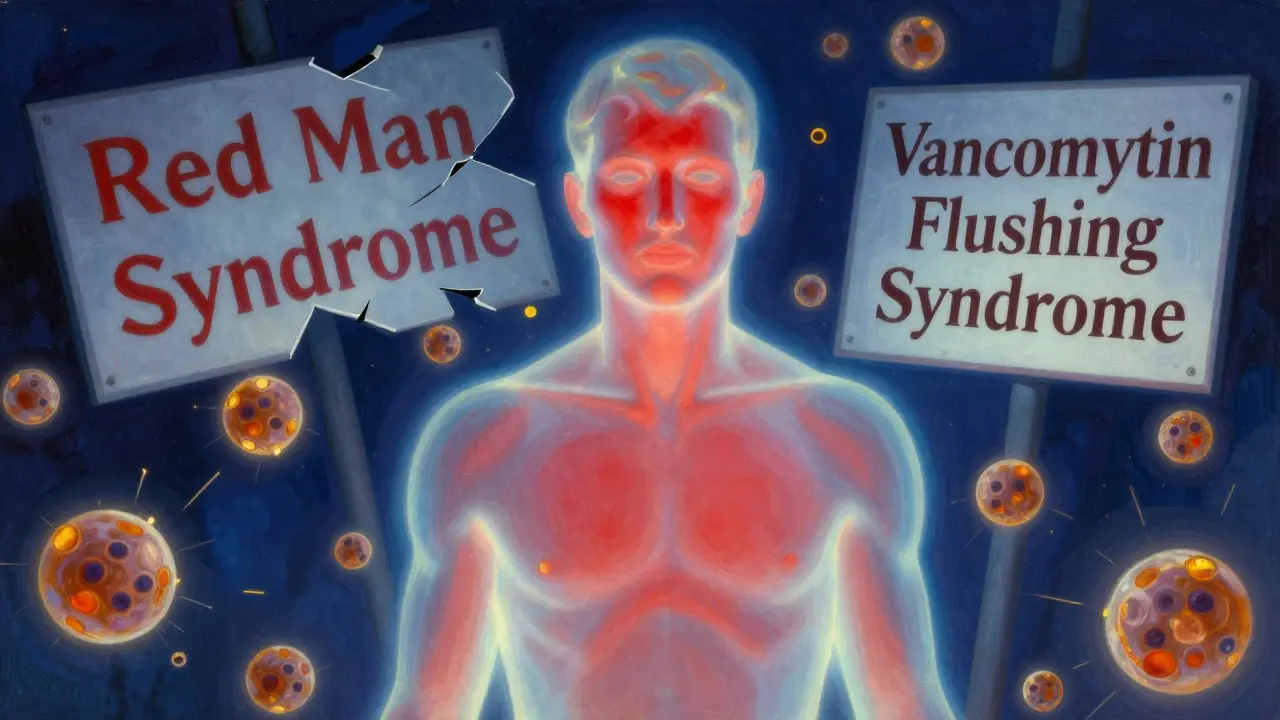
Vancomycin is a powerful antibiotic used to treat serious bacterial infections, especially those resistant to other drugs. But for many patients, getting this life-saving medicine comes with an unexpected and unsettling side effect: a sudden flush of redness, itching, and sometimes even dizziness. This isn’t an allergy in the traditional sense-it’s a vancomycin infusion reaction, once called "red man syndrome" but now properly named to reflect its true nature and avoid harmful language.
What Exactly Is a Vancomycin Infusion Reaction?
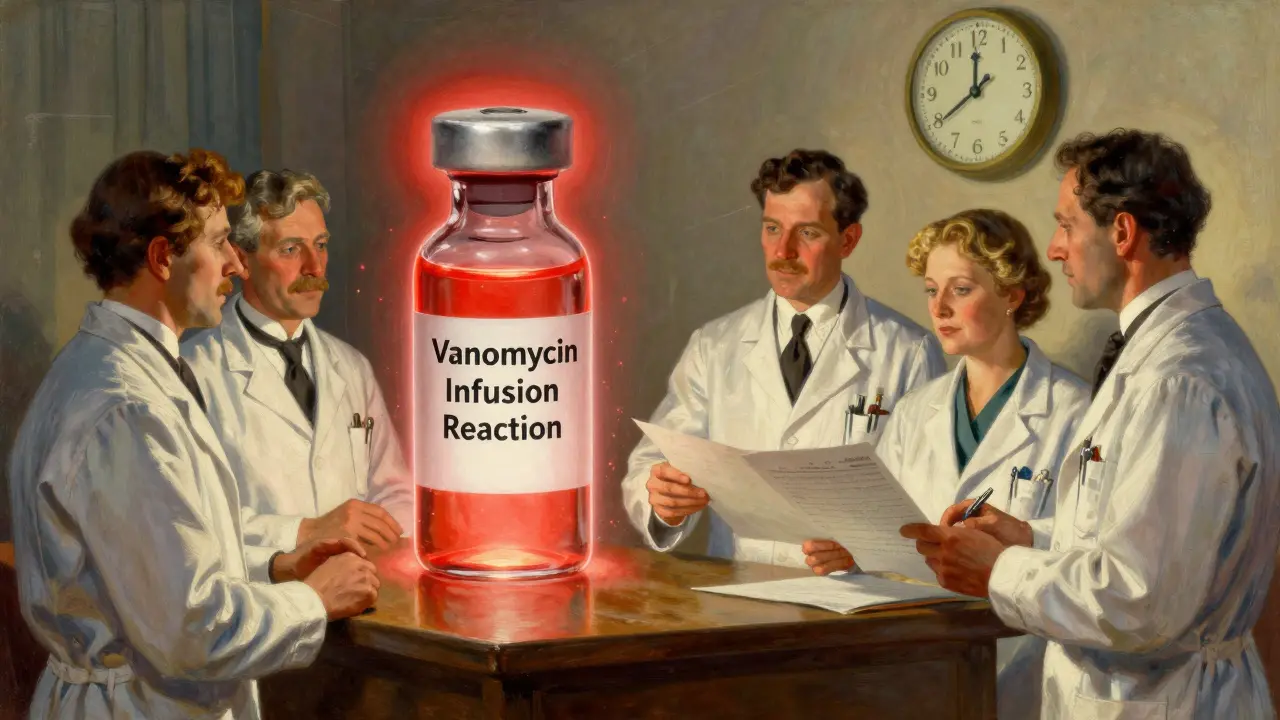
Vancomycin infusion reaction (VIR) happens when the antibiotic is given too quickly into the vein. It’s not caused by your immune system recognizing vancomycin as a threat like a true allergy. Instead, the drug directly triggers mast cells and basophils-types of immune cells-to dump histamine into your bloodstream. That histamine rush is what causes the redness, itching, and warmth you feel.
This reaction doesn’t require you to have taken vancomycin before. Unlike anaphylaxis, which needs prior exposure to develop, VIR can happen the very first time you get the drug. Symptoms usually show up 15 to 45 minutes after the infusion starts. You might notice your face, neck, and upper chest turning bright red. It can feel like a bad sunburn, accompanied by itching or a burning sensation. In more serious cases, you might feel your heart racing, your blood pressure dropping, or even experience muscle cramps or trouble breathing.
According to data from a landmark 1988 study in The Journal of Infectious Diseases, nearly 82% of healthy adults developed symptoms when given 1,000 mg of vancomycin over just one hour. But when the same dose was given slowly-over more than 100 minutes-none of them had a reaction. That’s the key: speed matters more than dose.
Why the Name Changed: From "Red Man Syndrome" to Vancomycin Flushing Syndrome
The old term "red man syndrome" was never accurate, and over time, it became clear it was also offensive. It painted a racial stereotype, implying the reaction was somehow linked to skin color, which it isn’t. The redness happens in people of all backgrounds.
In 2021, a study published in Hospital Pediatrics looked at 445 patient records where vancomycin was listed as an "allergy." Shockingly, over 60% of those records still used the outdated term "red man syndrome." After a hospital-wide effort to replace it with "vancomycin flushing syndrome," the use of the old term dropped by 17% in just three months. Major medical institutions like UCSF and the Infectious Diseases Society of America now require the use of the new terminology in all documentation.
This isn’t just about being politically correct. Using the right language helps doctors avoid misdiagnosing VIR as a true allergy. And that’s critical-because if you’re labeled "allergic to vancomycin," you might be given a less effective, more toxic, or more expensive antibiotic instead.
How to Tell It’s Not a True Allergy
Many patients are wrongly told they’re allergic to vancomycin because they had a flushing reaction. But true vancomycin allergies are extremely rare. A 2022 guideline from UCSF reviewed 198 patients labeled as allergic to vancomycin. Only 3% (6 people) had a real IgE-mediated anaphylactic reaction. Another 4% had other serious skin reactions like DRESS or Stevens-Johnson Syndrome. The vast majority-over 90%-had vancomycin infusion reactions, which are not allergies at all.
Here’s how to tell the difference:
- Vancomycin infusion reaction: Redness on face, neck, upper chest; itching; flushing; sometimes low blood pressure or fast heart rate. No swelling of the tongue or throat. No wheezing. Symptoms start during or right after the infusion.
- True anaphylaxis: Swelling of lips, tongue, or throat; wheezing or trouble breathing; severe drop in blood pressure; nausea or vomiting. This can happen with any exposure, even the first one, but it’s mediated by IgE antibodies and is far less common with vancomycin.
Other antibiotics can cause similar reactions. Amphotericin B, rifampin, and ciprofloxacin can also trigger histamine release. But vancomycin is the most common culprit, especially when given too fast.
How to Prevent a Reaction
The good news? Vancomycin infusion reactions are almost entirely preventable. The number one rule is simple: slow the infusion down.
Medical guidelines agree: vancomycin should never be given faster than 10 mg per minute. That means a 1,000 mg dose needs at least 100 minutes to infuse. Many hospitals now use infusion pumps to ensure this pace is maintained. Even in emergencies, rushing the drip is not worth the risk.
Here are three proven ways to avoid a reaction:
- Infuse slowly: Always use a rate of ≤10 mg/minute. For a 1g dose, that’s 100 minutes minimum.
- Avoid mixing with other triggers: Don’t give vancomycin at the same time as opioids, muscle relaxants, or contrast dye-they can worsen histamine release.
- Don’t pre-medicate unless necessary: You don’t need to give antihistamines like diphenhydramine before every dose. Only consider it for patients who’ve had a previous reaction and need a faster infusion for medical reasons.
Some hospitals still give diphenhydramine (Benadryl) as a routine pre-treatment. But that’s outdated. The 2018 Journal of Hospital Medicine concluded there’s no benefit to pre-medicating patients who’ve never had a reaction before. It adds unnecessary cost, risk of side effects, and doesn’t stop the reaction if the drug is given too fast.
What to Do If a Reaction Happens
If you or someone you’re caring for starts flushing, itching, or feeling unwell during a vancomycin infusion, stop the drip immediately. Don’t wait to see if it gets worse. Notify the nurse or doctor right away.
Most reactions are mild and resolve on their own within 30 minutes after stopping the infusion. But if the person is dizzy, has low blood pressure, or is struggling to breathe, they need urgent attention. Oxygen, fluids, and sometimes medications like epinephrine may be needed.
After the reaction, the medical team should document it correctly-not as an "allergy," but as a "vancomycin infusion reaction." That way, future providers won’t avoid vancomycin unnecessarily. If the patient needs vancomycin again, they can still get it safely-just slower.
What Happens If You Get It Again?
Here’s something surprising: people often have milder reactions the second time they get vancomycin. That’s called tachyphylaxis-the body seems to adapt. The 1988 study showed patients who had a strong reaction during their first infusion had a much weaker one during the second, even with the same dose and speed.
That doesn’t mean you should ignore the first reaction. But it does mean that with proper management, vancomycin can still be used safely in patients who’ve had a previous episode. Slowing the infusion and monitoring closely is usually enough.
Only in rare cases-like patients with repeated severe reactions despite slow infusions-do doctors consider alternatives like linezolid, daptomycin, or telavancin. Vancomycin desensitization protocols exist too, but they’re reserved for life-threatening infections with no other options.
Bottom Line: Slow Down to Stay Safe
Vancomycin is a vital tool in fighting dangerous infections. But like any powerful medicine, it must be used with care. The biggest risk isn’t the drug itself-it’s how fast it’s given.
Patients don’t need to fear vancomycin. They need to understand that the "red man syndrome" label is outdated, inaccurate, and harmful. The real solution isn’t more drugs or pre-treatments. It’s time.
Slow infusions prevent reactions. Accurate terminology prevents misdiagnosis. And both together keep patients safe, treated effectively, and free from unnecessary fear.
anthony epps
December 16, 2025 AT 13:26never knew vancomycin could do that. i thought it was just a strong antibiotic. so it's not an allergy but just the speed? that makes sense. my uncle got it once and they stopped it fast, but no one explained why.
Joanna Ebizie
December 17, 2025 AT 16:46lol so people still say 'red man syndrome'? wow. that's just lazy and dumb. i work in a hospital and we got trained on this last year. it's vancomycin flushing syndrome. period. if you're still using the old term, you're either outdated or don't care about patients.
Randolph Rickman
December 18, 2025 AT 16:05huge shoutout to the medical teams pushing for better language and slower infusions. this is exactly the kind of change that saves lives without needing new drugs. slow and steady wins the race here. if your hospital still rushes vancomycin, ask why. it’s not just about comfort-it’s about safety and accuracy. you deserve better care.
Tiffany Machelski
December 18, 2025 AT 20:03so if you get flushed and its not allergy then why do they give benadryl? i thought that was the fix? maybe they just do it cause its easy?
Mike Smith
December 20, 2025 AT 16:06Thank you for raising this important point. Pre-medication with diphenhydramine has been a long-standing practice, but current evidence strongly suggests it is unnecessary for patients without prior reactions. It introduces potential side effects-drowsiness, dry mouth, urinary retention-without preventing the underlying cause. The real solution remains infusion rate control. Institutions that have eliminated routine pre-medication report no increase in adverse events, and a marked improvement in protocol adherence. This is clinical wisdom in action: treat the cause, not the symptom.
Josias Ariel Mahlangu
December 21, 2025 AT 09:35people these days care more about names than results. if the drug works, who cares what you call it? red man syndrome was descriptive. now we got this long fancy name and still the same reaction. waste of time.
Dan Padgett
December 21, 2025 AT 17:02you know, in my village back home, we say the same thing about medicine-sometimes the bottle is not the problem, it's how you pour it. vancomycin is like fire-it heals when controlled, burns when rushed. and names? they're mirrors. if we call it 'red man,' we see only skin. but 'flushing syndrome'? we see the body's voice. maybe the language change is the first step to really listening.
Andrew Sychev
December 22, 2025 AT 20:53okay but let’s be real-this whole thing is just hospitals trying to look woke. they’re scared of being called racist so they change the name, but they still give the drug too fast. meanwhile, patients are still getting flushed. this is performative medicine. fix the infusion time, not the label. the label doesn’t hurt anyone, the slow drip does.
sue spark
December 23, 2025 AT 11:40so if you had a reaction once and then get it again slower it's milder? that's actually kind of cool. like your body learns. i wonder if that happens with other meds too