
CYP3A4 Interactions: How Common Medications Affect Each Other
When your body processes drugs, one enzyme does most of the heavy lifting: CYP3A4, a liver enzyme responsible for breaking down over half of all prescription medications. Also known as cytochrome P450 3A4, this enzyme is the reason some pills work better—or worse—when taken with others. If CYP3A4 is slowed down or sped up, your drug levels can spike or drop, leading to side effects, toxicity, or treatment failure.
This isn’t theoretical. Grapefruit juice? It blocks CYP3A4 and can turn a normal dose of statins or blood pressure meds into an overdose. St. John’s wort? It flips the enzyme into high gear, making birth control, antidepressants, or HIV drugs useless. Even common antibiotics like erythromycin or antifungals like ketoconazole can interfere. These aren’t rare edge cases—they’re everyday risks. And if you’re on multiple meds, especially for chronic conditions like high blood pressure, epilepsy, or depression, you’re likely caught in a hidden web of interactions.
What makes CYP3A4 tricky is that it doesn’t just affect drugs. It also handles many supplements, herbal products, and even some foods. A single change—starting a new pill, switching brands, or adding a vitamin—can throw off your whole system. That’s why people on warfarin, thyroid meds, or immunosuppressants need to be extra careful. Pharmacogenomics is starting to help, showing why some people are naturally more sensitive to these interactions based on their genes. But until you know your own risk, assume every new medication could interact.
Below, you’ll find real-world examples of how CYP3A4 interactions show up in daily life: from bleeding risks with vitamin E and warfarin, to birth control failing because of HIV meds, to how generic drugs and biosimilars can behave differently due to subtle metabolic changes. These aren’t abstract concepts—they’re the reasons people end up in the ER or end up pregnant when they didn’t mean to. You don’t need to memorize every drug. But you do need to know this: if you’re taking more than one thing, ask about CYP3A4. It’s the silent player behind most medication surprises.
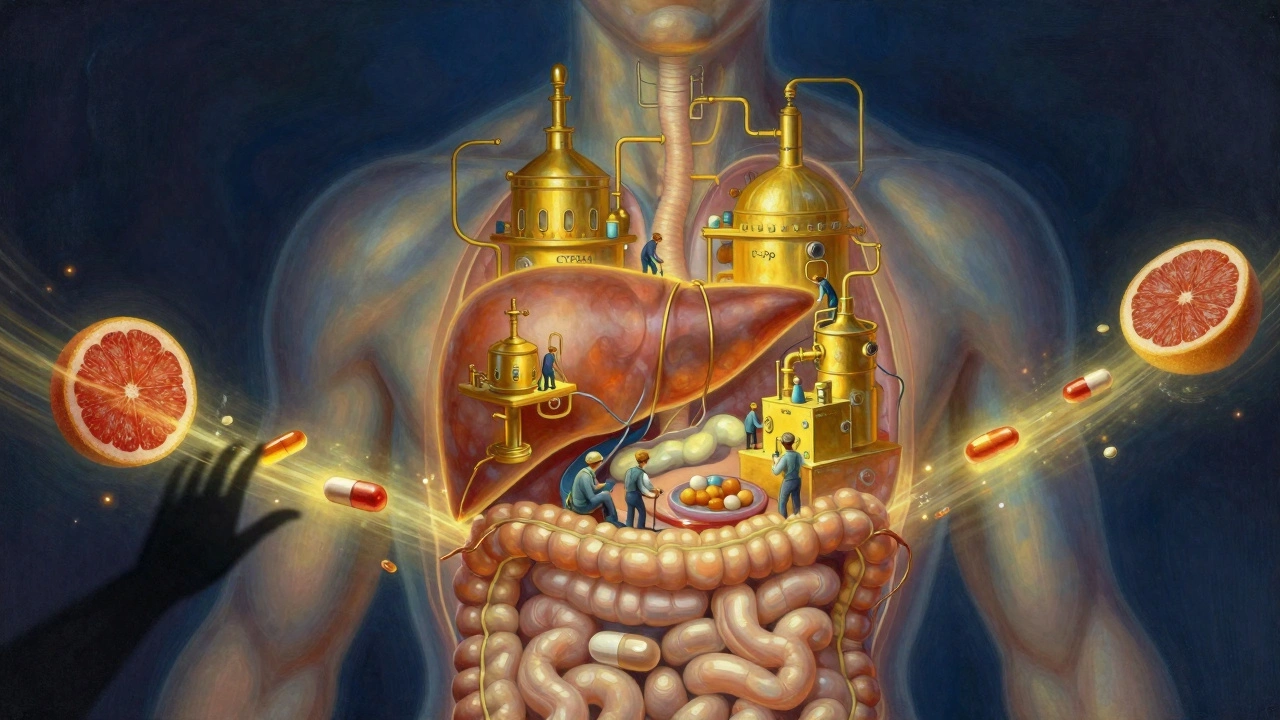
Antiviral Medications and CYP3A4/P-gp Interactions: What You Need to Know
Antiviral medications like those for HIV and hepatitis C can dangerously interact with common drugs through CYP3A4 and P-glycoprotein. Learn how to avoid life-threatening side effects with simple checks and safer treatment options.